The rising cost of prescription drugs remains a significant concern for Americans, with nearly 60% now worried about affording necessary medications for themselves and their families. This anxiety comes as the Trump administration promotes initiatives, including the recently launched TrumpRx website, aimed at lowering drug prices. However, a new poll from KFF reveals that public confidence in the administration’s ability to deliver on this promise is limited, even as a broad bipartisan majority agrees that greater government regulation of pharmaceutical pricing is needed. The affordability of medications, particularly newer drugs like GLP-1 agonists used for diabetes and weight loss, is increasingly impacting household budgets and healthcare decisions.
The KFF Health Tracking Poll, conducted from February 24 to March 2, 2026, among a nationally representative sample of 1,343 U.S. Adults, highlights a growing sense of unease. A substantial 59% of respondents expressed at least some worry about affording their prescriptions, marking the highest level of concern since KFF began tracking this metric in 2018. Specifically, 22% reported being “very worried” about the financial burden of medication costs. This widespread concern underscores the persistent challenges individuals face in accessing vital treatments, even with insurance coverage.
Bipartisan Support for Increased Regulation
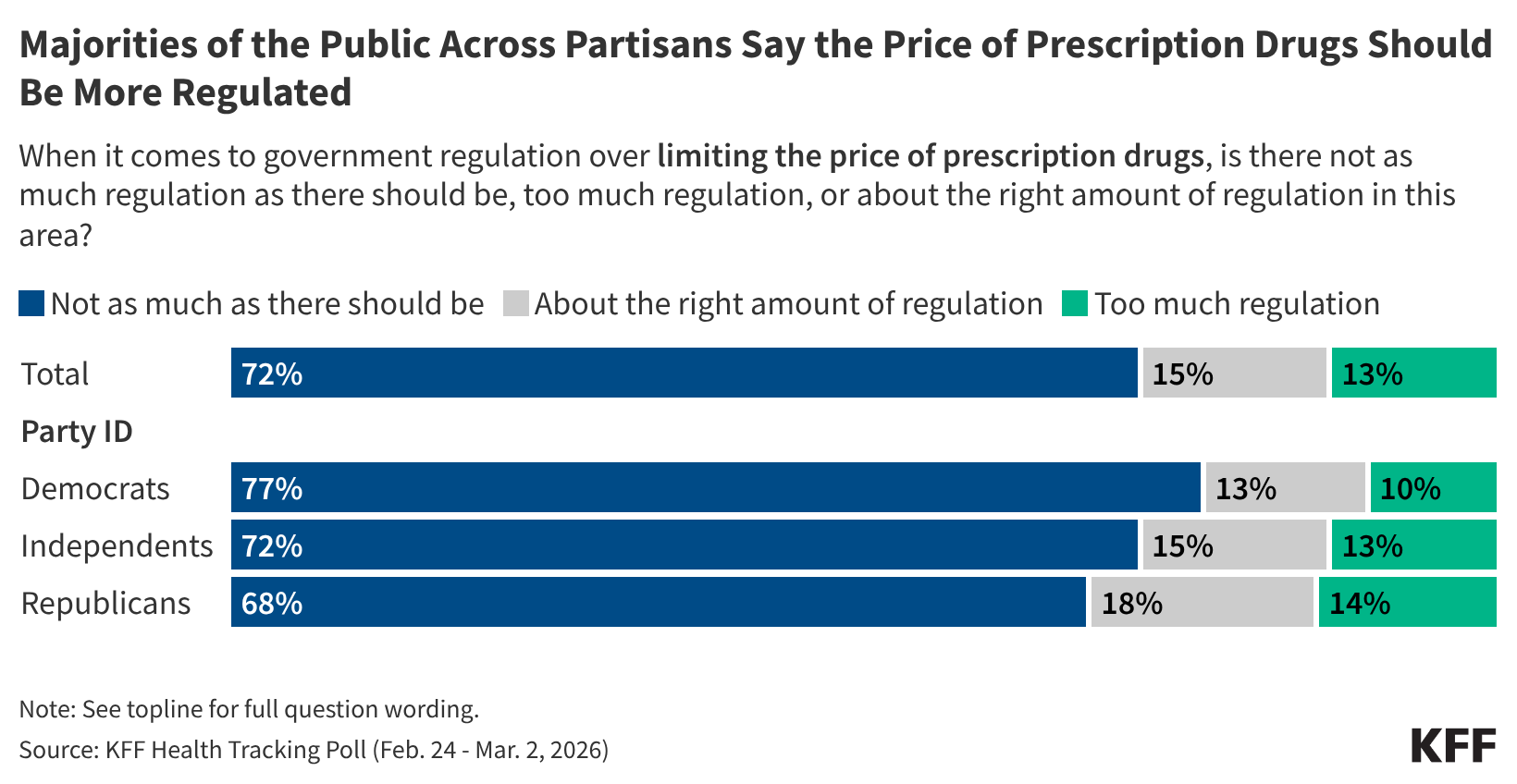
Despite political divisions on many issues, there’s a striking consensus regarding the need for more government intervention in regulating prescription drug prices. The poll found that 72% of Americans believe there isn’t enough government oversight in this area, a sentiment five times greater than the 13% who sense there’s too much regulation. This desire for increased control transcends party lines, with at least two-thirds of Republicans (68%), Independents (72%) and Democrats (77%) expressing support for greater government involvement. This broad agreement suggests a potential area for bipartisan collaboration in addressing the issue of drug affordability.
TrumpRx and Discount Programs: Limited Impact So Far
The launch of TrumpRx on February 5, 2026, a website designed to help consumers find discounts on brand-name drugs, has yet to significantly impact public perception or behavior. The poll indicates that roughly one-third (35%) of individuals who take prescription medications have heard of the website. However, only 7% have actually visited TrumpRx to compare prices. Interestingly, awareness and usage are higher among those currently or previously using GLP-1 medications – 16% of this group have visited the site. This suggests that targeted outreach to individuals using specific, often expensive, medications may be more effective.
Prior to TrumpRx, various discount cards and coupons offered by third-party platforms and pharmaceutical manufacturers were already available. The KFF poll reveals that 42% of prescription drug users have utilized such discounts in the past year, and 39% have compared prices online. Fewer have explored options like purchasing medications from online pharmacies without insurance (15%) or directly from manufacturers (8%). These findings suggest that while consumers are actively seeking ways to lower their drug costs, the existing landscape of discount programs can be complex and may not always be readily accessible or effective.
Skepticism Regarding Administration Policies
Despite the administration’s efforts, a majority of the public remains skeptical that current policies will translate into lower drug prices for them personally. 59% believe it’s “not too likely” or “not at all likely” that the Trump administration will succeed in reducing costs. This skepticism is particularly pronounced among Independents (35% believing it’s likely) and Democrats (only 11% expressing optimism). However, strong support persists within President Trump’s base, with 79% of Republicans and 88% of “Make America Great Again” (MAGA) supporters anticipating positive results. This divergence in opinion highlights the deeply polarized political climate and the influence of partisan affiliation on perceptions of policy effectiveness.
Political Implications and the Midterm Elections
The issue of prescription drug costs is similarly shaping the political landscape as the November midterm elections approach. The KFF poll reveals that voters currently place more trust in the Democratic Party (38%) than the Republican Party (28%) to address this critical issue. A significant 27% of voters express a lack of trust in either party. Among Independent voters, the Democratic Party holds a slight advantage (31% vs. 18%), while a substantial 41% remain uncommitted. This suggests that the ability to effectively address drug affordability could be a key factor influencing voter decisions in the upcoming elections.
The high cost of medications is not just a financial burden. it’s a public health issue. Individuals may delay filling prescriptions, skip doses, or forgo necessary treatments altogether due to cost concerns, potentially leading to adverse health outcomes. The increasing prevalence of chronic conditions, coupled with the rising prices of innovative therapies, necessitates a comprehensive and sustainable solution to ensure equitable access to essential medications. The debate over drug pricing is likely to continue, with ongoing discussions about potential policy interventions such as government negotiation of drug prices, importation of cheaper medications from other countries, and increased transparency in pharmaceutical pricing practices.
GLP-1 Medications and Affordability Challenges
The poll also sheds light on the challenges surrounding access to GLP-1 agonists, a class of drugs including medications like Ozempic and Wegovy, commonly used for managing type 2 diabetes and increasingly prescribed for weight loss. Approximately one in five (18%) adults report having ever taken a GLP-1 agonist, with 12% currently using this type of medication – a 6 percentage point increase from 18 months prior. Despite insurance coverage for many users, over half (56%) find these drugs difficult to afford, with a quarter describing the cost as “very difficult” to manage. Around 27% of GLP-1 users report having insurance but still being responsible for the full cost of the medication. This highlights the significant financial barriers that patients face even with insurance coverage, particularly for newer and more expensive medications.
the poll indicates a higher rate of GLP-1 use among individuals with diagnosed health conditions. Nearly half (45%) of those diagnosed with diabetes are currently using a GLP-1 medication, as are three in ten (29%) adults diagnosed with heart disease and about a quarter (23%) of those reporting being overweight or obese in the past five years. This underscores the growing demand for these medications and the potential impact of their cost on public health.
As policymakers grapple with the complex issue of prescription drug pricing, it’s crucial to consider the diverse needs of patients and the potential consequences of various policy options. Addressing affordability concerns requires a multifaceted approach that balances innovation, access, and cost containment. The KFF Health Tracking Poll provides valuable insights into public perceptions and priorities, informing the ongoing debate and shaping the future of healthcare policy.
The KFF Health Tracking Poll was designed and analyzed by public opinion researchers at KFF. The survey was conducted between February 24 and March 2, 2026, utilizing both online and telephone methods, reaching a nationally representative sample of 1,343 U.S. Adults in both English and Spanish. The margin of sampling error for the full sample is plus or minus three percentage points, with potentially higher margins for specific subgroups. Further details on the methodology can be found on the KFF website.
The conversation surrounding prescription drug costs is far from over. As new medications emerge and healthcare costs continue to rise, it’s essential to remain informed and engaged in the debate. What steps do you believe are most crucial to ensuring affordable access to prescription drugs for all Americans? Share your thoughts in the comments below.