
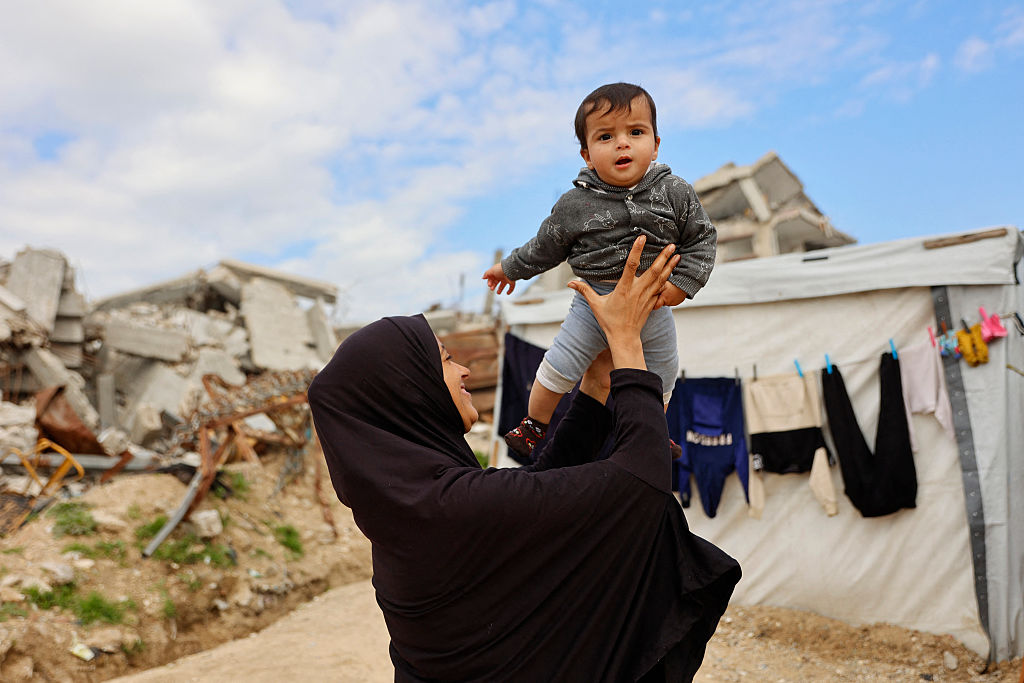
For millions of women in the Gaza Strip, motherhood has ceased to be a private journey of nurturing and has instead become a grueling exercise in survival. In a landscape defined by rubble and scarcity, the act of caregiving is no longer just about emotional support or guidance; This proves a desperate, hour-by-hour struggle to secure the most basic requirements for human life—water, calories, and a few hours of uninterrupted sleep.
Motherhood in Gaza currently exists in a state of permanent crisis, where the traditional roles of a caregiver are superimposed onto the trauma of active warfare. For many mothers, the “weight of exhaustion” is not merely physical but psychological, as they are tasked with the impossible: providing a sense of security and normalcy to their children while inhabiting a world where neither exists. This duality—the need to be a shield for their children while feeling entirely exposed themselves—defines the current maternal experience in the enclave.
The collapse of civil infrastructure has transformed the simple act of motherhood into a series of high-stakes logistical challenges. From the struggle to find clean diapers to the harrowing experience of giving birth in overcrowded shelters without anesthesia, the biological and emotional demands of motherhood are now compounded by a systemic failure of humanitarian access. The result is a generation of mothers who are caregiving even when they have nothing left to give, operating on the fumes of their own resilience.
The Collapse of Maternal Healthcare and Safe Childbirth
The most acute manifestation of this crisis is found in the breakdown of maternal health services. In a functioning society, pregnancy is managed through prenatal screenings, nutritional support, and sterile delivery environments. In Gaza, these benchmarks have largely vanished. According to reports from the World Health Organization (WHO), the destruction of hospitals and the shortage of medical supplies have left thousands of pregnant women without essential prenatal care, significantly increasing the risk of maternal and neonatal mortality.
Giving birth has become a gamble. Many women are forced to deliver in tents or makeshift shelters, often without the assistance of skilled birth attendants. The lack of sterile equipment and basic medication means that preventable complications—such as postpartum hemorrhage or neonatal infections—become life-threatening. For these mothers, the joy of a new arrival is frequently eclipsed by the immediate terror of whether the infant will survive the first week in an environment lacking clean water and warmth.
the psychological trauma of childbirth under fire cannot be overstated. The constant threat of bombardment means that the vulnerability of labor is experienced in a state of hyper-vigilance. Mothers report the agony of trying to soothe a newborn while simultaneously listening for the sounds of incoming strikes, a paradox of creation and destruction that leaves deep, lasting scars on the maternal psyche.
Food Insecurity and the Agony of Maternal Malnutrition
Caregiving in Gaza is further complicated by a catastrophic level of food insecurity. The struggle to feed children often falls squarely on the shoulders of mothers, who frequently prioritize their children’s intake over their own. This self-sacrifice, while instinctive, creates a dangerous cycle of malnutrition that affects both the mother and the child, particularly for those who are breastfeeding.
Data from the UNICEF highlights a worrying rise in acute malnutrition among children in Gaza. For breastfeeding mothers, the lack of adequate caloric intake and clean drinking water leads to a decline in milk production, forcing a reliance on infant formula—a commodity that is often unavailable or impossible to prepare safely due to the lack of potable water. This creates a secondary layer of maternal stress: the guilt of being unable to provide the most basic biological sustenance to their offspring.
The daily routine for a mother in a displacement camp often involves hours of queuing for meager food rations or searching for fuel to cook a simple meal. This “labor of survival” consumes the time and energy that would otherwise be spent on the emotional and developmental needs of the children. When a mother is starving, the act of reassuring a frightened child becomes an act of extreme willpower, a performance of strength maintained in the face of personal depletion.
The Psychological Toll: Shielding Children from Terror
Beyond the physical requirements of survival, mothers in Gaza are performing an invisible, exhausting form of emotional labor. They are the primary shock absorbers for their children’s trauma. In the midst of displacement and loss, mothers strive to maintain a semblance of routine—telling stories, singing songs, or inventing games—to distract children from the sounds of drones and explosions.
This role as an emotional anchor is maintained even as the mothers themselves grapple with profound grief and anxiety. Many have lost their own parents, siblings, or homes, yet they feel a mandatory obligation to suppress their own mourning to avoid further destabilizing their children. This emotional repression leads to a state of chronic burnout, where the caregiver’s internal resources are completely exhausted, yet the external demand for their strength remains constant.
The impact of “ceasefires” or temporary pauses in fighting often brings a different kind of stress. Rather than providing true respite, these periods frequently highlight the extent of the devastation. Mothers must navigate the trauma of returning to ruined homes or the anxiety of knowing that the pause is temporary. The instability of the security situation means that the “safe spaces” mothers try to create for their children are fragile and fleeting, making the effort to reassure them feel like a Sisyphean task.
Displacement and the Erosion of the Home
The concept of “home” as a sanctuary for child-rearing has been erased for a vast majority of Gazan families. Forced displacement has pushed mothers into overcrowded tents in areas like Al-Mawasi, where privacy is non-existent and sanitation is minimal. The loss of a private space fundamentally alters the dynamics of caregiving, making it difficult to maintain hygiene or provide the quiet environment necessary for a child’s psychological recovery.

In these camps, the burden of domestic labor is amplified. Without running water or electricity, the simple tasks of washing clothes or cleaning a child become grueling chores. The environmental stressors—extreme heat in the summer and damp cold in the winter—add another layer of difficulty to the caregiving process. Mothers must constantly innovate, using whatever scraps of plastic or fabric are available to protect their children from the elements.
The erosion of the community support system—the “village” that typically helps raise a child—has also left mothers isolated. While there is strong solidarity among women in the camps, the shared nature of their suffering means that there are few people left who are not also struggling to survive. The collective trauma of the community means that the burden of care is shared, but the resources to provide that care remain critically low.
The Path Forward: What is Needed for Maternal Survival
Addressing the crisis of motherhood in Gaza requires more than just the delivery of food parcels. It requires a comprehensive restoration of the systems that support human life. The international community must prioritize the establishment of safe, sterile maternal health corridors and the restocking of specialized neonatal equipment. Without dedicated prenatal and postnatal care, the cycle of maternal and infant mortality will continue to climb.
there is a desperate need for psychosocial support tailored specifically for caregivers. Mothers cannot continue to be the sole emotional pillars for their children if they have no one to support them. Mental health interventions that acknowledge the specific trauma of “caregiving under fire” are essential for the long-term recovery of the Gazan family unit.
Practical utility for those looking to assist or track the situation can be found through official humanitarian channels. Updates on food security levels are regularly published by the Integrated Food Security Phase Classification (IPC), while real-time needs for medical supplies are often coordinated through the WHO and the Palestinian Red Crescent Society.
The resilience of mothers in Gaza is a testament to the human spirit, but resilience should not be a substitute for basic human rights. To care for the children of Gaza, the world must first care for the mothers who are currently holding the remnants of their society together with nothing but sheer will.
The next critical checkpoint for the region remains the ongoing diplomatic efforts to secure a sustainable ceasefire and the subsequent scale-up of humanitarian aid. International observers are awaiting the next comprehensive report from the UN on child malnutrition and maternal health outcomes, which will provide a clearer picture of the long-term damage inflicted on the enclave’s most vulnerable populations.
World Today Journal encourages readers to share this report to bring visibility to the invisible labor of caregivers in conflict zones. We welcome your thoughts and reflections in the comments section below.