
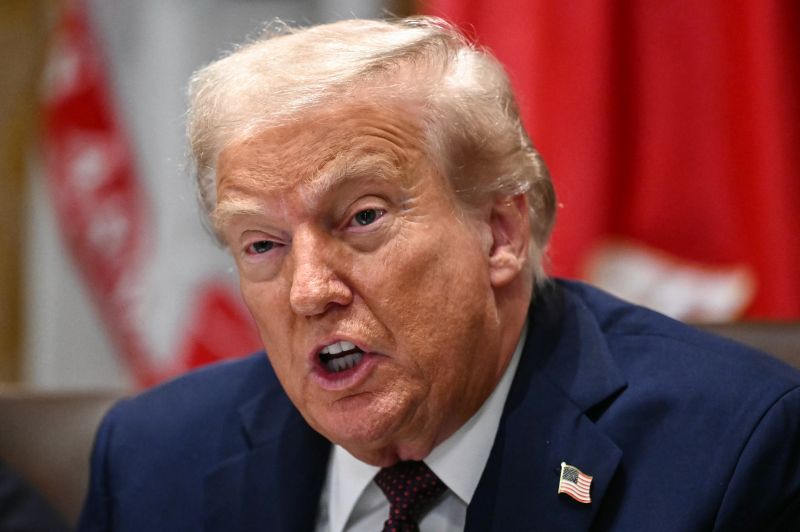
President Donald Trump has announced the cancellation of a planned trip to Pakistan by his envoys Steve Witkoff and Jared Kushner, who were scheduled to engage in discussions with Iranian officials. The decision comes amid heightened tensions in the Middle East and follows reports that the Iranian delegation had already departed Islamabad prior to the envoys’ arrival.
The White House confirmed that the trip, which had been organized to explore potential diplomatic channels regarding Iran’s nuclear program, was called off at the last minute. According to multiple international news outlets, Trump stated that the envoy mission was no longer necessary given the evolving situation on the ground.
Steve Witkoff, a special envoy for the Middle East, and Jared Kushner, the president’s son-in-law and former senior advisor, had been positioned as key figures in backchannel efforts to restart dialogue between Washington and Tehran. Their planned visit to Pakistan was intended to serve as a neutral venue for indirect talks, given the absence of direct diplomatic relations between the U.S. And Iran.
Reports from Agence France-Presse and Reuters indicated that the Iranian delegation had left Islamabad earlier than expected, prompting U.S. Officials to reassess the utility of the proposed meeting. No official reason was provided by the Iranian side for their early departure, though analysts speculated it may have been related to internal deliberations or external pressures.
The cancellation underscores the fragility of current diplomatic initiatives aimed at de-escalating tensions over Iran’s uranium enrichment activities. Despite repeated calls from European allies for renewed negotiations, the U.S. Has maintained a hardline stance, insisting that any talks must include strict limitations on Iran’s ballistic missile program and regional influence.
Observers note that the aborted mission reflects broader inconsistencies in U.S. Foreign policy messaging, particularly regarding the role of informal envoys in sensitive negotiations. While the administration has previously relied on backchannels to communicate with adversaries, the sudden cancellation raises questions about coordination within the National Security Council and the State Department.
In response to the development, Iran’s foreign ministry reiterated its position that it remains open to diplomacy but will not engage under what it describes as “unreasonable preconditions.” Officials in Tehran have consistently maintained that any negotiations must begin with the lifting of sanctions imposed during the Trump administration.
Meanwhile, regional allies such as Saudi Arabia and the United Arab Emirates have expressed cautious optimism about the possibility of dialogue, even as they continue to bolster their own defense capabilities amid fears of escalation. Israel, which has long opposed any engagement with Iran without preconditions, welcomed the cancellation as a sign of continued resolve.
The incident also highlights the logistical and symbolic challenges of conducting diplomacy through third-party countries. Pakistan, while maintaining ties with both the U.S. And Iran, has sought to balance its relationships carefully, avoiding actions that could be perceived as aligning too closely with either side.
As of now, You’ll see no announced plans to reschedule the envoy mission or to initiate alternative forms of communication. The U.S. State Department has declined to comment further on the matter, referring inquiries to the White House, which has not issued a detailed timeline for future diplomatic outreach.
For ongoing updates on U.S.-Iran relations and developments in Middle Eastern diplomacy, readers are encouraged to consult official statements from the U.S. Department of State and the Ministry of Foreign Affairs of the Islamic Republic of Iran.
We invite our global audience to share perspectives and insights in the comments section below. Your contributions facilitate foster informed discussion on critical international issues.