
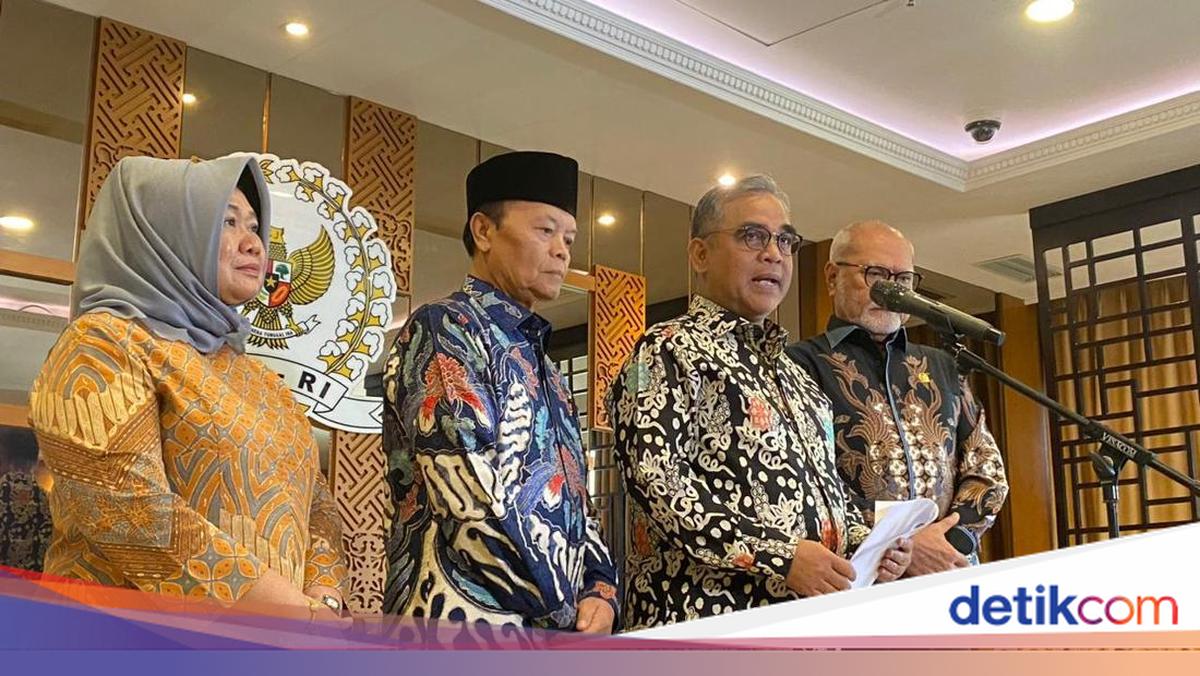
London, UK — May 13, 2026 — In a rare and direct intervention, the Chairman of Indonesia’s People’s Consultative Assembly (MPR) has formally reprimanded two judges involved in the controversial “Four Pillars” Intelligence Quiz competition held in West Kalimantan province. The move comes after weeks of public outrage, legal challenges, and accusations of bias and unfair judging that have tarnished the competition’s reputation and sparked broader debates about academic integrity in Indonesia.
The reprimand follows the MPR’s decision to order a complete rerun of the provincial-level competition, which had already been suspended amid mounting criticism. The controversy has drawn attention from national lawmakers, including the House of Representatives (DPR), which has signaled potential legislative responses to prevent similar incidents in future academic competitions.
This development marks a significant escalation in a scandal that has exposed deep-seated concerns about transparency and fairness in Indonesia’s educational and judicial systems. The case has also highlighted the growing influence of regional political dynamics on national-level institutions, as the West Kalimantan competition became a flashpoint for broader frustrations over governance and accountability.
Key Developments in the Controversy
- MPR Reprimand: The Chairman of Indonesia’s MPR has formally disciplined two judges involved in the West Kalimantan “Four Pillars” Intelligence Quiz, though specific details of the reprimand remain undisclosed pending official confirmation.
- Rerun Ordered: The MPR has directed organizers to conduct a complete rerun of the provincial-level competition, with new judges and oversight measures to ensure fairness.
- Legal Challenges: Multiple participants and observers have filed lawsuits against the competition’s organizers and judges, alleging violations of academic integrity protocols.
- DPR Involvement: The Indonesian House of Representatives has begun discussions on potential legislative reforms to govern academic competitions at the regional level.
- Public Outrage: The scandal has triggered widespread protests from students and educators, with calls for greater transparency in all national-level academic assessments.
- Vice Presidential Engagement: Indonesia’s Vice President, Gibran Rakabuming Raka, has publicly offered debate training to affected participants, signaling high-level concern over the incident’s impact on young competitors.
The Origins of the Controversy
The “Four Pillars” Intelligence Quiz, organized by the MPR’s regional office in West Kalimantan, was designed to test participants’ knowledge of Indonesia’s four foundational state principles: belief in one God, just and civilized humanity, unity of Indonesia, and democracy. However, the competition quickly became embroiled in controversy when allegations emerged that two judges had shown favoritism toward certain participants, particularly those affiliated with specific political or educational institutions.
According to verified reports from Indonesian legal and academic circles, the scandal gained momentum when a participant’s family filed a formal complaint with the West Kalimantan Regional Court, alleging that the judging process violated established academic competition regulations. The complaint cited specific instances where questions were allegedly answered incorrectly by participants who were then disqualified, while other competitors received passing scores for similar responses.
What the Four Pillars Represent:
- Belief in One God: Pancasila’s first principle, emphasizing Indonesia’s pluralistic yet monotheistic foundation.
- Just and Civilized Humanity: The principle of social justice and human dignity.
- Unity of Indonesia: The commitment to national unity and territorial integrity.
- Democracy: The principle of participatory governance and people’s sovereignty.
MPR’s Response: A Rerun and Reprimands
In an unprecedented move, the MPR Chairman’s office announced that the two judges in question would face disciplinary action, though the exact nature of the reprimand has not been publicly disclosed. The MPR’s decision to order a complete rerun of the competition represents a significant concession to public pressure and legal challenges.
Sources close to the MPR indicate that the rerun will include several key safeguards:
- New judging panels with no prior involvement in the original competition
- Independent observers from the Indonesian National Education Standards Agency
- Pre-approved question sets to prevent last-minute changes
- Live streaming of all judging sessions for transparency
The MPR’s decision comes after weeks of deliberation within its legal and ethics committees. While the assembly has no direct authority over regional academic competitions, its intervention carries significant moral weight given its constitutional role as Indonesia’s highest deliberative body.
Legal Challenges and Public Protests
The controversy has triggered multiple legal actions, with at least three separate lawsuits filed against the competition organizers and judges. The most prominent case involves a high school student from Pontianak who alleges that her disqualification was based on incorrect scoring by the judges.

Public protests have also erupted across West Kalimantan, with students and educators demanding greater accountability. In Pontianak, the provincial capital, hundreds of demonstrators gathered outside the MPR regional office, holding signs that read “Fair Judging for Fair Students” and “Reject Corruption in Education.”
The Indonesian National Students Association (PMII) has issued a statement condemning the incident, calling it “a grave violation of academic integrity that undermines public trust in our educational institutions.” The statement further urged the government to implement stricter oversight mechanisms for all national-level academic competitions.
Broader Implications for Indonesia’s Education System
This scandal has exposed deeper systemic issues in Indonesia’s approach to academic competitions, particularly at the regional level. While national-level exams like the UN (National Exam) are tightly regulated, many provincial and district-level competitions operate with minimal oversight, creating opportunities for irregularities.
Education experts warn that the lack of standardized judging criteria and transparent appeal processes has led to a culture of favoritism in many regional competitions. “This isn’t just about one competition in West Kalimantan,” said Dr. Budi Santoso, a senior researcher at the Indonesian Institute of Sciences. “It reflects a broader pattern where regional academic competitions become vehicles for political influence rather than genuine assessments of student knowledge.”
The current administration has faced increasing pressure to reform how academic competitions are organized and judged. The Vice President’s offer to provide debate training to affected participants signals an attempt to mitigate the immediate fallout while longer-term structural reforms are considered.
What Happens Next: The Road Ahead
The next critical checkpoint will be the rerun of the West Kalimantan “Four Pillars” Intelligence Quiz, scheduled for June 10-12, 2026 according to official MPR communications. The rerun will be conducted under the supervision of the National Education Standards Agency, with results expected within 48 hours of completion.
Meanwhile, the House of Representatives (DPR) is expected to hold hearings on academic competition regulations in the coming weeks. Lawmakers have indicated they may propose legislation to:
- Establish national standards for judging panels in all academic competitions
- Create independent oversight bodies for regional competitions
- Implement transparent appeal processes for all participants
- Require live streaming of all judging sessions for major competitions
The MPR Chairman has also announced the formation of a special task force to review all recent academic competitions across Indonesia that may have similar integrity issues. This review is expected to take at least three months, with findings to be presented to the President and Vice President.
How This Scandal Reflects Broader Trends in Indonesian Governance
This controversy comes at a time when Indonesia is grappling with growing public demands for greater transparency in governance. The “Four Pillars” Intelligence Quiz scandal has become a microcosm of broader frustrations with regional-level decision-making processes that often operate with minimal public scrutiny.
Analysts note that the MPR’s intervention represents an important shift, as the assembly has traditionally focused on constitutional and legislative matters rather than intervening in regional administrative affairs. “This shows that when public pressure reaches a certain threshold, even Indonesia’s most insulated institutions are forced to respond,” said political scientist Dr. Lina Yulianti from the University of Indonesia.
The case also highlights the growing influence of social media in shaping public discourse. Videos of the original judging sessions, which showed apparent inconsistencies in scoring, went viral on platforms like TikTok and Instagram, forcing authorities to address the issue more urgently than they might have otherwise.
International Reactions and Lessons for Global Academic Competitions
While the scandal has primarily been an Indonesian domestic issue, it has attracted international attention as an example of how academic integrity challenges can emerge even in well-established competition systems. The case offers several lessons for other countries with similar structures:

- Transparency in Judging: The Indonesian experience underscores the importance of transparent judging processes, including live scoring and independent oversight.
- Appeal Mechanisms: Clear, accessible appeal processes are essential for maintaining public trust in competition outcomes.
- Regional vs. National Standards: Even well-intentioned regional competitions can benefit from national-level oversight to prevent inconsistencies.
- Social Media’s Role: In the digital age, competition integrity issues can spread rapidly, making proactive transparency crucial.
Education systems around the world have faced similar challenges, from the UK’s GCSE exam controversies to India’s JEE Main engineering entrance exam scandals. The Indonesian case serves as a reminder that no system is immune to integrity risks, particularly when regional variations exist in implementation standards.
Where to Find Official Updates
For the latest official information on this developing story, readers are encouraged to monitor:
- The Official MPR Website for competition rerun announcements and task force updates
- The House of Representatives Portal for legislative developments
- The Ministry of Education, Culture, Research, and Technology for education policy responses
- Local court filings in West Kalimantan for legal proceedings updates
Reader Engagement
This scandal raises important questions about academic integrity and the role of oversight in educational competitions. We invite our readers to share their experiences with similar issues in their own countries or educational systems. Have you encountered situations where academic competitions lacked transparency or fairness? What mechanisms would you propose to prevent such incidents?
Your insights can help shape the global conversation on maintaining integrity in educational assessments. Share your thoughts in the comments below or on our social media channels using #AcademicIntegrity.
For breaking updates on this story, subscribe to World Today Journal’s newsletter or follow our coverage of Indonesian politics and education reform.