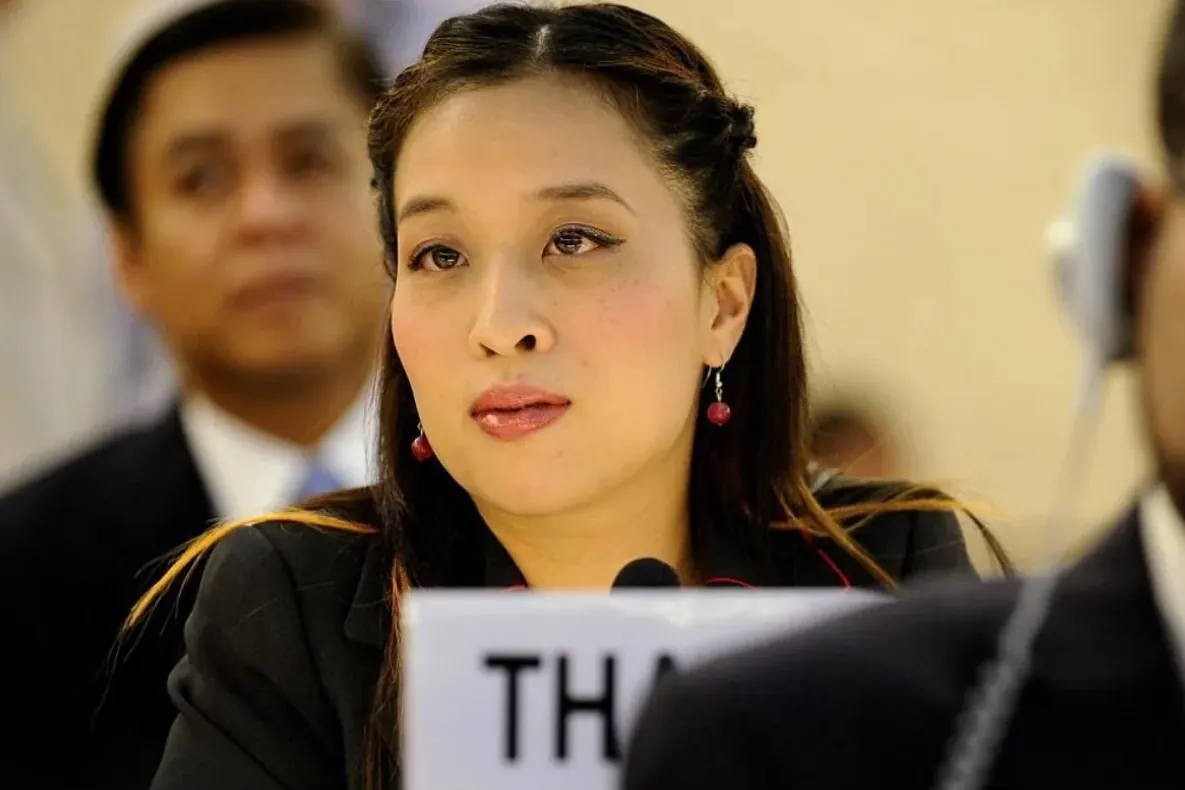
Princess Bajrakitiyabha Narendira Debyavati of Thailand has died at the age of 44, more than a year and a half after collapsing due to a heart condition. The Royal Household Bureau confirmed the passing of the eldest daughter of King Maha Vajiralongkorn in a formal statement, ending a period of intense public uncertainty regarding the health of the potential heir to the throne.
The Princess, who was widely considered a significant figure within the Thai monarchy, had been hospitalized since December 2022. According to the Royal Household Bureau, her health declined following a collapse caused by a severe arrhythmia resulting from a mycoplasma infection. Her death brings to a close a lengthy period of medical observation that had fueled intense international speculation regarding the succession of the Chakri dynasty.
The Royal Household Bureau Announcement
On December 15, 2022, Princess Bajrakitiyabha lost consciousness while training her dogs for a competition in Nakhon Ratchasima province. She was initially treated at a local hospital before being airlifted to King Chulalongkorn Memorial Hospital in Bangkok, as reported by the Associated Press. For months, the palace provided limited updates, describing her condition as “stable to a certain extent” while noting that she remained unconscious.
The medical team identified the cause of her collapse as an inflammation of the heart associated with a mycoplasma infection. The official Royal Household Bureau statement released during her hospitalization indicated that the Princess was placed on life support, including heart, lung, and kidney assistance machines. Her passing marks a significant moment for the Thai royal institution, which has faced questions regarding its future stability.
Succession and the Future of the Monarchy
Princess Bajrakitiyabha was the eldest child of King Rama X and his first wife, Princess Soamsawali. As a senior member of the royal family, she held a unique position as a Harvard-educated lawyer who previously served as Thailand’s ambassador to the United Nations and as a diplomat in Austria. Her professional background and perceived influence within the palace led many analysts to view her as a stabilizing force and a potential candidate for a prominent role in the kingdom’s future.

The question of succession remains a sensitive topic in Thailand, where the monarchy is protected by strict lèse-majesté laws. Under the 1924 Palace Law of Succession, the King has the authority to nominate his heir, but the process is subject to the approval of the Privy Council and the parliament. With the Princess’s passing, the focus of the public and international observers shifts toward the King’s other children, including Prince Dipangkorn Rasmijoti, who is the King’s only son with his third wife.
Public Response and Official Mourning
Following the announcement, the Thai government and the Royal Household have initiated formal mourning protocols. Public buildings across the country have been instructed to fly flags at half-mast, and members of the public have begun gathering at hospitals and royal sites to pay their respects. The loss is viewed as a major blow to the royal family, given the Princess’s extensive philanthropic work and her active role in the Thai justice system, where she championed reforms regarding the treatment of female inmates.
The Bangkok Post reports that funeral rites will be conducted in accordance with traditional Buddhist customs, with the Royal Household expected to release a detailed schedule of ceremonies in the coming days. These events are anticipated to draw large crowds of mourners, reflecting the high regard in which the Princess was held by segments of the Thai population.
Contextualizing the Succession Precedent
The role of the Princess was often compared to that of a modernizing influence within the palace. Her work with the United Nations Office on Drugs and Crime (UNODC) on the “Bangkok Rules”—a set of international standards for the treatment of women prisoners—earned her international recognition. Her absence from the royal hierarchy creates a vacuum that experts suggest may require the King to clarify his intentions for the future of the throne sooner than previously anticipated.
As the kingdom moves forward, all eyes will be on the palace for further guidance regarding the formal succession process. The next official checkpoint will be the commencement of the royal funeral rites, which will serve as an indicator of the state’s official transition following this loss. Readers are encouraged to monitor the official website of the Bureau of the Royal Household for verified updates on funeral arrangements and official declarations.
Jonathan Reed is the News Editor at World Today Journal, based in London. With over 16 years of experience in international reporting, he specializes in political analysis and global affairs.
Related reading