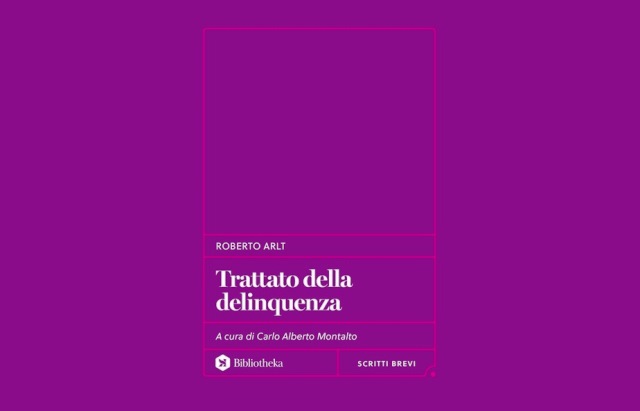
Readers exploring Latin American literature for the first time in Italian can now access the sharp, biting, and fast-paced journalistic writings of Roberto Arlt, published originally in the Buenos Aires newspaper El Mundo. Long celebrated for his novels and plays that captured the gritty underbelly of Argentine urban life, Arlt’s extensive newspaper chronicles offer an unfiltered lens into 20th-century society, criminality, and human nature. This landmark translation brings a vital piece of journalistic history to an Italian-speaking audience.
Maria Petrova, World Editor at World Today Journal, examines how these newly available texts shed light on Arlt’s evolution as a chronicler of the streets. Born in Buenos Aires in 1900 to German-immigrant parents, Arlt worked across various trades before establishing himself as a defining voice of Argentine modernism. His column in El Mundo, known as Aguafuertes porteñas, revolutionized Spanish-language journalism with its direct, conversational prose and unflinching focus on ordinary people.
The arrival of these translated chronicles in Italy fills a notable gap in European publishing regarding early 20th-century South American prose. While Arlt’s fiction—including works like Los siete locos (The Seven Madmen)—has earned steady academic and literary attention abroad, his daily journalism remains less explored outside the Spanish-speaking world. Cultural institutions and literary critics have long pointed to these short sketches as foundational texts that bridged the gap between high literature and mass-media storytelling.
The Evolution of Arlt’s Journalistic Voice in El Mundo
Arlt joined the staff of El Mundo in the late 1920s, utilizing the daily format to document the rapid transformation of Buenos Aires into a bustling, chaotic metropolis. According to historical analyses of Argentine print culture, his contributions were rarely traditional news reports; instead, they functioned as sociological snapshots, opinion pieces, and narrative vignettes. He wrote about petty criminals, factory workers, eccentric inventors, and street vendors with the same gravity usually reserved for political elites.
The newly translated Italian selections highlight Arlt’s fascination with urban survival and moral ambiguity. Writing with swift, corrosive sentences, Arlt avoided flowery romanticism. Instead, he favored a stark realism that mirrored the anxieties of the post-World War I era. Literary historians note that his background as a reporter for crime and local beats deeply informed his fiction, imbuing his novels with a restless energy that felt distinctly modern.
For Italian readers, encountering these texts provides a fresh perspective on how journalism operated as an art form in interwar Latin America. Arlt’s ability to condense complex social tensions into a few hundred words established a template for the modern literary chronicler. The translation project relies on rigorous archival research to ensure the idiomatic slang and vernacular expressions of 1920s Buenos Aires find appropriate equivalents in Italian without losing their raw edge.
Impact on Contemporary Literary Studies and Cultural Exchange
The publication of Arlt’s El Mundo pieces in Italian arrives amid a broader revival of interest in translated Latin American classics across European publishing markets. Academic circles have increasingly recognized that mid-century “Boom” writers like Gabriel García Márquez and Julio Cortázar stood on the shoulders of earlier innovators who experimented with narrative voice in newspaper columns. Arlt’s work is frequently cited as a precursor to these later movements, combining journalistic observation with existential philosophy.
Scholars specializing in comparative literature emphasize that Arlt’s essays challenge conventional boundaries between high culture and lowbrow entertainment. By choosing to write about pickpockets, swindlers, and lonely immigrants, he elevated marginalized urban experiences into permanent literary subjects. The Italian edition provides students and researchers with accessible source material to study how urban modernity manifested simultaneously in different hemispheres.
Cultural organizations involved in the translation effort plan to host academic seminars and public readings to discuss Arlt’s enduring relevance. These events aim to connect contemporary readers with a writer who viewed the city not merely as a physical setting, but as a living, breathing organism defined by its contradictions and struggles.
Next Steps and Availability for Readers
The newly released Italian translation of Roberto Arlt’s journalistic writings is currently available through major European distributors and specialized bookstores focusing on international literature. Literary critics expect further academic commentary and reviews to emerge as the book reaches university curricula across Italy. Readers seeking further updates on literary translations and international cultural releases can consult upcoming announcements from participating publishing houses and cultural institutes.
What are your thoughts on Roberto Arlt’s transition from novelist to journalistic chronicler? Share your perspective in the comments below or pass this article along to fellow literature enthusiasts.