
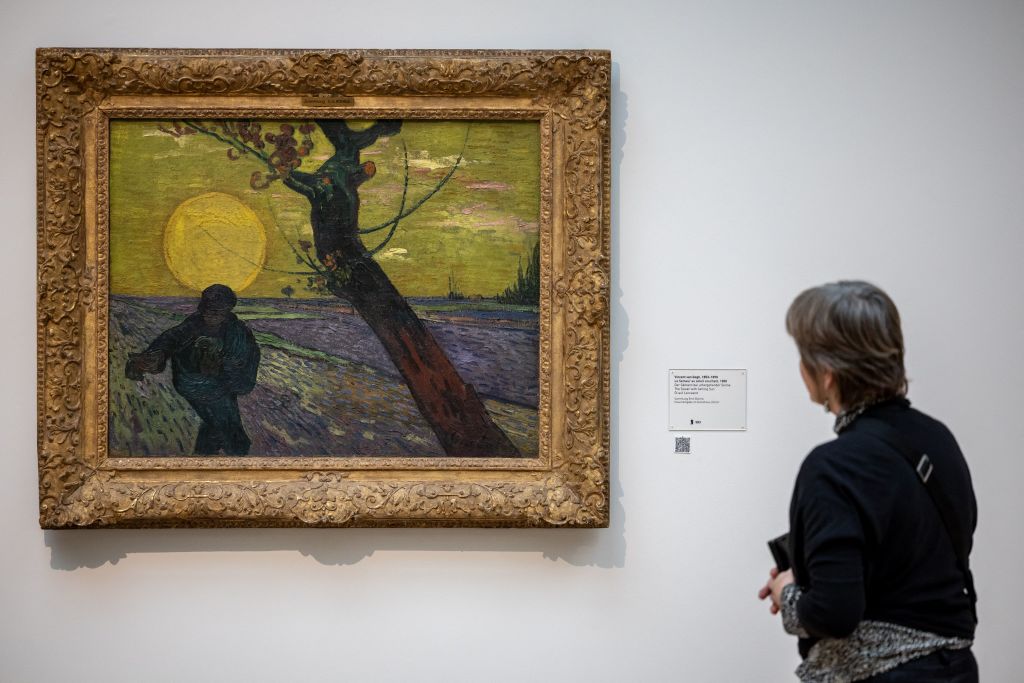
In the heart of Paris, the Musée d’Orsay has unveiled a permanent gallery that transforms the act of viewing art into an act of historical interrogation. The new space, titled “À qui appartiennent ces œuvres ? / Who Do These Works Belong To?”, does not merely showcase masterpieces; it exposes the gaps in their history, focusing specifically on artworks that were looted by the Nazis and their collaborators during World War II but remain without identified owners.
This initiative marks a significant shift in how one of the world’s most prestigious institutions handles the Nazi looted art Musée d’Orsay holds within its walls. By moving these pieces from the silence of archives into the direct sightline of the public, the museum is attempting to turn the gallery into a living tool for restitution, inviting descendants of the original owners to recognize their family’s lost heritage.
The artworks on display are part of the Musées Nationaux Récupération (MNR) collection. These are pieces that were recovered by the French state at the end of the war but were never successfully returned to their rightful owners. For decades, many such works remained in state custody, often tucked away in storage or displayed without clear acknowledgment of their contested provenance. The opening of this dedicated space signals a move toward radical transparency in the face of one of Europe’s longest-running cultural reckonings.
For the global art community and historians, the gallery is more than a display of aesthetic beauty; it is a physical manifestation of unfinished justice. It acknowledges that while the war ended eight decades ago, the theft of cultural identity—specifically targeting Jewish collectors, museums, and institutions—continues to cast a shadow over European heritage.
The MNR Collection: A Legacy of Displacement
To understand the significance of the new gallery, one must first understand the nature of the Musées Nationaux Récupération (MNR). The MNR is not a traditional museum collection but rather a category of artworks recovered after 1945 that the French state holds in trust. These works were systematically seized by Nazi authorities and the Vichy regime, which collaborated with German forces to strip Jewish citizens of their property, a process known as spoliation.
The process of restitution is often hampered by the destruction of records during the war and the systemic erasure of families during the Holocaust. Provenance research—the detailed study of an object’s ownership history—is a painstaking process that requires tracing sales, wills, and exhibition catalogs across multiple borders and languages. Because many heirs were murdered in concentration camps or displaced globally, the chain of ownership was frequently broken.
By placing these works in a public gallery, the Musée d’Orsay is effectively crowdsourcing the search for heirs. The museum’s goal is to make these objects visible to a global audience, hoping that a photograph or a description might trigger a memory or a discovery within a family archive, eventually leading to a formal claim for restitution.
The Role of the CIVS in Cultural Restitution
The process of returning these works is not handled by the museum alone but is governed by a rigorous legal and ethical framework. Central to this is the Commission for the Compensation of Victims of Spoliation (CIVS). This national restitution commission is tasked with evaluating claims involving looted cultural property and recommending returns when ownership can be established through credible evidence.
The CIVS operates on the principle that the state’s responsibility is to facilitate the return of property to the rightful heirs. When a claim is filed, the commission reviews provenance documents to verify the link between the claimant and the original owner. If the claim is validated, the work is removed from the MNR collection and returned to the family, often after a period of official deliberation and government decree.
This systemic approach is part of a broader European effort to confront the aftermath of Nazi-era confiscations. As detailed by the United States Holocaust Memorial Museum, the Nazi program of art looting was a coordinated effort to strip communities of their cultural identity while redistributing wealth through state-sanctioned channels and black markets.
A Paradigm Shift in Museum Ethics
The decision to embed a gallery of “unresolved” art within a major national museum reflects a evolving philosophy in the curatorial world. For much of the 20th century, museums viewed their collections as settled heritage—assets to be preserved and displayed as part of a national narrative. However, there is a growing movement to treat contested collections as ongoing historical records.
Art historians suggest that the Musée d’Orsay’s approach treats the artwork not just as an object of beauty, but as a witness to a crime. By labeling the works with their incomplete histories, the museum acknowledges that the current state of possession is provisional. The gallery does not claim ownership; it admits a lack of knowledge, shifting the museum’s role from “owner” to “temporary custodian.”
This shift is particularly poignant given the types of works involved. When a painting by a master like Renoir or Degas is displayed under the question “Who owns this work?”, the focus shifts from the artist’s genius to the victim’s loss. It forces the visitor to confront the reality that the art world’s prestige was often built upon the ruins of systemic persecution.
What This Means for Future Restitution
The “Who Do These Works Belong To?” gallery is expected to serve as a model for other European institutions grappling with similar legacies. The integration of provenance research into the public experience transforms the museum from a static repository into an active site of investigation.
For potential claimants, the existence of this gallery provides a clear point of entry. The museum encourages anyone with information regarding the ownership of these pieces to come forward. This process is supported by the continued work of provenance researchers who utilize digital archives and international databases to bridge the gaps in the MNR records.
The impact of this transparency is twofold: it provides a pathway for the restoration of family legacies and it educates the public on the mechanisms of the Holocaust. It ensures that the story of the art is inseparable from the story of the people who were forced to lose it.
As provenance research continues, the composition of the gallery will inevitably change. Every time a work is restituted, it represents a victory for historical justice, though it also leaves a void in the gallery. For the Musée d’Orsay, however, the goal is for the gallery to eventually empty—a result that would signify the successful resolution of these historical thefts.
The next phase of this effort involves the ongoing review of the remaining MNR pieces and the continued collaboration between the Musée d’Orsay and the CIVS to process pending claims. Updates on restituted works and new additions to the rotating selection of the gallery are typically managed through the museum’s official provenance records and government announcements.
World Today Journal encourages readers to share this story to help reach potential heirs and descendants who may have lost family artworks during the Nazi era.