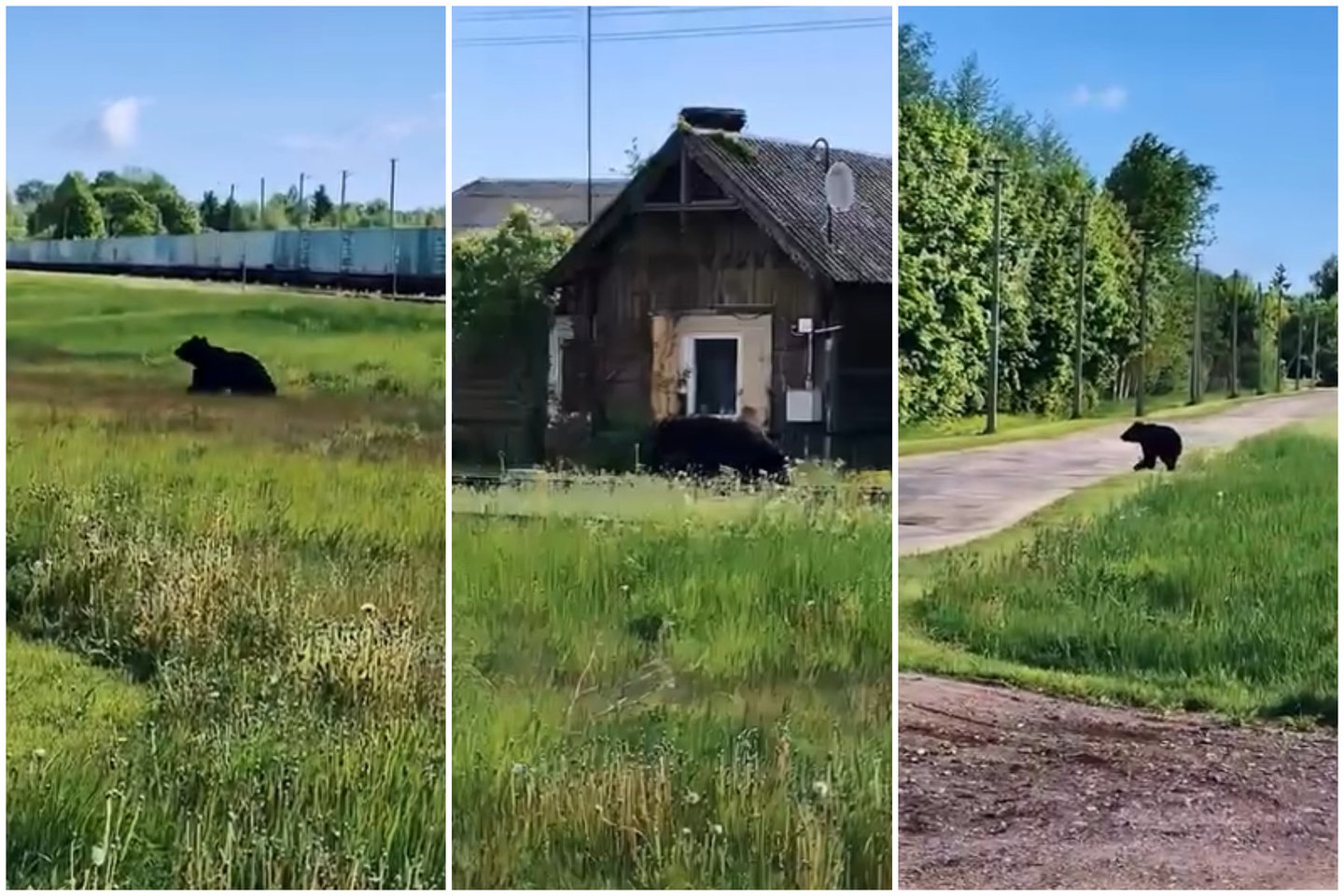
A Rare Visitor in Lithuania’s Aukštaitija: Brown Bear Roams Near Human Settlements
Lithuania’s Aukštaitija region, known for its vast forests and serene lakes, has become an unexpected stage for a rare wildlife drama. A brown bear, an elusive and powerful creature typically associated with the country’s eastern wilderness, has been spotted roaming near populated areas, prompting authorities to issue safety advisories and residents to take precautions. The sighting, confirmed by environmental officials, underscores growing human-wildlife interactions as natural habitats shrink and wildlife ranges expand.
While brown bears are native to Lithuania, their presence near human settlements is uncommon and raises both ecological and safety concerns. The latest sighting, documented in early May 2026, has sparked discussions about how to balance wildlife conservation with public safety in one of Europe’s most biodiverse regions.
The bear was first observed in the Vilniaus district, specifically in the Tarandė area, according to reports from environmental protection authorities. While the exact origin of the bear remains unclear, such sightings are not unprecedented in Lithuania. In recent years, brown bears have been increasingly spotted outside their traditional habitats, often due to changes in food availability or shifts in forest management practices.
Why This Sighting Matters
Brown bears, once nearly extinct in Lithuania due to hunting and habitat loss, have made a slow recovery in recent decades. The country’s eastern regions, including Aukštaitija, now host a small but growing population of these apex predators. However, their presence near human settlements is a relatively new phenomenon, driven by factors such as:
- Habitat fragmentation: Deforestation and urban expansion have pushed bears into areas where they encounter humans more frequently.
- Food availability: Bears may venture closer to towns in search of food, including waste or livestock.
- Climate change: Shifting ecosystems can alter bear behavior and migration patterns.
Environmental authorities have emphasized that while brown bears are generally shy and avoid humans, encounters can turn dangerous if people provoke the animal or fail to follow safety protocols. The latest sighting has led the Aplinkos apsaugos departamentas (Environmental Protection Department) to issue a public advisory urging residents to report any bear sightings immediately and avoid approaching the animal.
Public Safety and Wildlife Management
The Environmental Protection Department has confirmed the bear’s presence and is monitoring the situation closely. In a statement released on May 6, 2026, officials advised residents to:
— Maintain a safe distance from the bear and avoid provoking it.
— Do not attempt to feed, photograph, or chase the bear.
— If the bear approaches, stand tall, raise your arms, and avoid sudden movements.
— Report sightings immediately to emergency services (112 in Lithuania).
While the bear’s long-term behavior remains uncertain, wildlife experts suggest that it may eventually return to more remote areas if food sources in urban environments become scarce. However, the sighting serves as a reminder of the delicate balance between human development and wildlife conservation in Lithuania.
Aukštaitija: A Land of Contrasts
Aukštaitija, Lithuania’s northeastern ethnographic region, is a landscape of stark contrasts. Covering approximately 27,672 square kilometers, it is home to some of the country’s most pristine natural areas, including Aukštaitija National Park, which boasts over 126 lakes and dense forests. The region is also dotted with historic towns such as Panevėžys, Kėdainiai, and Ukmergė, each offering a glimpse into Lithuania’s cultural heritage.
Yet, like much of rural Lithuania, Aukštaitija faces challenges such as depopulation and economic decline. As forests recede and agricultural lands expand, wildlife like the brown bear is increasingly finding itself in closer proximity to human communities. This dynamic is not unique to Lithuania. across Europe, urbanization and climate change are reshaping ecosystems and forcing unexpected encounters between humans and wildlife.
Brown Bears in Lithuania: A Fragile Recovery
Brown bears once roamed freely across much of Europe, but by the early 20th century, they had been hunted to near extinction in Lithuania. Conservation efforts in the latter half of the century helped stabilize populations, particularly in the country’s eastern regions. Today, Lithuania is estimated to host between 300 and 500 brown bears, with most living in the eastern forests near the borders with Belarus and Latvia.
However, the bears’ recovery has not been without challenges. Poaching, habitat loss, and human-wildlife conflicts continue to threaten their survival. The recent sighting in Aukštaitija is a testament to the bears’ resilience but also highlights the need for better wildlife management strategies to prevent future conflicts.
What Residents Should Do
Given the potential risks associated with bear encounters, authorities have outlined several precautions for residents in Aukštaitija and other affected regions:
- Report sightings: Contact emergency services (112) or local environmental authorities immediately if a bear is spotted.
- Avoid feeding wildlife: Feeding bears or other wildlife can make them more aggressive and dependent on human food sources.
- Secure livestock and waste: Bears may be attracted to farms or garbage if food is easily accessible.
- Stay informed: Follow updates from the Environmental Protection Department and local media for the latest advisories.
Expert Perspectives on Human-Wildlife Coexistence
Wildlife biologists and environmental experts emphasize that while encounters with brown bears are rare, they are not impossible. Dr. Jonas Virbickas, a conservation specialist at Vilnius University, notes that such sightings are often a sign of broader ecological changes.

“The presence of a brown bear near human settlements is a clear indicator that our natural spaces are shrinking. While we cannot eliminate all human-wildlife interactions, we can take steps to minimize risks and ensure that both people and wildlife thrive.”
— Dr. Jonas Virbickas, Conservation Specialist, Vilnius University
Dr. Virbickas and other experts stress the importance of long-term conservation efforts, including habitat protection, anti-poaching measures, and public education. They also advocate for better infrastructure to reduce human-bear conflicts, such as secure waste disposal systems and livestock protection measures.
What Happens Next?
The Environmental Protection Department is currently tracking the bear’s movements and assessing the risks it poses to local communities. While officials have not yet confirmed whether the bear will remain in the area or return to its natural habitat, they are working with local authorities to monitor the situation.
Residents are encouraged to stay vigilant and report any unusual activity. For the latest updates, follow official channels from the Environmental Protection Department or local news outlets.
Key Takeaways
- A brown bear has been spotted near populated areas in Lithuania’s Aukštaitija region, raising safety concerns.
- The sighting underscores the challenges of wildlife conservation in a changing landscape.
- Authorities advise residents to maintain a safe distance from the bear and report sightings immediately.
- Long-term solutions include habitat protection, anti-poaching efforts, and public education.
- Brown bears are native to Lithuania but are increasingly encountered outside their traditional habitats.
Have you encountered wildlife in unexpected places? Share your experiences in the comments below or join the conversation on social media. For more updates on this story, visit World Today Journal.