
The promise of artificial intelligence has long been shadowed by one stubborn problem: its enormous appetite for energy. As AI models grow more complex, the data centers that power them consume electricity at rates that strain both budgets and the planet. Now, a development emerging from research labs in the UK offers a potential path forward—one that takes its cues not from traditional computing architecture, but from the most efficient processor we know: the human brain.
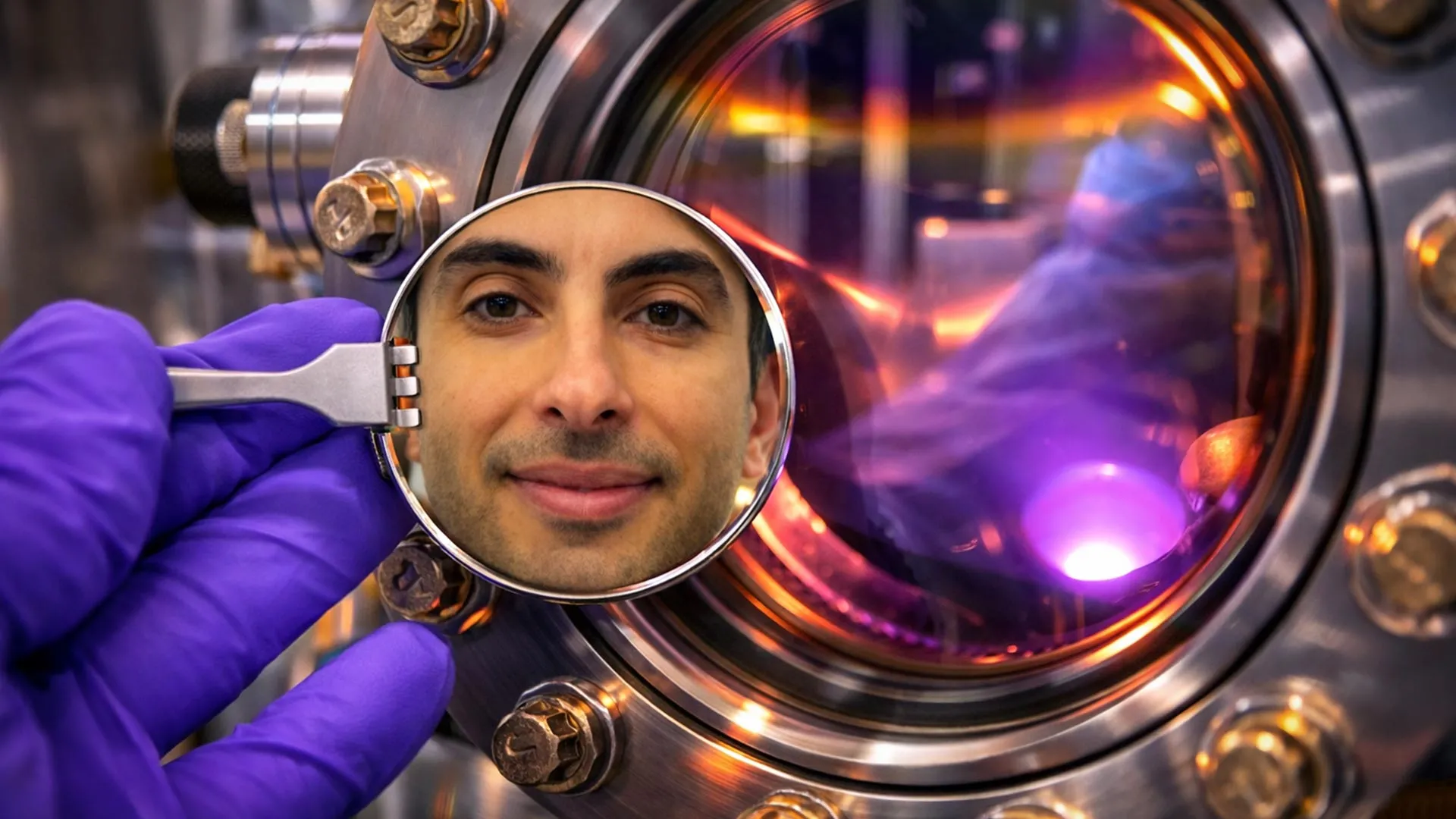
Scientists at the University of Cambridge have engineered a nanoelectronic device using a modified form of hafnium oxide that behaves like a synapse in the brain, processing and storing information in the same place. This design eliminates the need to constantly shuttle data between separate memory and processing units—a major source of inefficiency in conventional chips. By mimicking the brain’s integrated approach, the device operates with ultra-low power consumption, and researchers say it could reduce the energy used by AI hardware by as much as 70%.
The innovation centers on a material called hafnium oxide, which, when engineered with precise atomic-level modifications, can act as a stable and reliable memristor. Memristors are electrical components that regulate current while retaining a memory of the charge that has passed through them—much like how neurons strengthen or weaken their connections based on activity. In the brain, this process allows for learning and adaptation with minimal energy. The Cambridge team’s version maintains this behavior even after billions of switching cycles, addressing a key hurdle that has limited the practical use of memristors in computing.
According to the researchers, the device’s performance stems from its ability to switch states using extremely low currents, reducing the energy lost as heat during operation. Unlike traditional silicon transistors that require significant voltage to change states, this hafnium oxide-based memristor responds to subtle electrical shifts, enabling computation that is both fast and frugal. The stability of the material as well means it can endure the relentless cycling demanded by AI workloads without degrading—a critical factor for real-world deployment.
How Brain-Inspired Computing Differs from Traditional Chips
Most modern computers follow the von Neumann architecture, where processing and memory are physically separate. This separation creates a bottleneck known as the “von Neumann bottleneck,” where energy and time are wasted moving data back and forth between chips. For AI applications, which rely on vast networks of interconnected operations mimicking neural pathways, this inefficiency is amplified. Each adjustment to a neural network’s weights—equivalent to strengthening a synaptic connection—requires fetching data from memory, processing it, and sending it back, repeating millions or billions of times.
The brain, by contrast, does not separate storage and computation. Synapses both process signals and retain information through changes in their physical and chemical state. When a signal passes, the synapse adjusts its conductivity, embedding the experience directly into its structure. This co-location of function minimizes movement and maximizes efficiency. The Cambridge team’s hafnium oxide memristor seeks to replicate this principle in solid-state form, creating a nanoscale device where computation and memory happen in the same physical space.
Lab tests have shown that the device can perform analog switching—gradually adjusting its resistance rather than flipping strictly between on and off states—much like a biological synapse. This capability is essential for implementing neuromorphic computing models, which aim to replicate the brain’s efficiency in hardware. By enabling gradual, energy-efficient updates to connection strengths, the memristor could support AI systems that learn continuously without the prohibitive power costs of current training methods.
Materials Science Breakthrough Enables Stability
One of the persistent challenges in developing memristor-based systems has been material instability. Early versions often suffered from unpredictable behavior, degradation after repeated use, or sensitivity to environmental factors like temperature and humidity. These flaws made them unsuitable for the rigorous demands of commercial AI applications, where devices must operate reliably for years under constant load.
The Cambridge researchers overcame this by carefully controlling the oxygen vacancy distribution within thin films of hafnium oxide. By introducing precise imperfections at the atomic level, they created a material that consistently forms and dissolves conductive filaments in response to low-voltage signals. This controlled filament movement is what allows the memristor to switch states reliably and retain those states over time. The result is a device that maintains its switching characteristics even after more than a billion cycles—a benchmark far exceeding the endurance of earlier attempts.
This level of stability brings the technology closer to viability for integration into AI accelerators. While manufacturing still requires temperatures that are high by industry standards, the material’s compatibility with existing semiconductor fabrication processes offers a plausible route to scaling. Researchers note that further refinements could lower processing temperatures, making the technology more attractive for adoption by chip foundries.
Implications for AI Energy Consumption and Sustainability
If successfully scaled, brain-inspired memristors like this one could significantly alter the energy profile of AI infrastructure. Training large language models currently demands megawatts of power, often sourced from grids still reliant on fossil fuels. Inference—the process of running trained models to generate responses—also consumes substantial energy, especially as AI becomes embedded in everyday devices from smartphones to automobiles.
A 70% reduction in energy use per operation, as suggested by the researchers, would not only lower operational costs for tech companies but also decrease the carbon footprint associated with AI deployment. For data centers, which already account for about 1% of global electricity demand according to the International Energy Agency, such savings could compound rapidly across millions of servers. Even partial adoption of neuromorphic elements in hybrid systems could yield meaningful improvements in efficiency.
Beyond data centers, low-power AI hardware could enable more sophisticated on-device processing, reducing reliance on cloud connectivity. This would benefit applications in healthcare, autonomous systems, and edge computing, where latency, privacy, and battery life are critical. By bringing brain-like efficiency to the hardware level, innovations like the hafnium oxide memristor could help democratize access to advanced AI while making it more environmentally sustainable.
Next Steps and Ongoing Research
The Cambridge team continues to refine the material’s properties and explore integration pathways with existing chip designs. Their function is part of a broader international effort to develop neuromorphic computing technologies, supported by funding from UK research councils and collaborations with semiconductor industry partners. While no commercial timeline has been announced, the researchers emphasize that recent progress in material science and nanofabrication is bringing brain-inspired computing closer to practical realization.
For now, the device remains a laboratory prototype, but its performance metrics offer a compelling proof of concept. As the demand for AI continues to grow, so too does the urgency to find computing models that can scale without unsustainable energy costs. By looking to the brain—not as a metaphor, but as a blueprint—scientists are uncovering modern ways to build machines that learn efficiently, adapt continuously, and operate within the planet’s limits.
If you’ve followed developments in AI efficiency or neuromorphic engineering, we’d love to hear your thoughts. Share your perspective in the comments below, and consider passing this article along to others interested in how emerging technologies might reshape the future of computing.