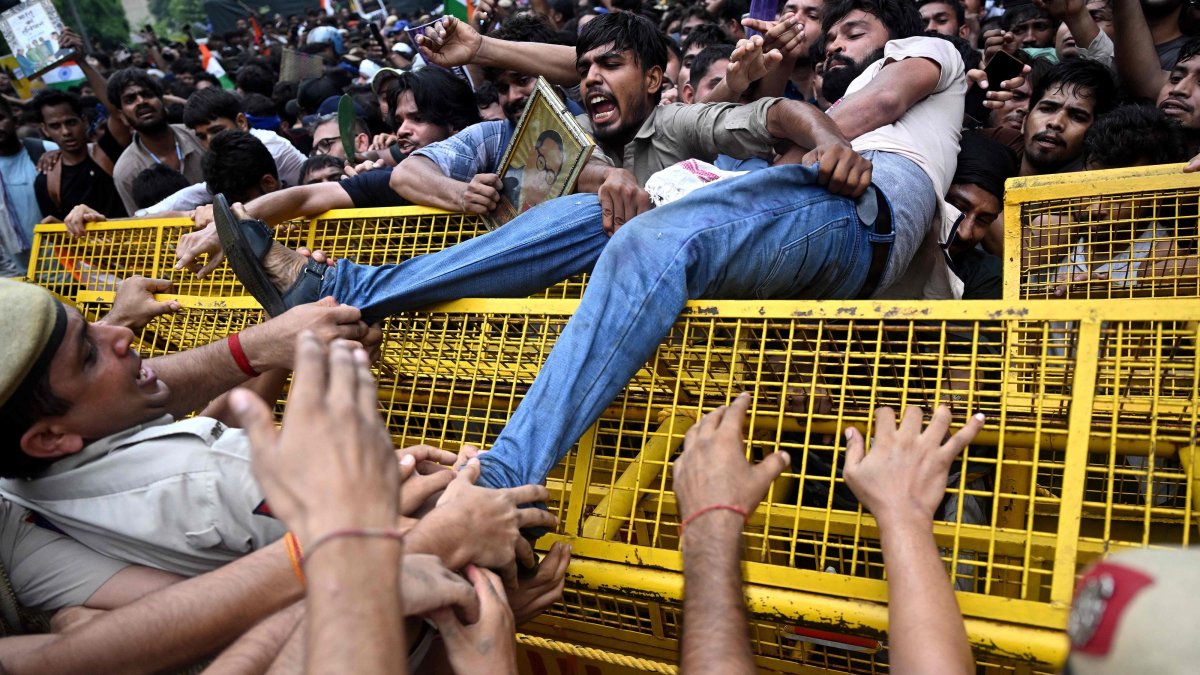
India’s political landscape is undergoing a notable shift as economic pressures increasingly challenge entrenched identity politics, testing the electoral durability of Prime Minister Narendra Modi’s administration. According to recent political analysis and electoral data, voters across key constituencies are placing immediate concerns over unemployment, inflation, and stagnant wage growth ahead of traditional ideological alignments. This reorientation comes as the ruling Bharatiya Janata Party (BJP) navigates a more complex legislative environment following recent electoral setbacks, prompting policymakers to recalibrate their approach to economic development and job creation.
For more than a decade, political analysts have tracked how the BJP successfully consolidated a broad Hindu nationalist voting bloc, often referred to as Hindutva, blending cultural nationalism with ambitious welfare distribution. Yet, recent electoral outcomes in crucial states suggest that persistent youth unemployment and cost-of-living pressures are creating friction within this coalition. Economists note that while direct-benefit transfers have provided a vital safety net for millions of low-income households, they do not fully substitute for formal, sustainable private-sector employment. As the government prepares for upcoming fiscal policy announcements, lawmakers face mounting demands to demonstrate tangible progress in manufacturing growth and labor-market expansion.
The tension between cultural identity appeals and bread-and-butter economic issues is visible in both urban centers and rural districts, where young job seekers report growing frustration with the pace of formal hiring. According to labor statistics released by the Centre for Monitoring Indian Economy (CMIE), urban unemployment rates remain a central point of contention for middle-class and working-class families alike. Opposition parties have increasingly seized on these economic vulnerabilities, shifting campaign narratives toward job creation, public sector vacancies, and educational reform. In response, federal ministries have ramped up capital expenditure on infrastructure projects designed to stimulate construction jobs and attract foreign direct investment.
Economic Realities Reshape Electoral Priorities
The pivot from identity-centric campaigns to economic pragmatism reflects a maturing electorate where a significant demographic cohort enters the workforce each year. According to demographic projections cited by the International Labour Organization (ILO), India adds millions of young people to its working-age population annually, making job creation the defining metric of governance. Analysts point out that when economic growth fails to translate into quality employment, voters become less responsive to cultural appeals. This dynamic was visibly demonstrated in recent state legislative contests, where local economic grievances overshadowed national identity messaging.
Industry leaders and financial analysts emphasize that long-term political stability in New Delhi will depend heavily on the successful execution of industrial policies like production-linked incentive (PLI) schemes. These initiatives aim to position India as a global manufacturing alternative in electronics, automotive components, and renewable energy technology. However, scaling these sectors to absorb the massive influx of job seekers requires sustained regulatory reforms, land acquisition easing, and improved workforce training. Business advocacy groups continue to press for deeper structural changes to lower the cost of doing business and encourage private investment beyond traditional industrial hubs.
Policy Responses and Future Outlook
In light of these shifting voter priorities, the Union Ministry of Finance and related economic bodies are under intense scrutiny to deliver budgets that prioritize job-intensive growth. Government officials have defended their economic record by pointing to highway expansions, digital public infrastructure advancements, and targeted financial inclusion programs as foundational steps for economic resilience. At the same time, regional leaders within the ruling coalition are increasingly vocal about the need to address local employment disparities to maintain their electoral base against resurgent opposition parties.
The next major milestone for the administration’s economic agenda will arrive with the presentation of upcoming parliamentary budget sessions and midterm economic reviews, where fiscal allocations for manufacturing and vocational education will face rigorous legislative debate. Observers will monitor whether these policy adjustments can successfully reconcile the government’s foundational ideological commitments with the urgent, practical demands of an employment-seeking populace. Stakeholders seeking official updates on labor data, fiscal policy documents, and parliamentary schedules can consult the official portals of the Ministry of Statistics and Programme Implementation and the Lok Sabha.
Keep reading