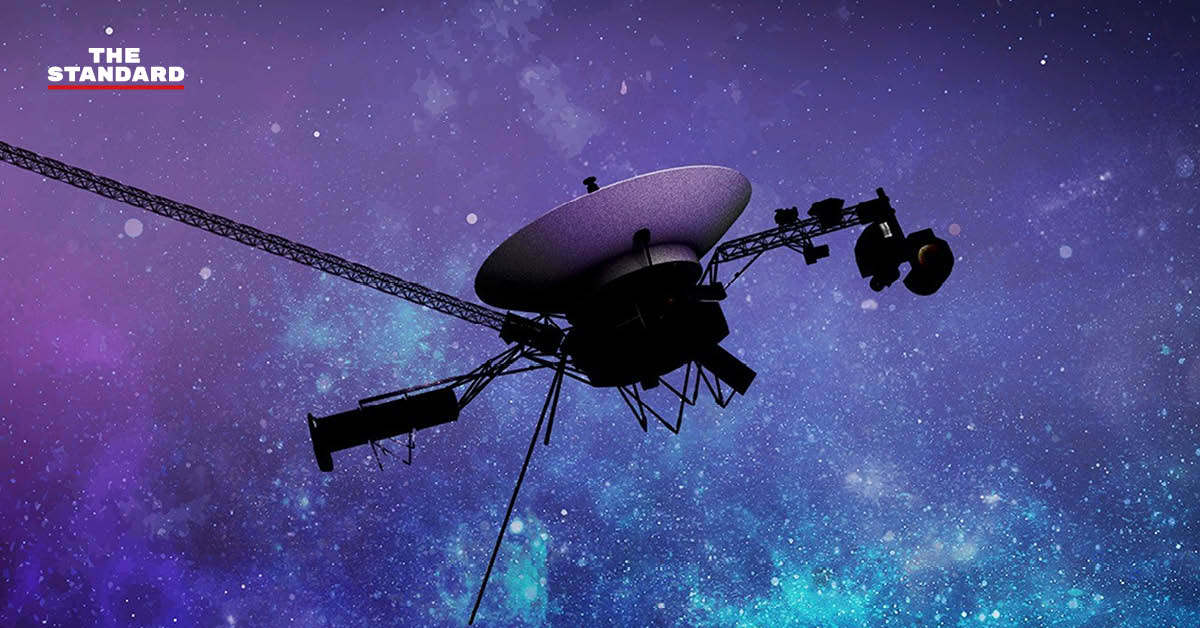
NASA has taken another step to preserve the longevity of Voyager 1, the most distant human-made object in space, by shutting down additional systems aboard the spacecraft to conserve its dwindling power supply. As the probe continues its journey through interstellar space, mission engineers are making careful adjustments to ensure it can continue transmitting valuable scientific data for as long as possible.
The decision to deactivate more instruments comes as Voyager 1’s radioisotope thermoelectric generator, which converts heat from decaying plutonium-238 into electricity, continues to lose output after more than 47 years in space. With power levels now too low to support all onboard systems simultaneously, NASA has prioritized keeping the spacecraft’s core communication and data collection functions active while turning off non-essential heaters and instruments.
Launched in 1977 alongside its twin Voyager 2, Voyager 1 crossed the heliopause in 2012, becoming the first human-made object to enter interstellar space. Since then, it has provided unprecedented insights into the boundary between our solar system and the wider galaxy, measuring cosmic rays, magnetic fields, and plasma density in a region no other spacecraft has reached.
According to NASA’s Jet Propulsion Laboratory, which manages the Voyager mission, the spacecraft currently operates on less than half the power it had at launch. To extend its operational life, engineers have implemented a series of power-saving measures, including the recent shutdown of the plasma wave subsystem’s heater, which was no longer deemed critical for maintaining instrument functionality in the cold environment of deep space.
“Every watt counts now,” said Suzanne Dodd, Voyager project manager at JPL, in a 2023 interview with NASA. “We’re making strategic trade-offs to keep the mission alive. The goal is to get as much science as One can from this unique vantage point.”
The plasma wave subsystem, which detects oscillations in plasma caused by solar events and interstellar shocks, remains functional without its heater, as the instrument can operate within acceptable temperature ranges using residual heat from nearby electronics. This allows the team to preserve power while maintaining the ability to detect key phenomena in the interstellar medium.
Voyager 1 continues to return data from its remaining active instruments, including the magnetometer, low-energy charged particle instrument, and cosmic ray subsystem. These tools help scientists understand how the Sun’s influence diminishes with distance and how interstellar space interacts with the heliosphere’s outer edge.
As of early 2024, Voyager 1 is approximately 163 astronomical units from Earth—over 15 billion miles away—meaning radio signals accept more than 22 hours to travel one way. Despite the vast distance, the spacecraft still communicates with Earth via NASA’s Deep Space Network, though its signal grows progressively fainter as power diminishes.
Power Management Strategy for Long-Term Survival
NASA’s approach to extending Voyager 1’s life involves a carefully sequenced shutdown of non-essential systems, beginning with heaters and moving toward instrument deactivation only if absolutely necessary. The mission team has already turned off several systems over the years, including the ultraviolet spectrometer in 1998 and the data tape recorder in 2007, to conserve energy.
More recently, in 2023, engineers powered down the heater for the cosmic ray subsystem after determining it could operate within safe thermal limits without active heating. The latest action—disabling the plasma wave subsystem heater—follows the same principle of evaluating whether each component can endure the ambient cold of deep space, which averages around -45 degrees Fahrenheit (-43 degrees Celsius).
These decisions are based on extensive thermal modeling and decades of operational data. Engineers monitor temperatures and power draw in real time, adjusting strategies as conditions evolve. The goal is not merely to keep the spacecraft alive, but to ensure it continues to return scientifically meaningful data.
“We’re not just trying to survive—we’re trying to do useful science,” Dodd emphasized in a 2022 briefing. “If we can keep even one instrument returning quality data, that’s a win.”
Current projections suggest that with careful power management, Voyager 1 could remain operational into the early 2030s, potentially allowing it to detect changes in the interstellar environment as the Sun’s magnetic field continues to weaken with distance.
Scientific Value of the Interstellar Mission
Voyager 1’s ongoing mission provides a unique opportunity to study the local interstellar medium—the gas, dust, and cosmic rays that fill the space between stars—without the confounding influence of the solar wind. This region shapes the environment through which future interstellar probes may one day travel.
Data from the spacecraft has already revealed unexpected complexities, such as a stagnation region just beyond the heliopause where solar and interstellar winds interact in unpredictable ways. More recent observations have shown fluctuations in cosmic ray intensity that may be tied to solar activity cycles, even at such vast distances.
The magnetometer continues to measure the interstellar magnetic field’s orientation and strength, helping researchers understand how the galaxy’s magnetic structure influences particle acceleration and cosmic ray propagation. Meanwhile, the low-energy charged particle instrument tracks the flow of ions and electrons, offering clues about energy transfer processes in interstellar space.
These measurements are vital for validating models of our galaxy’s structure and dynamics. They also inform the design of future missions, such as the proposed Interstellar Probe, which aims to travel even farther and faster than the Voyagers to explore the origins and evolution of our cosmic neighborhood.
Despite its age, Voyager 1 remains one of the few direct sensors we have in interstellar space. No other spacecraft has reached this region, and none are expected to do so for decades, making its continued operation scientifically invaluable.
Challenges of Deep Space Operations
Maintaining contact with a spacecraft billions of miles away presents unique technical challenges. As Voyager 1’s power decreases, so does the strength of its radio signal, requiring larger antennas and longer listening sessions from the Deep Space Network to detect and decode its transmissions.
Voyager 1 is now over 15 billion miles from Earth. Its signal is incredibly faint — like trying to detect the power level of a refrigerator bulb from across the universe. Yet we still hear it. https://t.co/0l1Zx5JZqG
— NASA Jet Propulsion Laboratory (@NASAJPL) February 15, 2023
Engineers must also account for the gradual degradation of components over time. While the spacecraft was designed for a four-year mission, its systems have far exceeded expectations due to robust engineering and redundant design. However, age-related wear, such as potential corrosion or sensor drift, remains a factor in long-term planning.
Communication delays complicate real-time troubleshooting. A command sent from Earth takes over 22 hours to reach Voyager 1, and another 22 hours for a response to return. This means the mission team must plan actions days in advance and rely heavily on pre-programmed fault protection routines to handle anomalies autonomously.
Despite these challenges, the spacecraft has demonstrated remarkable resilience. In November 2023, Voyager 1 experienced a temporary issue with its flight data system that caused it to send repeating patterns of code instead of science data. After months of diagnosis, engineers identified a corrupted memory section and successfully bypassed it by rerouting data through healthy hardware—a testament to the ingenuity of the mission team.
What’s Next for the Voyager Mission
As of mid-2024, NASA has not announced any additional instrument shutdowns beyond the plasma wave subsystem heater. The mission team continues to evaluate power allocation on a quarterly basis, weighing the scientific value of each active instrument against the rate of power decline.
The next major milestone will be the periodic assessment of the spacecraft’s ability to maintain attitude control and point its high-gain antenna toward Earth. This requires power for heaters that keep hydrazine fuel lines from freezing, which is essential for firing thrusters that adjust orientation.
If power levels drop too low to sustain both science operations and thermal control, engineers may face the difficult decision of prioritizing one over the other. However, current projections suggest that both functions can be maintained with careful management through at least 2027, with potential extensions beyond that depending on actual decay rates.
Voyager 2, which launched a few weeks after its twin, remains operational as well and has also entered interstellar space. It follows a different trajectory and provides complementary data, allowing scientists to study large-scale structures in the heliosphere’s outer layers.
Together, the two Voyagers represent humanity’s farthest-reaching exploratory effort—a testament to decades of innovation, perseverance, and curiosity. As they continue their silent journey through the dark between stars, they carry with them not only scientific instruments but also the Golden Records, a message to any potential extraterrestrial listeners that might one day encounter them.
Their mission reminds us that exploration is not just about reaching new places, but about enduring long enough to learn what those places have to teach.
For updates on the Voyager mission’s status, power levels, and latest science findings, visit NASA’s official Voyager website or follow the Jet Propulsion Laboratory’s mission news page.
What do you think about humanity’s most distant emissaries continuing their journey after nearly half a century? Share your thoughts in the comments and spread the word if you found this story inspiring.
Worth a look
- Google Cloud, SnapLogic, and Appian Launch New Enterprise AI Agent Platforms
- Honor Unveils New Logo and Shifts Focus to Open AI Ecosystem
- Spy Shots: Ferrari 12Cilindr, BMW i4 Convertible and Range Rover Sport – Specialty Equipment Market (archyde.com)
- Chad Powers Season 2 Release Date Set for September 3 on Hulu (time.news)