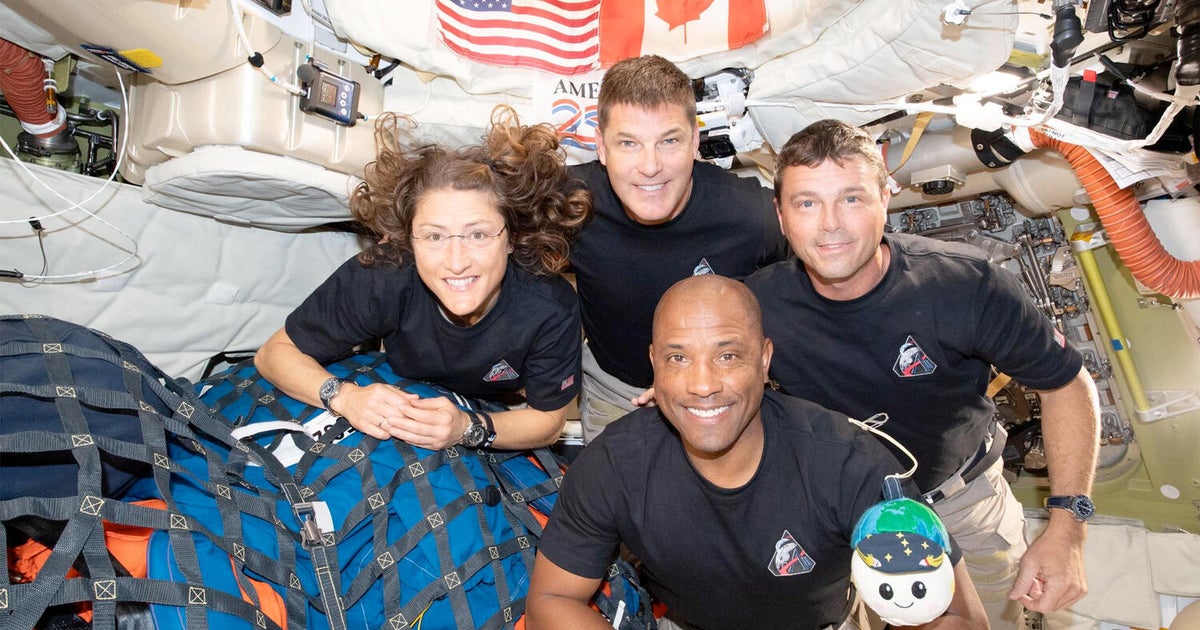
The tension is palpable today, Friday, April 10, 2026, as the world holds its breath for the return of four pioneers. After a daring 10-day journey around the moon, the crew of the Artemis II mission is currently awake and making final preparations for a high-velocity reentry into Earth’s atmosphere. While the mission is a triumph of engineering and physics, it is the human elements—the music, the camaraderie, and the grit—that are capturing the global imagination.
As part of the mission’s cultural footprint, NASA has highlighted the “moon music tradition,” a practice spanning more than 50 years of space exploration. By sharing the Artemis II crew’s playlist this week, the agency has offered a glimpse into the sonic landscape that accompanied the first crewed flight beyond low Earth orbit since 1972. For a crew venturing into the silent void, these wake-up songs serve as more than just entertainment; they are a vital psychological link to home.
The mission, which launched on April 1, 2026, represents a pivotal leap for humanity’s return to the lunar surface and eventual missions to Mars. Aboard the Orion spacecraft, named Integrity by its crew, astronauts Reid Wiseman, Victor Glover, Christina Koch, and Jeremy Hansen have spent the last several days testing deep space systems and pushing the boundaries of human endurance. Now, they face the most perilous stage of their journey: the plunge back to Earth.
The Soundtrack of a Lunar Flyby
Music has long been a staple of astronaut life, used to maintain morale and signal the start of a new operational day. The tradition of “wake-up calls” began decades ago, with mission control selecting songs to greet astronauts as they stirred from sleep in orbit. With the release of the Artemis II playlist, NASA continues this legacy, acknowledging that the emotional resonance of music is as essential to mission success as the fuel in the Space Launch System (SLS) rocket.

The selection of songs for the 10-day flyby reflects the diverse backgrounds and tastes of the four-person crew. While the technical specifics of the journey—such as the 694,481 miles traveled—are documented in flight logs, the playlist provides a more intimate narrative of the crew’s experience. This blend of official mission objectives and personal touchpoints is what transforms a scientific expedition into a global cultural event.
High-Stakes Reentry: The Final Hurdle
The celebration of music is currently balanced by the extreme technical risks of the return trip. The Artemis II crew is set to become the fastest human beings in history, hitting the Earth’s atmosphere at approximately 25,000 miles per hour (40,000 kilometers per hour). According to reports from Live Science, reentry is scheduled for approximately 7:53 p.m. EDT today.
The primary concern during this phase is the Orion capsule’s heat shield. Designed to withstand temperatures reaching 2,800 degrees Celsius (5,000 degrees Fahrenheit), the shield is a critical point of failure. This particular piece of hardware has been under scrutiny because the heat shield used during the uncrewed Artemis I mission partially cracked upon reentry. The success of Integrity‘s shield is the only thing standing between the crew and the incinerating friction of the atmosphere.
If the reentry sequence holds, the crew is expected to splash down in the Pacific Ocean near San Diego at roughly 8:07 p.m. EDT (5:07 p.m. PDT). The recovery operation will be led by the USS John P. Murtha, which is positioned to retrieve the capsule and its crew shortly after they hit the water.
The Unglamorous Side of Deep Space
While the “moon music” and the stunning astrophotography captured during the flyby provide a polished image of space travel, the reality aboard Integrity has included some less poetic challenges. In a candid update shared during final reentry preparations, NASA’s Jacki Mahaffey, the Artemis II chief training officer, coordinated the stowing of a “collapsable contingency urinal” (CCU).
The CCU became a necessary tool after the mission’s space toilet suffered a notorious malfunction. Astronaut Christina Koch confirmed to mission control that the CCU had been sealed inside two ziploc bags to ensure it remained inaccessible and secure during the violent vibrations of reentry. This detail serves as a stark reminder that deep space exploration is often a struggle between cutting-edge science and basic human needs.
Artemis II Mission Timeline and Key Data
| Event/Metric | Detail | Date/Value |
|---|---|---|
| Launch Date | Kennedy Space Center, LC-39B | April 1, 2026 |
| Closest Lunar Approach | Distance: 4,067 miles | April 6, 2026 |
| Spacecraft | Orion CM-003 (Integrity) | Lockheed Martin / Airbus |
| Reentry Speed | Atmospheric Entry | ~25,000 mph |
| Planned Splashdown | Pacific Ocean (near San Diego) | April 10, 2026 |
Defining the Legacy of Artemis II
The Artemis II mission is more than a test flight; it is a demonstration of “human deep space capabilities.” By sending a crew of four—including the first woman and first person of color to venture around the moon—NASA is redefining who gets to explore the cosmos. The crew consists of Reid Wiseman, Victor Glover, Christina Koch, and Jeremy Hansen.
The mission’s success paves the way for Artemis III, which aims to return humans to the lunar surface for the first time in over half a century. The data gathered during this flyby—from the performance of the SLS rocket to the endurance of the crew—will be used to refine the safety protocols for future landings at the lunar South Pole.
For the entertainment and culture world, Artemis II proves that the “space race” is no longer just about geopolitical dominance, but about the shared human experience. From the specific songs that wake an astronaut up in the dark of space to the improvised solutions for a broken toilet, these stories humanize the vastness of the void.
The next official checkpoint is the live splashdown broadcast, with NASA’s official stream beginning at 6:30 p.m. EDT today. The world will be watching to see if the Integrity and its crew return safely to the Pacific.
What songs would you include on your own lunar playlist? Share your picks in the comments below and let us know if you’ll be watching the splashdown live.