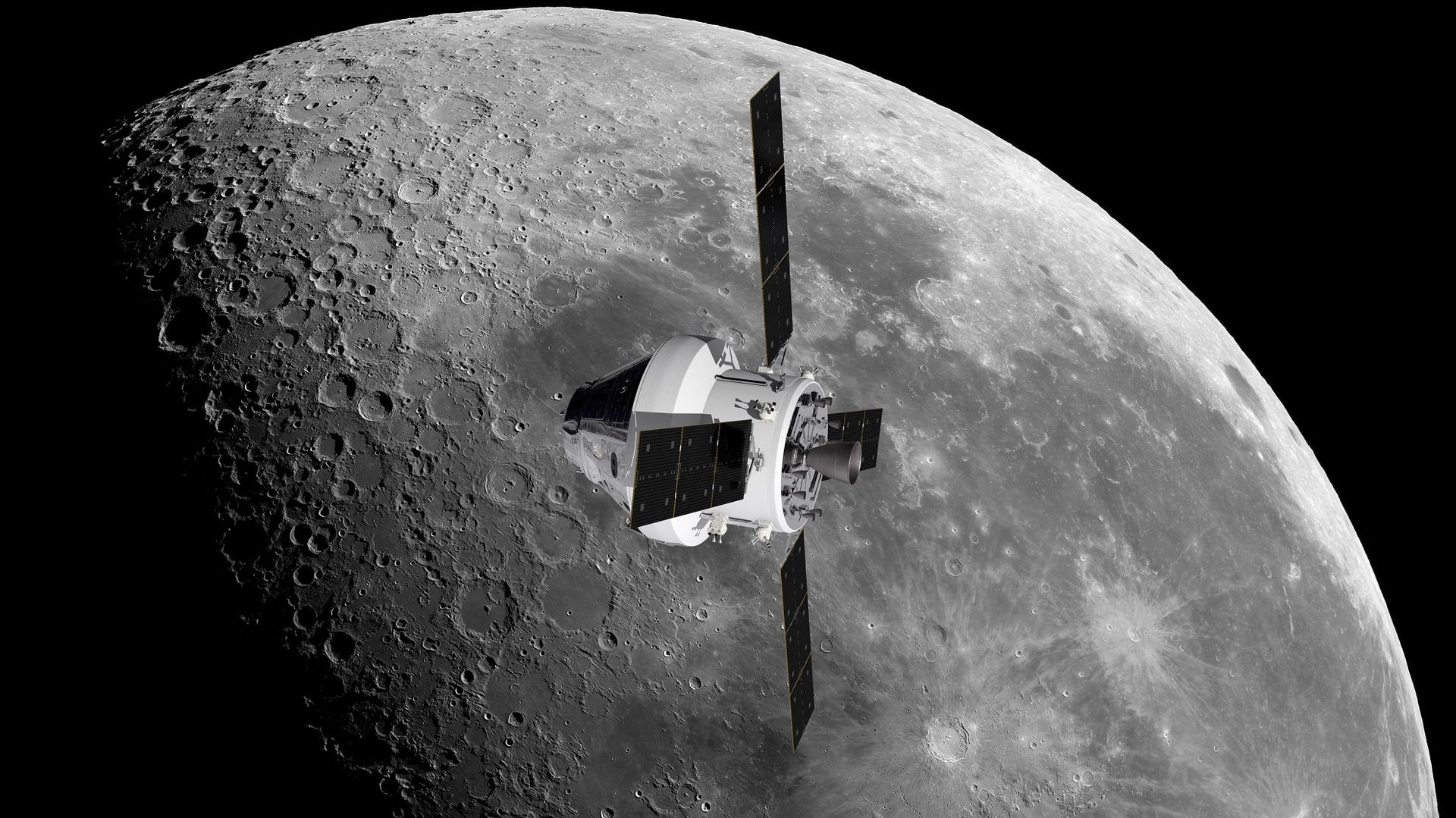
The dream of returning humans to the vicinity of the Moon is rapidly gaining momentum. NASA has announced that the Artemis 2 mission, a crewed flight intended to orbit the Moon, is scheduled to launch on March 7th. This mission echoes the early phases of the Apollo program, where orbital flights paved the way for the historic lunar landings.
This upcoming mission represents a significant step in NASA’s broader Artemis program, an ambitious effort to establish a sustainable human presence on the Moon and eventually use it as a stepping stone for future missions to Mars. The Artemis program, named after the Greek goddess of the Moon, aims to land the first woman and the first person of color on the lunar surface. NASA’s Artemis program website provides detailed information about the program’s goals and progress.
Echoes of Apollo: A Familiar Approach
The decision to conduct a crewed lunar orbit mission before attempting a landing is a deliberate callback to the Apollo program. Before Neil Armstrong took “one small step” in 1969, several Apollo missions, including Apollo 8 in December 1968, successfully orbited the Moon, testing spacecraft systems and scouting potential landing sites. Apollo 8, famously, carried astronauts Frank Borman, James Lovell and William Anders, and provided the first human views of the far side of the Moon. The Artemis 2 mission will follow a similar trajectory, providing valuable data and experience for future lunar landing attempts.
The Apollo program itself was initiated in 1961 under the administration of President Eisenhower, with the goal of expanding upon the crewed spaceflight efforts begun with Project Mercury. As detailed in the Wikipedia entry for the Apollo program, the program ultimately cost $25.4 billion and resulted in the collection of 381.7 kg of lunar samples. The success of Apollo laid the groundwork for many of the technologies and techniques used in modern space exploration.
The Artemis 2 Crew and Mission Details
The Artemis 2 mission will carry a crew of four astronauts: NASA astronauts Gregory Wiseman, Victor Glover, and Christina Koch, along with Canadian Space Agency astronaut Jeremy Hansen. The crew will embark on a 10-day mission aboard the Orion spacecraft, launched by the Space Launch System (SLS) rocket. The mission will follow a “free-return trajectory,” utilizing the Moon’s gravity to slingshot the spacecraft back towards Earth, a safety measure that allows for mission abort at any point before lunar orbit insertion.
According to BBC reporting, the launch is scheduled for March 7th in the United States (March 6th elsewhere). The mission will involve orbiting the Moon and then returning to Earth, serving as a crucial test flight for the Orion spacecraft and the SLS rocket. Recent testing of the SLS in February 2026 revealed a hydrogen fuel leak, highlighting the complexities and challenges inherent in spaceflight.
The Space Launch System and Orion Spacecraft
The Space Launch System (SLS) is a powerful, heavy-lift launch vehicle designed to send astronauts and large payloads to deep space. It is the most powerful rocket NASA has ever built. The Orion spacecraft, built by Lockheed Martin, is designed to carry astronauts beyond low Earth orbit and support long-duration deep space missions. The Orion spacecraft is designed for crewed missions to the Moon, Mars, and other destinations.
The Artemis 2 mission will be a critical test of both the SLS and Orion, validating their performance and reliability before the Artemis 3 mission, which is planned to land astronauts on the Moon’s South Pole. The South Pole is of particular interest to scientists due to the presence of water ice, which could potentially be used as a resource for future lunar settlements.
Scientific Objectives and Future Lunar Exploration
While Artemis 2 is primarily a test flight, it will also contribute to scientific understanding of the space environment. The mission will gather data on radiation levels and other factors that could affect astronaut health during long-duration space missions. The data collected will be invaluable for planning future lunar missions and ensuring the safety of astronauts.
The broader goals of the Artemis program extend beyond simply returning to the Moon. NASA aims to establish a sustainable lunar base, allowing for long-term scientific research and the development of technologies for future exploration of Mars. This includes plans for a lunar orbiting station called Gateway, which will serve as a staging point for lunar landings and other missions. The Gateway project is a collaborative effort involving NASA, the European Space Agency (ESA), the Japan Aerospace Exploration Agency (JAXA), and the Canadian Space Agency (CSA).
The Significance of a Free-Return Trajectory
The choice of a free-return trajectory for Artemis 2 is a key safety feature. This trajectory utilizes the Moon’s gravity to naturally return the spacecraft to Earth in the event of a major system failure. As explained in NASA’s Apollo 11 mission overview, this approach provides a ready abort option at any time before lunar orbit insertion, significantly enhancing crew safety. While it limits maneuverability, the increased safety margin is considered crucial for this initial crewed flight.
International Collaboration in Space Exploration
The Artemis program is a testament to the growing importance of international collaboration in space exploration. With contributions from multiple space agencies around the world, the program represents a united effort to push the boundaries of human knowledge and capability. Canada’s participation with astronaut Jeremy Hansen underscores the global nature of this endeavor. The European Space Agency is providing key components for the Orion spacecraft and the Gateway station, while JAXA is contributing to the development of lunar rovers and other technologies.
The return to the Moon, and the subsequent push towards Mars, is not just an American endeavor, but a global one. The success of these missions will depend on the continued collaboration and cooperation of nations around the world.
As the launch date for Artemis 2 approaches, the world will be watching with anticipation. This mission represents a pivotal moment in space exploration, marking a recent era of lunar exploration and paving the way for future missions to the Red Planet and beyond. The next major update from NASA is expected in early March, providing final confirmation of the launch schedule and crew readiness.
What are your thoughts on the Artemis 2 mission? Share your comments below and let us know what excites you most about the future of space exploration.
- Andromeda Galaxy Star Formation Declines Steadily Over 500 Million Years
- How to Water Your Garden Legally During a Hosepipe Ban Using Tech
- Why Cooper Cannot Return After Signing Memphis Two-Way Contract (news-usa.today)
- Gears of War: E-Day: Release date, platforms & everything else we know about Marcus Fenix’s return (archyde.com)