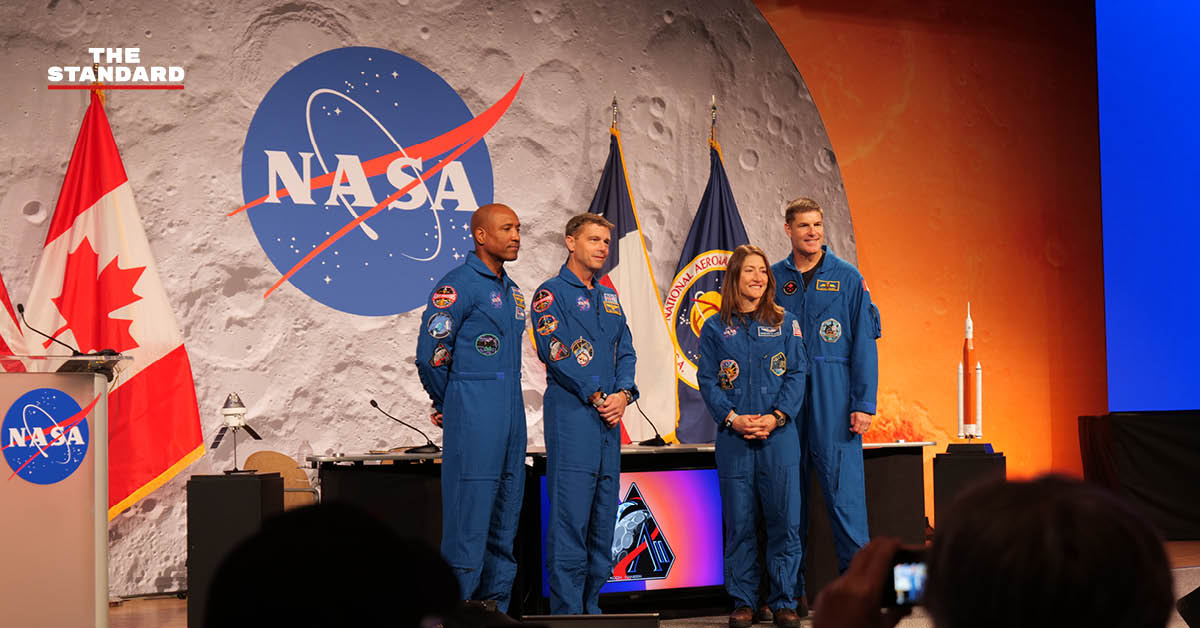
NASA’s Artemis II mission represents a pivotal moment in space exploration as the first crewed flight of the Artemis program, aiming to send astronauts around the Moon for the first time since Apollo 17 in 1972. This approximately 10-day mission will test the Orion spacecraft’s systems with a crew of four astronauts aboard, marking humanity’s return to deep space after more than five decades. The mission serves as a critical test flight before future lunar landings, focusing on validating Orion’s performance in the deep space environment.
The Artemis II crew consists of NASA astronauts Reid Wiseman as commander, Victor Glover as pilot and mission specialists Christina Koch and Jeremy Hansen from the Canadian Space Agency. This diverse team will be the first to fly aboard Orion, NASA’s deep-space capsule built by Lockheed Martin, which is designed to sustain astronauts during missions beyond low-Earth orbit and ensure their safe return to Earth. The spacecraft will launch atop NASA’s Space Launch System (SLS) rocket from Kennedy Space Center in Florida.
One of the key innovations enabling public engagement with Artemis II is the Artemis Real-time Orbit Website (AROW), which allows anyone with internet access to track Orion’s journey in real time. Through AROW, the public can visualize data collected by sensors on Orion and transmitted to Mission Control at NASA’s Johnson Space Center in Houston. The platform provides continuous updates on the spacecraft’s distance from Earth and the Moon, mission duration, and other vital metrics beginning about one minute after liftoff through atmospheric reentry.
The Orion spacecraft features advanced systems critical for deep space travel, including a launch abort system designed to pull the crew to safety in milliseconds if an anomaly occurs during ascent. Its heat shield, which must withstand temperatures reaching approximately 2,800 degrees Celsius during reentry into Earth’s atmosphere, has undergone rigorous testing to ensure it protects the crew during the high-speed return from lunar vicinity. Orion’s life support systems are engineered to provide a habitable environment for the crew throughout the mission.
During Artemis II, astronauts will have the opportunity to manually fly Orion at certain points in the flight, testing the spacecraft’s handling characteristics as they venture around the Moon and back. This hands-on evaluation is essential for ensuring the spacecraft operates as designed with humans aboard, ahead of future Artemis missions that will land astronauts on the lunar surface. The mission will also gather valuable data on how Orion’s systems perform in the actual deep space environment with a crew onboard.
Public access to mission tracking is available through multiple platforms, including NASA’s official website at www.nasa.gov/trackartemis and the NASA app, which offers an augmented reality feature to help users locate Orion relative to their position on Earth. After a brief calibration sequence, on-screen indicators in the app guide users to move their phone to notice where Orion currently is in relation to their location, creating an interactive experience for space enthusiasts worldwide.
The Artemis II mission builds upon the success of Artemis I, an uncrewed test flight that successfully launched Orion beyond low-Earth orbit and returned it to Earth in late 2022. That mission validated many of Orion’s core systems in the space environment, paving the way for the crewed Artemis II flight. NASA views Artemis II as a crucial step toward establishing a long-term human presence at the Moon for scientific research and exploration under the Artemis campaign.
As preparations continue for the Artemis II launch, NASA emphasizes that the mission will test how Orion’s systems operate as designed with crew aboard in the deep space environment. The data gathered will directly inform the development of future Artemis missions, including Artemis III, which aims to land the first woman and first person of color on the lunar surface. This incremental approach allows NASA to reduce risk while advancing its Moon to Mars exploration objectives.
For those wishing to follow the Artemis II mission in real time, NASA provides official tracking through its website and mobile application, ensuring global access to updates on this historic mission. The space agency invites people around the world to participate in this journey as Orion prepares to carry humans farther into space than they have gone since the Apollo era.
Worth a look