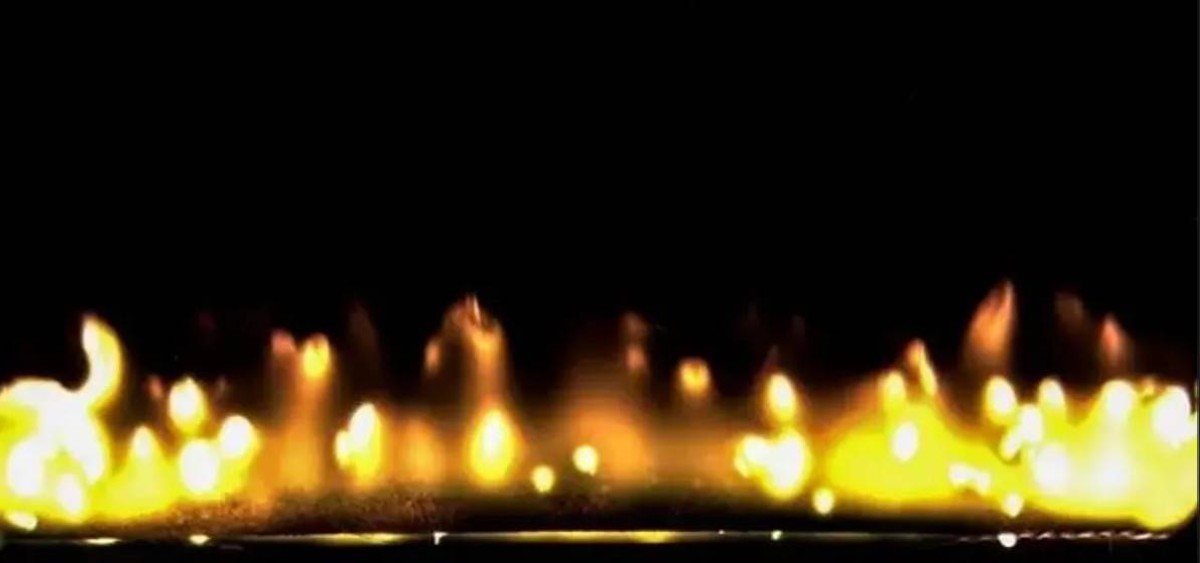
NASA is preparing to conduct controlled fire experiments on the lunar surface as part of its Artemis program, a move that may seem counterintuitive but serves a critical purpose in preparing for long-term human presence on the Moon. The initiative, known as the Lunar Fire Experiment (LFE), aims to study how flames behave in low-gravity environments and how lunar regolith — the Moon’s surface material — responds to combustion. This research is essential for designing safe habitats, life support systems, and equipment for future astronauts who will live and work on the Moon for extended periods.
The experiments will take place during upcoming Artemis missions, beginning with Artemis III, which aims to land the first woman and the next man on the lunar south pole by 2026. NASA engineers emphasize that these fires will be small, contained, and conducted under strict safety protocols to avoid any risk to personnel or equipment. The goal is not to create hazards but to understand fundamental fire dynamics in an environment where gravity is only one-sixth of Earth’s and there is no atmosphere to carry heat or smoke.
On the Moon, fire behaves differently than on Earth. Without convection — the rising of hot air that shapes flames here — lunar fires tend to be spherical and spread more slowly, relying instead on diffusion and radiation for heat transfer. Even as, in enclosed habitats with limited ventilation, even a small fire could pose serious risks due to the buildup of toxic gases like carbon monoxide and the potential for rapid heat accumulation. Understanding these behaviors is crucial for developing effective fire detection, suppression, and prevention systems tailored to lunar conditions.
The Lunar Fire Experiment will leverage specialized combustion chambers made of fire-resistant materials to ignite small samples of common spacecraft materials, such as fabrics, wires, and polymers, under simulated lunar conditions. Sensors will measure flame spread rate, temperature, smoke production, and gas emissions. Data collected will inform the design of future lunar bases, including material selection, electrical system safety, and emergency response procedures.
This research builds on decades of fire safety studies conducted aboard the International Space Station (ISS), where microgravity experiments have already revealed how flames behave in near-zero gravity. However, the Moon’s partial gravity presents a unique middle ground between Earth and microgravity environments, making it a critical area of study. NASA’s Glenn Research Center in Ohio is leading the effort, collaborating with international partners including the European Space Agency (ESA) and the Japan Aerospace Exploration Agency (JAXA).
One of the key objectives is to determine whether current fire suppression technologies used on the ISS — such as water mist and inert gas systems — will be effective in lunar gravity. Early results suggest that while these systems may still work, their efficiency could be reduced, requiring adjustments in nozzle design, agent concentration, or activation timing. The findings could lead to the development of next-generation fire safety systems specifically engineered for extraterrestrial environments.
Beyond immediate safety applications, the Lunar Fire Experiment also supports broader goals of the Artemis program, including in-situ resource utilization (ISRU). By understanding how lunar regolith reacts to heat, scientists can better assess its potential use in construction, radiation shielding, or even as a raw material for producing oxygen through thermal processes. This knowledge is vital for reducing reliance on Earth-supplied resources and enabling sustainable lunar operations.
The experiments are scheduled to begin during the Artemis III mission, with follow-up tests planned for Artemis IV and beyond. NASA will publish preliminary results through its technical reports and peer-reviewed journals, ensuring transparency and allowing the global scientific community to build upon the findings. As with all Artemis data, the fire experiment results will be archived in NASA’s Planetary Data System for long-term access.
As humanity prepares to return to the Moon after more than five decades, understanding even the most basic physical phenomena — like how fire behaves — becomes a cornerstone of mission success. What may seem like a dangerous idea — lighting fires on the Moon — is, in fact, a meticulously planned step toward making lunar exploration safer, smarter, and more sustainable.
For updates on the Artemis program and related scientific experiments, visit NASA’s official Artemis webpage NASA Artemis or follow the agency’s latest releases via the NASA Newsroom NASA Newsroom.
We invite our readers to share their thoughts on lunar exploration and the challenges of living beyond Earth. What other environmental factors do you think will be critical for long-term survival on the Moon? Join the conversation in the comments below and help spread awareness by sharing this article with others interested in the future of space exploration.
Worth a look