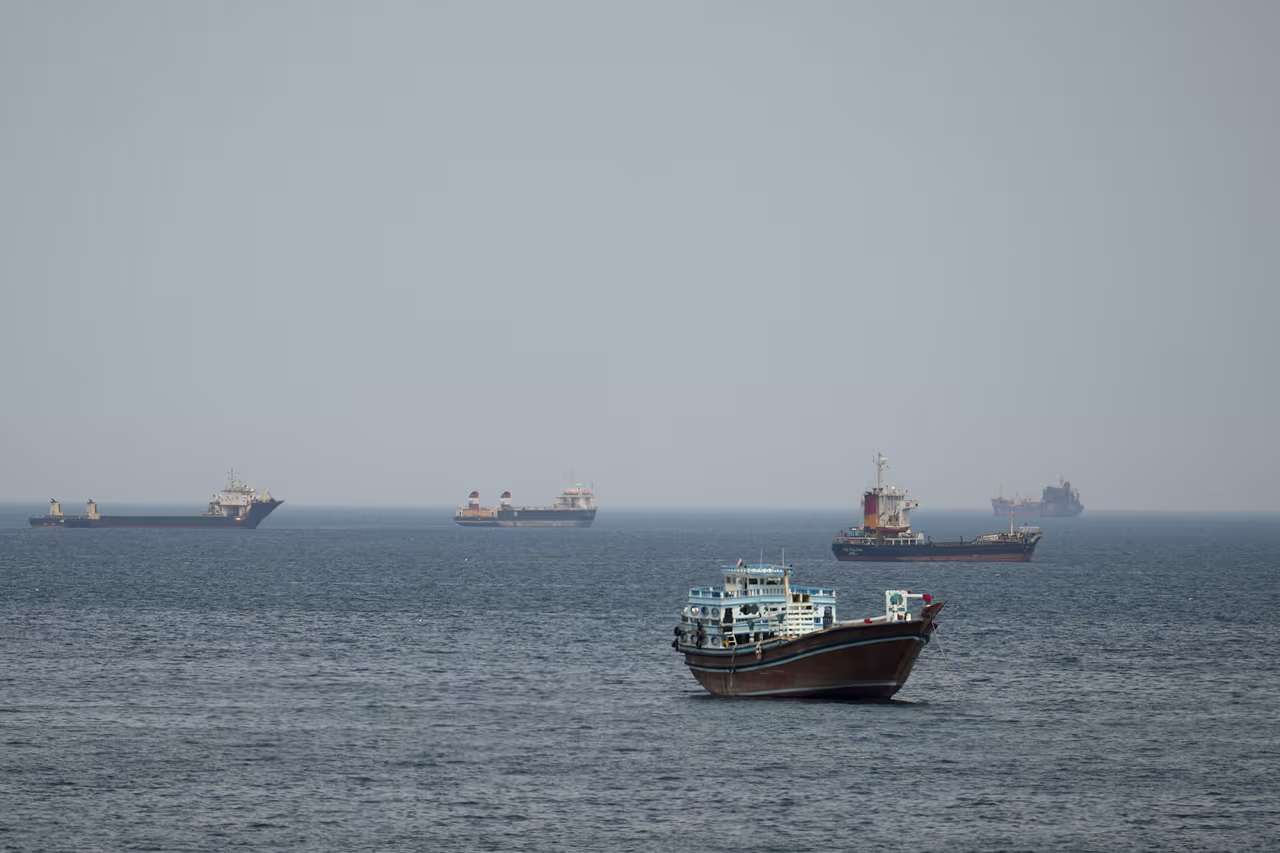
On Wednesday, April 22, 2026, Iran opened fire on three vessels in the Strait of Hormuz, seizing two of them in an escalation of maritime tensions that followed the extension of a U.S.-Iran ceasefire announced by President Donald Trump the previous day. According to the Associated Press, the attacks occurred in the critical chokepoint through which approximately 20% of the world’s oil shipments pass, heightening concerns about global energy supply disruptions.
The incident took place amid stalled diplomatic efforts between Washington and Tehran, with U.S. Forces maintaining a blockade on Iranian ports even as engaging in indirect negotiations. The British military confirmed the attacks, noting that the developments complicated attempts to convene U.S. And Iranian officials in Pakistan for talks aimed at de-escalating the broader regional conflict.
Iran’s Islamic Revolutionary Guard Corps (IRGC) stated that it had intercepted two “violating vessels” — the MSC Francesca and the Epaminodes — accusing them of operating without proper authorization and tampering with navigation systems. The IRGC claimed the ships were seized and escorted to Iran’s coast, asserting that disrupting maritime security in the Strait of Hormuz crosses its “red line.”
The IRGC too alleged, without providing evidence, that the MSC Francesca was linked to Israel. This claim emerged shortly after Trump announced the indefinite extension of the ceasefire with Iran, which had been set to expire on Wednesday, while maintaining existing U.S. Sanctions and port restrictions.
Earlier that weekend, U.S. Forces had captured an Iranian vessel and intercepted another connected to Iran’s oil trade, actions Tehran likely viewed as provocative. The sequence of events underscored the fragility of the truce, even as both sides signaled willingness to negotiate under tightened conditions.
The Strait of Hormuz remains one of the world’s most strategically vital waterways, bordered by Iran to the north and the United Arab Emirates and Oman to the south. Any disruption to shipping lanes here has immediate repercussions for global crude prices, as markets react swiftly to perceived threats to supply chains.
Following the attacks, international benchmark Brent crude surpassed $100 per barrel — a 35% increase from pre-conflict levels — though equity markets appeared to downplay the immediate impact. Analysts noted that while energy costs have risen, broader inflationary pressures on food and consumer goods have also intensified due to increased transportation and insurance premiums for shipping through the region.
U.S. Central Command continues to patrol the Arabian Sea, maintaining a visible naval presence to deter further incidents. However, the lack of direct communication channels between Washington and Tehran raises the risk of miscalculation, particularly as hardliners within Iran’s leadership appear emboldened by the latest indicate of force.
Diplomatic backchannels remain active, but no formal talks have been scheduled beyond the proposed Pakistan meeting, which has yet to be confirmed by either side. Observers warn that without a durable agreement governing naval conduct in the strait, sporadic confrontations could become a recurring feature of U.S.-Iran relations.
For ongoing developments, readers are encouraged to monitor official statements from the U.S. Department of Defense, Iran’s Ministry of Foreign Affairs, and the International Maritime Organization, which issues regular advisories on navigation safety in high-risk zones.
Share your thoughts on this evolving situation in the comments below, and help spread awareness by sharing this article with others following global security and energy markets.
Worth a look