
NASA faces increasing budgetary and logistical pressure as it navigates a complex, evolving strategy for Mars exploration. While the agency maintains its long-term objective of human exploration of the Red Planet, shifting priorities toward lunar missions under the Artemis program and significant cost overruns for the Mars Sample Return (MSR) mission have prompted a re-evaluation of its immediate Mars roadmap. According to official NASA reports, the agency is currently restructuring its approach to planetary exploration to balance fiscal constraints with scientific ambition.
The core of the current debate concerns the feasibility of the Mars Sample Return mission, a collaborative effort with the European Space Agency (ESA) designed to bring Martian soil back to Earth. In a 2024 update, NASA leadership acknowledged that the projected costs for the mission have climbed significantly, with independent reviews suggesting the total could reach between $8 billion and $11 billion. This financial reality has forced the agency to solicit innovative, lower-cost proposals from both private industry and its own internal research centers to avoid cannibalizing the budgets of other high-priority science missions.
Shifting Priorities: From Mars to the Moon
The primary driver of the cooling enthusiasm for Mars is the prioritization of the Artemis program, which aims to return humans to the lunar surface. NASA’s current strategic framework establishes the Moon as a testbed for the technologies required for future Mars expeditions. By focusing on lunar infrastructure, the agency argues it is building the necessary foundation for deep-space travel, even if that means temporarily slowing the cadence of direct Mars-bound robotic missions.

This pivot has drawn scrutiny from the scientific community. Critics within the planetary science sector argue that delaying Mars exploration risks losing the momentum gained by the Perseverance rover, which is currently collecting samples in the Jezero Crater. According to the National Academies of Sciences, Engineering, and Medicine, maintaining a balanced portfolio between lunar and planetary science is essential for long-term discovery, yet the current budget caps imposed by Congress have left NASA with little room to maneuver.
The Financial Realities of Mars Exploration
Mars exploration remains a high-cost, high-risk endeavor. The MSR mission, in particular, has become a focal point for budget hawks in Washington. In April 2024, NASA announced it would seek “out-of-the-box” solutions to reduce the complexity and cost of the return mission, effectively acknowledging that the original 2020s-era plan was no longer fiscally sustainable. This move follows a NASA Office of Inspector General report that highlighted significant management and technical challenges in the mission’s early phases.
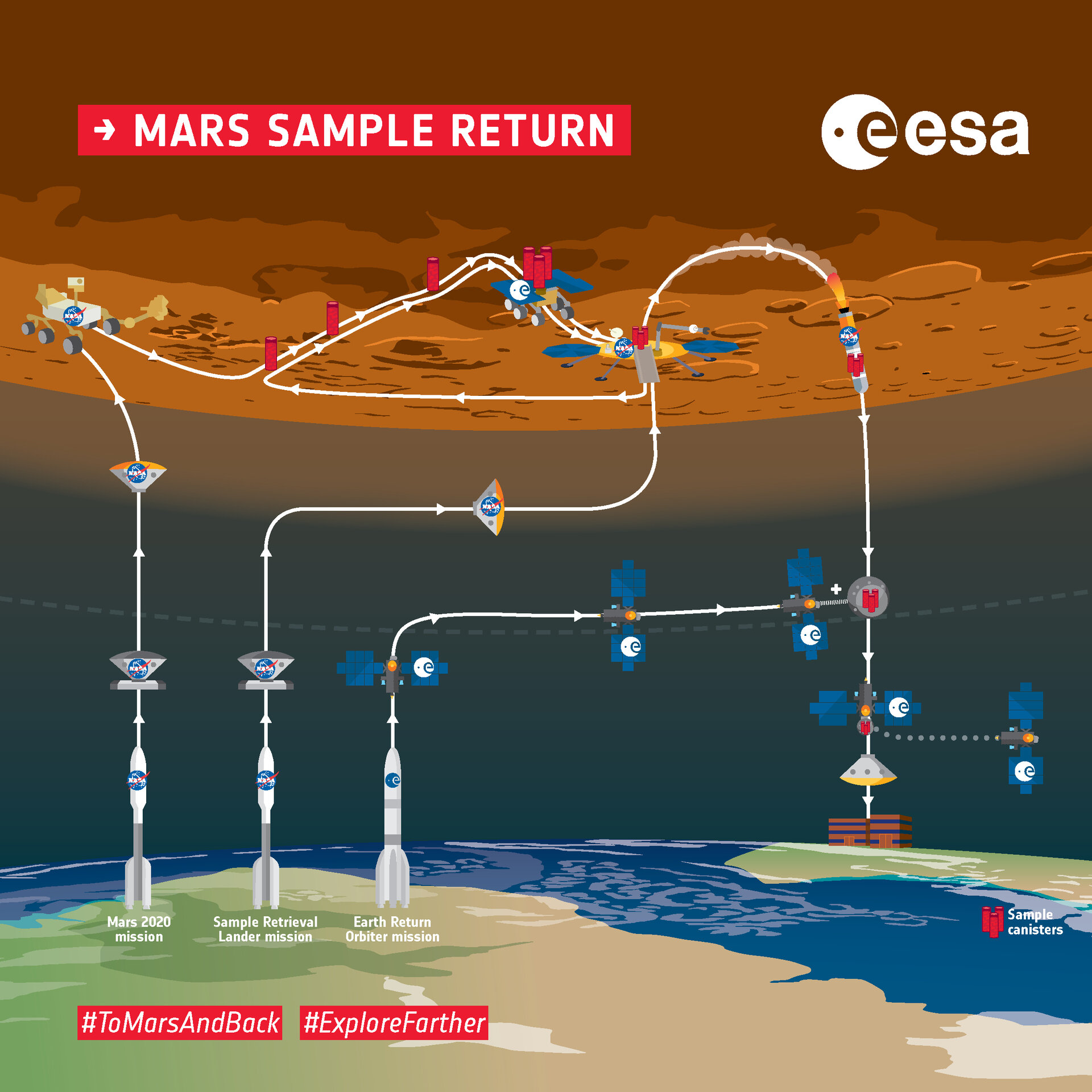
The agency’s decision to request alternative proposals from private aerospace companies reflects a broader trend of integrating commercial partners into NASA’s deep-space architecture. By opening the Mars sample return challenge to competitive bidding, NASA aims to leverage private sector efficiencies, though it faces the challenge of maintaining rigorous scientific standards for sample containment and planetary protection.
What Happens Next for the Red Planet
NASA has scheduled a series of internal reviews throughout the remainder of 2024 to finalize the architecture for the Mars Sample Return mission. These decisions will determine whether the program continues in its current form or undergoes a significant scope reduction. The agency’s next formal budget submission to the Office of Management and Budget (OMB) will provide a clearer picture of how much funding is allocated specifically for Mars science versus lunar development.
For the scientific community, the wait for definitive answers continues. The agency has stated it will provide updates on the MSR mission trajectory as it evaluates the feasibility of the new proposals submitted by industry partners. Readers interested in the latest mission status reports and official policy shifts can monitor the NASA Science Mission Directorate website for upcoming briefings and public documentation. We invite our readers to share their views on the balance between lunar and Martian exploration in the comments section below.