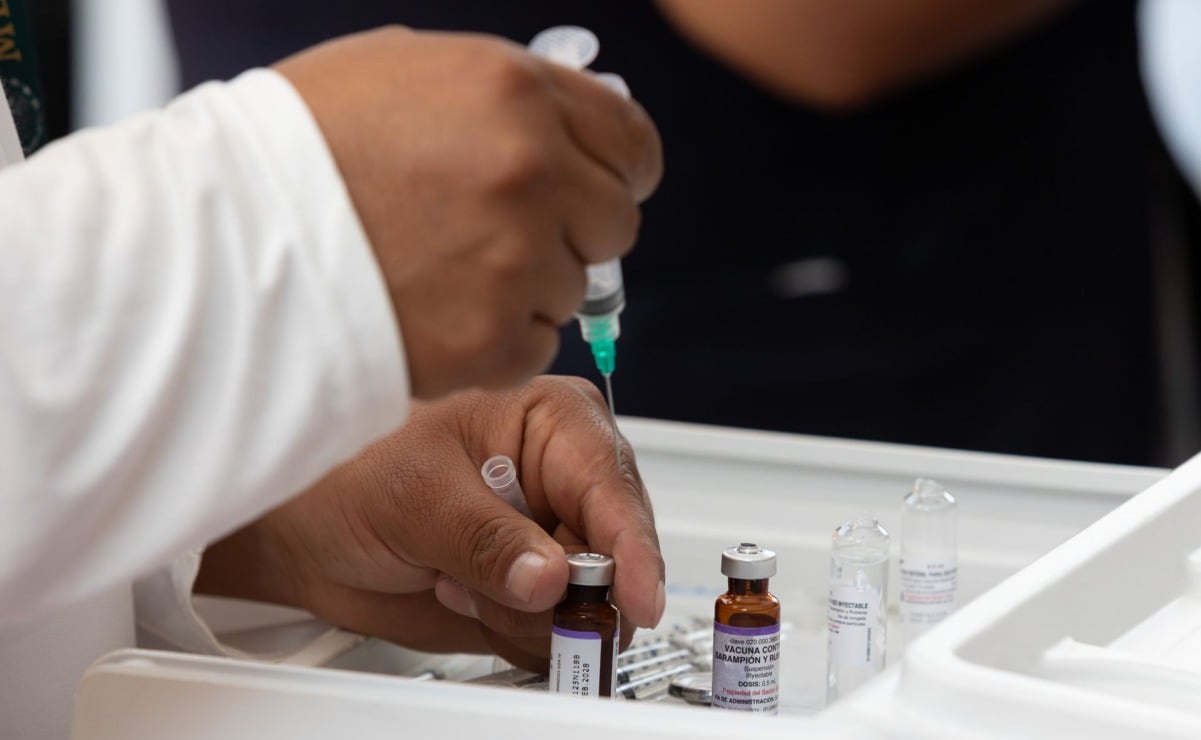
Mexico’s federal health authorities have announced the 2026 National Vaccination Week, a nationwide campaign running from April 25 to May 2 to strengthen immunization coverage and recover incomplete vaccination schedules across all age groups. The initiative, branded under the slogan “Vaccunar es amar” (Vaccinating is loving), aligns with the 24th Vaccination Week in the Americas and World Immunization Week 2026, as confirmed by the Ministry of Health in official communications released on April 22, 2026.
The campaign aims to administer approximately 1.7 million doses of vaccines free of charge, targeting infants, children, adolescents, pregnant women, older adults, and high-risk populations. This effort forms part of Mexico’s Universal Vaccination Program strategy to prevent, control, and eliminate vaccine-preventable diseases, with special emphasis on measles, rubella, and mumps through the triple viral vaccine, alongside boosters for diphtheria, pertussis, and tetanus (DPT) and human papillomavirus (HPV) immunization.
According to verified announcements from the Secretaría de Salud, the vaccination drive will include biologicals from the national immunization schedule such as BCG and hepatitis B for newborns; pentavalent, pneumococcal conjugate, and rotavirus vaccines for children under one year; and seasonal influenza and COVID-19 vaccines for children under five, at-risk groups, healthcare workers, and adults over 60. The vaccines will be administered through fixed health units, semi-fixed posts in high-traffic areas, and mobile brigades reaching rural and hard-to-access communities.
State-level health authorities, including those in Jalisco, have echoed the federal call to participate, urging residents to take advantage of the opportunity to update vaccination records with more than 10 different biologicals available at no cost. The ISSSTE under Martí Batres has also confirmed its involvement in the campaign, extending services to millions of beneficiaries during the same period.
Vaccines Offered During Mexico’s 2026 National Vaccination Week
The federal health ministry has specified that the following vaccines will be available free of charge during the campaign:
- BCG and hepatitis B for newborns
- Hexavalent acellular, pneumococcal conjugate, and rotavirus vaccines for infants under one year
- Triple viral (measles, rubella, mumps) vaccine for early childhood
- Hexavalent acellular, pneumococcal conjugate, and hepatitis A vaccines as boosters in early childhood
- DPT (diphtheria, pertussis, tetanus) as a booster for school-aged children
- HPV vaccine for girls, boys, and adolescents
- Td and Tdap vaccines (tetanus, diphtheria, pertussis) for adolescents, adults, pregnant women, and healthcare workers
- Seasonal influenza and COVID-19 vaccines for children under five, at-risk populations, medical personnel, and adults over 60
- Pneumococcal vaccine for adults aged 60 and older
These biologicals correspond to those listed in Mexico’s National Vaccination Schedule and are intended to close immunity gaps, particularly in communities where vaccination rates have declined due to access barriers or misinformation.
Goals and Public Health Rationale
The primary objective of the 2026 National Vaccination Week is to recover incomplete vaccination schedules and increase coverage rates nationwide. Health officials emphasize that achieving high immunization rates is critical to preventing outbreaks of diseases like measles, which remains a concern in regions with suboptimal vaccine uptake. The campaign also supports the Pan American Health Organization’s (PAHO) Disease Elimination Initiative, which aims to eradicate more than 30 communicable diseases by 2030, at least 11 of which are preventable through vaccination.
By focusing on vulnerable groups—including pregnant women, elderly individuals, and marginalized communities—the initiative seeks to reduce health inequities and strengthen herd immunity. Mobile brigades and community-based outreach are central to reaching populations that may not regularly access formal healthcare facilities.
How to Access Vaccination Services
Vaccinations will be available at public health clinics, schools, community centers, and via mobile units deployed across all 32 federal entities. No identification or insurance is required to receive the vaccines, and all doses are provided at no cost. Individuals are encouraged to bring any existing vaccination records to help healthcare providers determine which doses are needed.
Official updates and location-specific information are being disseminated through state health secretariats and the federal Ministry of Health’s website and social media channels. The public is advised to consult local health jurisdictions for exact site locations and operating hours during the April 25 to May 2 window.
As Mexico continues its efforts to maintain and improve immunization coverage following disruptions seen in recent years, the 2026 National Vaccination Week represents a coordinated, nationwide push to protect populations through equitable access to life-saving vaccines. The campaign underscores the enduring public health message that vaccination remains one of the most effective tools for individual and community protection.