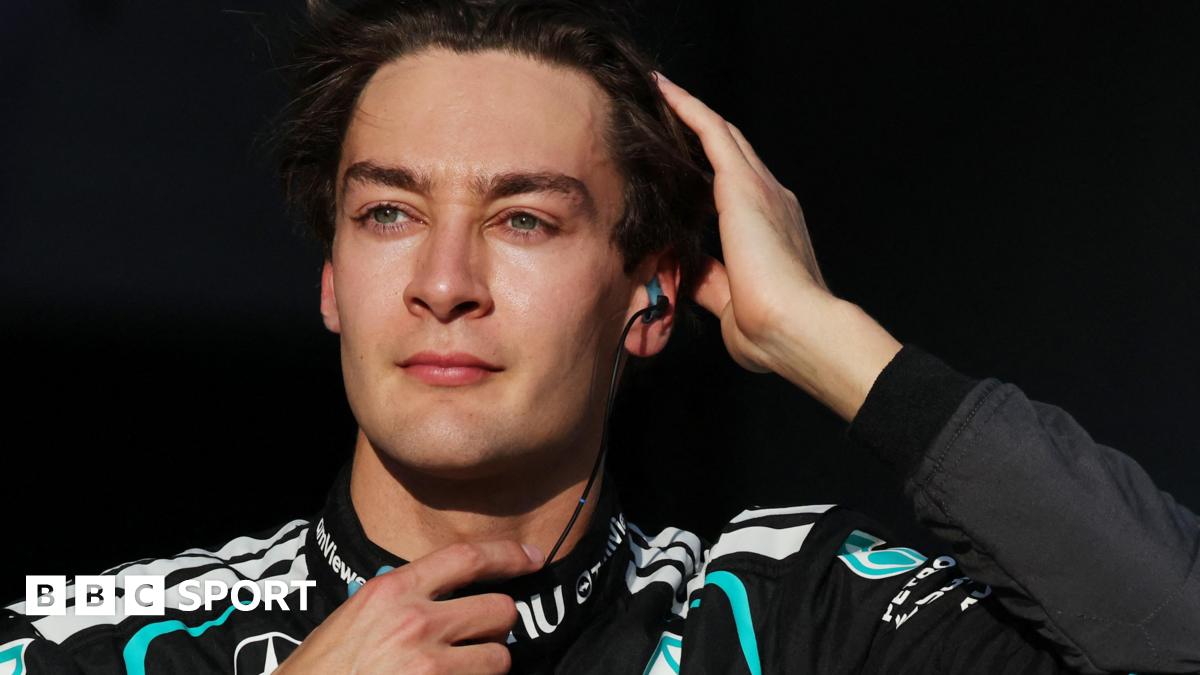
George Russell has been making waves in the 2026 Formula One season, not just for his performances on track but for his candid reflections on the evolving nature of the sport. As the Mercedes driver prepares for what could be a defining year in his career, he has spoken openly about embracing the challenges posed by F1’s latest technical regulations while expressing a desire for greater competition at the sharp end of the grid.
The 28-year-old Briton, who turned 28 last month, has consistently ranked among the most accepting drivers of the new rules framework introduced this season, which features a 50-50 split between internal combustion and electrical power in the power units. This shift has fundamentally altered driving styles, requiring precise energy management and introducing complex systems like overtake and boost modes that have divided opinions across the paddock.
Russell’s perspective carries particular weight given his recent form. After securing victories in Canada and Singapore during the 2025 campaign – making him one of only four drivers to win a grand prix last season alongside Lando Norris, Max Verstappen, and Oscar Piastri – he enters 2026 with renewed confidence. His approach, he insists, remains rooted in the same passion that first drove him to compete as a ten-year-old karting enthusiast.
“I’m working so hard with the team, everybody here has been working flat out to really maximise this new set of regulations and I’m honestly just so excited by the challenge,” Russell stated in a recent BBC Sport interview. “Because it is a huge challenge adapting to these new cars, how the energy management works, the re-harvesting of the batteries, getting your head around the boost system, the overtake modes, the active aero. There’s a lot of things we need to learn very quickly, but I feel I can take advantage from that and I feel confident with myself and my team.”
This mindset contrasts sharply with some of his peers’ reactions to the regulatory overhaul. While Verstappen has openly criticized the new power units – citing dissatisfaction with how the cars behave under the revised rules – Russell has taken a more measured stance. He acknowledged that Red Bull’s lack of early-season competitiveness may be influencing Verstappen’s complaints, drawing from his own experience: “I didn’t enjoy driving the 2022 car when it was porpoising up and down, killing everybody’s backs.”
Russell’s willingness to engage constructively with the changes reflects his broader philosophy about competition in Formula One. When asked about the prospect of Verstappen potentially leaving the sport, he struck a balanced tone: “Formula 1 is bigger than any driver, so you wouldn’t seek to lose Max, because I think we all enjoy racing against Max. But you’d understand if he stayed and you’d understand if he went.”
Finding Positives in Technical Complexity
Despite the initial learning curve, Russell has identified several advantages in the new regulatory environment. The increased emphasis on energy recovery and deployment has created strategic dimensions that weren’t as prominent in previous eras. Drivers must now constantly calculate when to harvest electrical energy during braking and when to deploy it for overtaking maneuvers, adding a layer of chess-like strategy to wheel-to-wheel racing.
The active aerodynamics systems, which adjust wing angles in real-time to optimize straight-line speed versus cornering grip, have also presented both challenges and opportunities. Russell has noted that mastering these systems requires close collaboration with engineers, fostering a deeper integration between driver and team that he finds rewarding.
Perhaps most significantly, the Briton has expressed enthusiasm about the prospect of tighter competition emerging as teams converge on solutions to the new rules. Having experienced periods of dominance by single teams in recent years, he believes the current regulatory flux could level the playing field: “I would enjoy more competition for the F1 title. That’s what makes the sport great – when multiple teams and drivers are genuinely fighting for wins and championships.”
Consistency in Approach Amid Change
Throughout his ascent from junior formulae to Formula One front-runner, Russell has maintained a remarkably consistent mindset. Despite achieving milestones that include winning the FIA Formula 2 Championship, GP3 Series, and BRDC F4 title in successive seasons, he insists his fundamental approach to racing hasn’t changed since childhood.

This continuity is evident in how he processes both success and setbacks. After Mercedes secured victories in the season-opening Japanese Grand Prix and subsequent races in 2026, Russell remained focused on incremental improvement rather than celebrating results. Similarly, when facing reliability issues during pre-season testing in Bahrain, he framed them as solvable challenges rather than causes for concern.
“It does not change my approach one single bit,” Russell explained when questioned about pre-season championship favouritism tags. “I’m working so hard with the team… I’m honestly just so excited by the challenge.” This attitude has resonated within the Mercedes garage, where technicians and engineers describe him as a meticulous collaborator who provides precise feedback essential for developing the W16 chassis.
The stability of his outlook stands in contrast to the volatility often seen in elite sports, where success can alter an athlete’s relationship with their craft. For Russell, the joy remains rooted in the act of driving itself – a sentiment he traces back to his early karting days in King’s Lynn, Norfolk, where he began competitive racing at age seven.
Implications for the 2026 Title Race
As the season progresses, Russell’s combination of technical adaptability and psychological resilience positions him as a serious contender in what promises to be a closely fought championship battle. His ability to extract performance from the Mercedes W16 while managing its complex energy systems has already yielded results, with the team winning all three races to date in the 2026 campaign.

Should this form continue, Russell could join an elite group of British drivers who have won the Formula One World Championship. More immediately, his success would validate Mercedes’ decision to maintain faith in their radical car concept despite early-season skepticism from some quarters.
Beyond personal achievement, Russell’s outlook offers a case study in how elite athletes can navigate periods of significant regulatory change. By focusing on controllable factors – preparation, teamwork, and a growth mindset – he has transformed potential frustration into motivation, setting an example for how competitors might approach future evolutions in the sport.
The next confirmed checkpoint in Russell’s season will be the Chinese Grand Prix, scheduled for April 19-20, 2026 at the Shanghai International Circuit, where he will aim to build on Mercedes’ current winning streak.
If you found this analysis insightful, please consider sharing your thoughts in the comments below or spreading the article to fellow motorsport enthusiasts who appreciate technically informed yet accessible coverage of Formula One’s ongoing evolution.