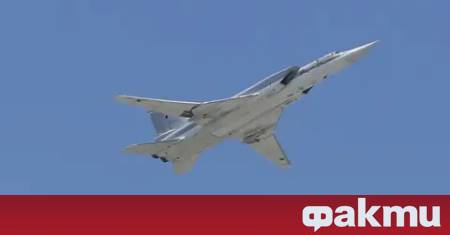
On Monday, April 20, 2026, NATO fighter jets intercepted Russian military aircraft flying over the Baltic Sea, marking another instance of heightened aerial activity along NATO’s eastern flank. The intercept involved Russian strategic bombers and fighter jets that were monitored by allied forces as they flew through international airspace near the alliance’s borders.
According to reports from NATO and participating national militaries, the Russian formation included two Tu-22M3 supersonic bombers escorted by approximately ten fighter jets, consisting of Su-30 and Su-35 models. In response, NATO launched fighter jets from several member states, including France, Sweden, Finland, Poland, Denmark, and Romania, to identify, track, and monitor the aircraft.
French Rafale fighters were deployed from Šiauliai Air Base in Lithuania, where they are stationed as part of NATO’s ongoing Baltic Air Policing mission. These jets, armed with air-to-air missiles, joined counterparts from other allied nations in conducting the interception. The operation was described by NATO officials as a routine but necessary measure to ensure flight safety and maintain situational awareness in the region.
The Russian Defense Ministry stated that the flight was pre-planned and conducted entirely over the neutral waters of the Baltic Sea, in full compliance with international airspace regulations. The ministry emphasized that such long-range missions are regularly carried out by the Russian Aerospace Forces over various regions, including the Arctic, North Atlantic, Pacific, and Black Seas, as well as the Baltic.
NATO’s Allied Air Command did not issue an immediate public statement following the intercept, but officials confirmed that the alliance frequently scrambles jets to monitor Russian aircraft operating near its airspace, particularly when those aircraft do not transmit identification signals or communicate with air traffic control. The alliance characterizes these intercepts as defensive actions aimed at preventing misunderstandings and ensuring transparency.
The Baltic Air Policing mission, which has been active since 2004 following the Baltic states’ accession to NATO, continues to serve as a key mechanism for monitoring aerial activity in the region. Its importance has increased since the onset of Russia’s full-scale invasion of Ukraine in 2022, leading to greater vigilance and more frequent interactions between NATO and Russian forces in the Baltic airspace.
This latest incident underscores the ongoing pattern of aerial encounters between NATO and Russian forces, reflecting broader geopolitical tensions. While both sides maintain that their operations are conducted within legal frameworks, the frequency of such intercepts highlights the delicate balance of deterrence and communication in one of Europe’s most sensitive military zones.
As of Tuesday, April 21, 2026, no further details about the specific flight paths, durations, or communications during the intercept have been released by either NATO or Russian defense authorities. Observers note that such operations are typically not disclosed in real time, with official summaries often issued days or weeks later.
For ongoing updates on NATO’s Baltic Air Policing operations and related developments in European security, readers are encouraged to consult official NATO communications and verified defense ministry statements from member states.
Share your thoughts on this development in the comments below, and facilitate spread awareness by sharing this article with others interested in global affairs.
Related reading