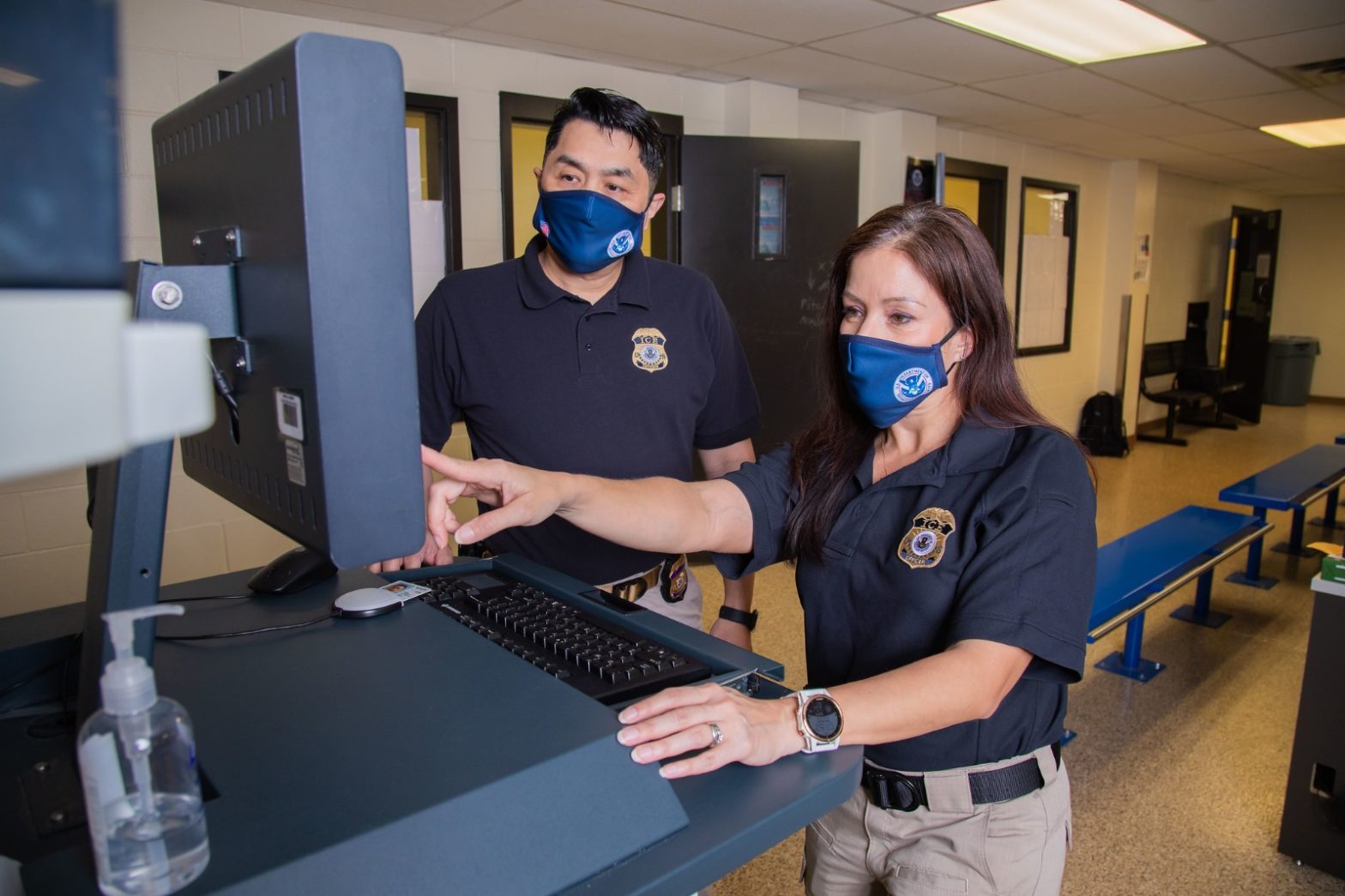
Expanding Cooperation with ICE in North Carolina: More Agencies Enter into 287(g) Agreements
Raleigh, North Carolina – A growing number of law enforcement agencies in North Carolina are formalizing partnerships with U.S. Immigration and Customs Enforcement (ICE) through the 287(g) program, a collaborative effort designed to enhance immigration enforcement at the state and local levels. This increased cooperation allows local officers, after receiving federal training, to identify individuals who may be subject to deportation proceedings and to assist in broader immigration enforcement efforts. The program has sparked debate regarding its impact on community trust and civil liberties, even as proponents emphasize its role in public safety.
Recent developments indicate a significant uptick in participation, with four North Carolina agencies – the Beulaville Police Department, the Onslow County Sheriff’s Office (expanding an existing agreement), the Person County Sheriff’s Office, and the Robbins Police Department – entering into new 287(g) agreements in late 2025 and early 2026. This expansion reflects a broader national trend, with 766 such agreements now in place across the country as of early 2025, representing a more than 2,500% increase from previous years, according to reporting from La Noticia. La Noticia reports that Florida and Texas account for over half of these agreements nationwide.
The 287(g) program, established in 1996 and significantly expanded after the September 11th attacks, allows ICE to delegate immigration enforcement authority to state and local law enforcement. According to ICE, the program aims to “preserve communities safer through a collaborative approach to immigration enforcement.” The ICE website details the program’s objectives and outlines the different models of participation available to local agencies.
Understanding the 287(g) Program Models
The 287(g) program offers three distinct models for collaboration, allowing agencies to tailor their participation to their specific needs and resources. These models are the Jail Enforcement Model (JEM), the Task Force Model (TFM), and the Warrant Service Officer (WSO) model. Each model defines the scope of authority granted to local officers and the types of immigration enforcement activities they can undertake.
The Beulaville Police Department, the Robbins Police Department, and the Onslow County Sheriff’s Office will operate under the Task Force Model (TFM). This model enables trained officers to collaborate with ICE on immigration enforcement operations outside of correctional facilities, including during patrols and investigations. The Onslow County Sheriff’s Office already participates in the program through the Warrant Service Officer model, which allows local officers to execute administrative arrest warrants issued by ICE against individuals already in custody at the county jail. The new agreement expands the Sheriff’s Office’s collaboration with ICE, adding the TFM to its existing capabilities.
The Person County Sheriff’s Office, which signed its agreement in February 2026, has opted for the Jail Enforcement Model (JEM). Under this model, officers review the immigration status of individuals as they are booked into the county jail, identifying those who may be subject to deportation. This allows for the initiation of deportation proceedings while individuals are in custody, streamlining the process and potentially reducing the risk of release before immigration status can be determined.
Current 287(g) Agreements in North Carolina
As of March 5, 2026, a total of 27 agencies and entities across North Carolina have active agreements under the 287(g) program, according to data compiled from multiple sources. Univision reports that between 2020 and February 2025, approximately 23 North Carolina sheriff’s offices collaborated with ICE through the 287(g) program, resulting in over 3,300 arrests by ICE agents.
| AGENCIA | TIPO DE ACUERDO | AGENCIA | TIPO DE ACUERDO |
| Oficina del Sheriff del Condado de Alamance | WSO | Oficina del Sheriff del Condado de Duplin | WSO |
| Prisión del Distrito de Albemarle | WSO | Oficinas el Sheriff del Condado de Gaston | JFM |
| Oficina del Sheriff del Condado de Abery | WSO | Oficina del Sheriff del Condado de Henderson | JFM |
| Departamento de Policía de Beulaville | TFM | Oficina del Sheriff del Condado de Lincoln | WSO |
| Departamento de Policía de Brookford | TFM | Oficina del Sheriff del Condado de Nash | WSO |
| Oficina del Sheriff del Condado de Brunswick | WSO | Departamento de Policñia de Newland | TFM |
| Oficina del Sheriff del Condado de Cabarrus | JEM | Oficina del Sheriff del Condado de Onslow | TFM WSO |
| Oficina del Sheriff del Condado de Caldwell | WSO | Oficina del Sheriff del Condado de Person | JEM |
| Oficina del Sheriff del Condado de Carteret | WSO | Oficina del Sheriff del Condado de Randolph | WSO |
| Oficina del Sheriff del Condado de Catawba | WSO | Departamento de Policía de Robbins | TFM |
| Oficina del Sheriff del Condado de Cleveland | WSO | Oficina del Sheriff del Condado de Rockingham | WSO |
| Oficina del Sheriff del Condado de Columbus | TFM WSO |
Oficina del Sheriff del Condado de Union | WSO |
| Oficina del Sheriff del Condado de Craven | WSO | Oficina del Sheriff del Condado de Yancey | WSO |
| Oficina del Sheriff del Condado de Cherokee | WSO |
The expansion of the 287(g) program in North Carolina, and nationally, comes amidst ongoing debate about the role of local law enforcement in immigration enforcement. Critics argue that the program can lead to racial profiling and erode trust between law enforcement and immigrant communities. Proponents, however, maintain that It’s a valuable tool for enhancing public safety by removing dangerous criminals from the streets. ICE provides training to local officers participating in the program, covering topics such as immigration law, identification of fraudulent documents, and proper procedures for processing individuals suspected of immigration violations.
The program also allows participating agencies to potentially qualify for funding through the Department of Justice’s State Criminal Alien Assistance Program (SCAAP), which provides federal funding to states and local jurisdictions for the costs of incarcerating criminal aliens. However, SCAAP funding is separate from the 287(g) program itself.
As more North Carolina agencies embrace the 287(g) program, the debate over its effectiveness and impact on communities is likely to intensify. The program’s future will depend on a complex interplay of political, legal, and social factors, as well as the ongoing needs and priorities of local law enforcement agencies and the communities they serve.
The next step for the newly participating agencies will be to complete the required training provided by ICE and to formally implement the chosen 287(g) model. Further updates on the program’s implementation and impact in North Carolina will be available on the ICE website. We encourage readers to share their thoughts and experiences regarding the 287(g) program in the comments below.
Keep reading