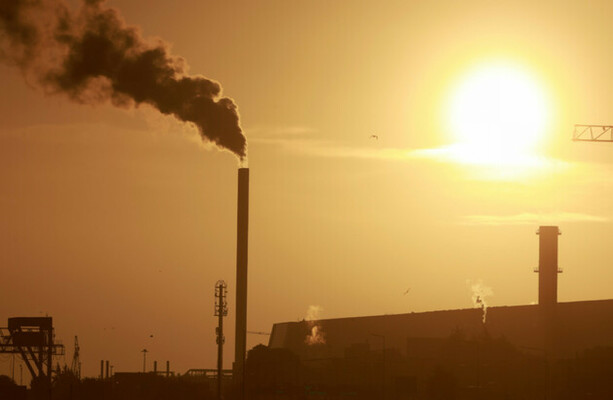
DUBLIN — Ireland is facing a widening gap between its legislative climate ambitions and the atmospheric reality of its current emissions trajectory. Despite a rigorous framework of domestic laws and European Union mandates, new assessments suggest the nation is significantly off course to meet its 2030 greenhouse gas reduction targets, with some projections indicating that the country may deliver only half of the necessary cuts required to meet its legal obligations.
The discrepancy between policy and practice has placed the Irish government under increasing scrutiny. While the Climate Action Plan 2024 outlines an aggressive roadmap for decarbonization, the actual movement of emissions in key sectors—most notably agriculture and transport—remains stubbornly high. This misalignment threatens not only Ireland’s environmental commitments but also its standing within the European Union’s regulatory framework.
At the heart of the crisis is the target established under the Climate Action and Low Carbon Development (Amendment) Act 2021. This legislation mandates a 51% reduction in greenhouse gas emissions by 2030, using 2018 levels as the baseline. However, current data suggests that many of the nation’s primary emission-producing sectors are not merely slowing their growth, but are on track to exceed their allocated sectoral emissions ceilings.
The Sectoral Divide: Where Reductions Are Failing
The challenge of meeting the 2030 targets is not uniform across the Irish economy. Instead, it is characterized by a “sectoral divide” where progress in some areas is being neutralized by stagnation or increases in others. To understand the scale of the shortfall, one must examine the specific sectors that constitute the bulk of Ireland’s carbon footprint.
1. The Agricultural Challenge
Agriculture remains the most complex and contentious hurdle in Ireland’s climate strategy. As a nation with a massive livestock sector, methane emissions—a potent greenhouse gas—are a structural component of the economy. Current trajectories indicate that the agricultural sector is struggling to meet its specific emissions ceiling, largely due to the difficulty of reducing methane output from enteric fermentation in cattle and sheep.
While there have been pushes toward more sustainable land management and improved feed efficiency, the sheer scale of the livestock population means that even incremental improvements are often insufficient to meet the steep downward curve required by the 2030 targets. This has created a significant tension between environmental necessity and the economic viability of the farming community.
2. Transport and the Rise of Emissions
While the transition to electric vehicles (EVs) is accelerating, the transport sector has historically been one of the most difficult to decarbonize in Ireland. Despite investments in public infrastructure, the total volume of traffic and the continued reliance on internal combustion engines have kept transport-related emissions high. For the nation to meet its goals, the rate of vehicle electrification and the shift toward active travel—such as cycling and walking—must outpace the current rate of fossil fuel consumption.
3. Energy and the Built Environment
The decarbonization of residential and commercial heating presents another significant bottleneck. The transition away from fossil fuels in home heating, particularly the replacement of oil and gas boilers with heat pumps, is a cornerstone of the government’s strategy. However, the pace of retrofitting Ireland’s aging building stock remains a critical concern for meeting the necessary emissions reductions by the end of the decade.

The Role of the EPA and Regulatory Oversight
The Environmental Protection Agency (EPA) serves as the primary watchdog for Ireland’s environmental progress. The EPA’s monitoring and reporting are essential for determining whether the state is meeting its legal obligations. Recent assessments by the agency have highlighted the precarious nature of the current path, noting that while some progress is visible, the overall momentum is insufficient for the 2030 deadline.
The EPA’s role is not just to report, but to provide the data that informs the government’s subsequent Climate Action Plans. When the data shows a failure to meet sectoral ceilings, it triggers a need for more radical policy interventions. The current data suggests that the “business as usual” approach, even with current climate policies in place, will lead to a significant shortfall in the total reduction of greenhouse gas emissions.
For policymakers, this creates a “compliance gap.” If Ireland fails to meet its targets, it risks facing legal challenges and significant financial penalties from the European Commission. The EU’s “Fit for 55” package imposes strict requirements on member states, and Ireland’s ability to stay within its emissions budget is a matter of both environmental integrity and economic stability.
What This Means for the Irish Public and Economy
The failure to meet these targets is not merely a matter of statistics; it has profound implications for the Irish people and the national economy. As the gap between targets and reality grows, the eventual policy responses are likely to become more intensive and potentially more disruptive.

- Increased Regulatory Pressure: To close the gap, the government may be forced to implement more stringent regulations on agriculture, transport, and energy use, which could impact various industries and consumer habits.
- Economic Transition Risks: A sudden, late-stage push to meet targets could lead to higher costs for businesses and households as they are forced to transition to greener technologies more rapidly than they have planned for.
- Climate Vulnerability: Beyond the legal and economic risks, the failure to mitigate emissions contributes to the broader global climate crisis, increasing the frequency and severity of extreme weather events that Ireland is already beginning to experience.
For the average citizen, this may manifest as increased costs for carbon-intensive goods, more aggressive mandates for home retrofitting, or changes in how transport is managed in urban centers. The “cost of inaction” is increasingly being framed by economists and environmental scientists as being higher than the “cost of transition.”
Looking Ahead: The Next Policy Checkpoints
The path to 2030 is narrowing. The Irish government is under immense pressure to refine its strategies and ensure that the Climate Action Plans are not just aspirational documents, but actionable blueprints for change. The focus must shift from setting targets to implementing the granular, sector-specific measures that can actually move the needle on emissions.
Key areas for immediate focus include:
- Accelerating Agricultural Innovation: Finding scalable, economically viable ways to reduce methane emissions.
- Massive Retrofitting Programs: Scaling up the deployment of heat pumps and insulation to decarbonize the built environment.
- Public Transport Revolution: Moving beyond EV adoption to a fundamental shift in how people move through the country.
The next major checkpoint will be the review of progress in the upcoming annual climate reports provided by the EPA and the subsequent updates to the national Climate Action Plan. These documents will provide the definitive evidence of whether Ireland is beginning to close the gap or if the nation is drifting further from its 2030 commitments.
As this story develops, we will continue to monitor official government filings and EPA reports for updates on Ireland’s emissions trajectory.
What do you think is the biggest obstacle to Ireland meeting its climate goals? Is it the economic cost, or the difficulty of changing long-standing sectors like agriculture? Share your thoughts in the comments below and share this article to join the conversation.