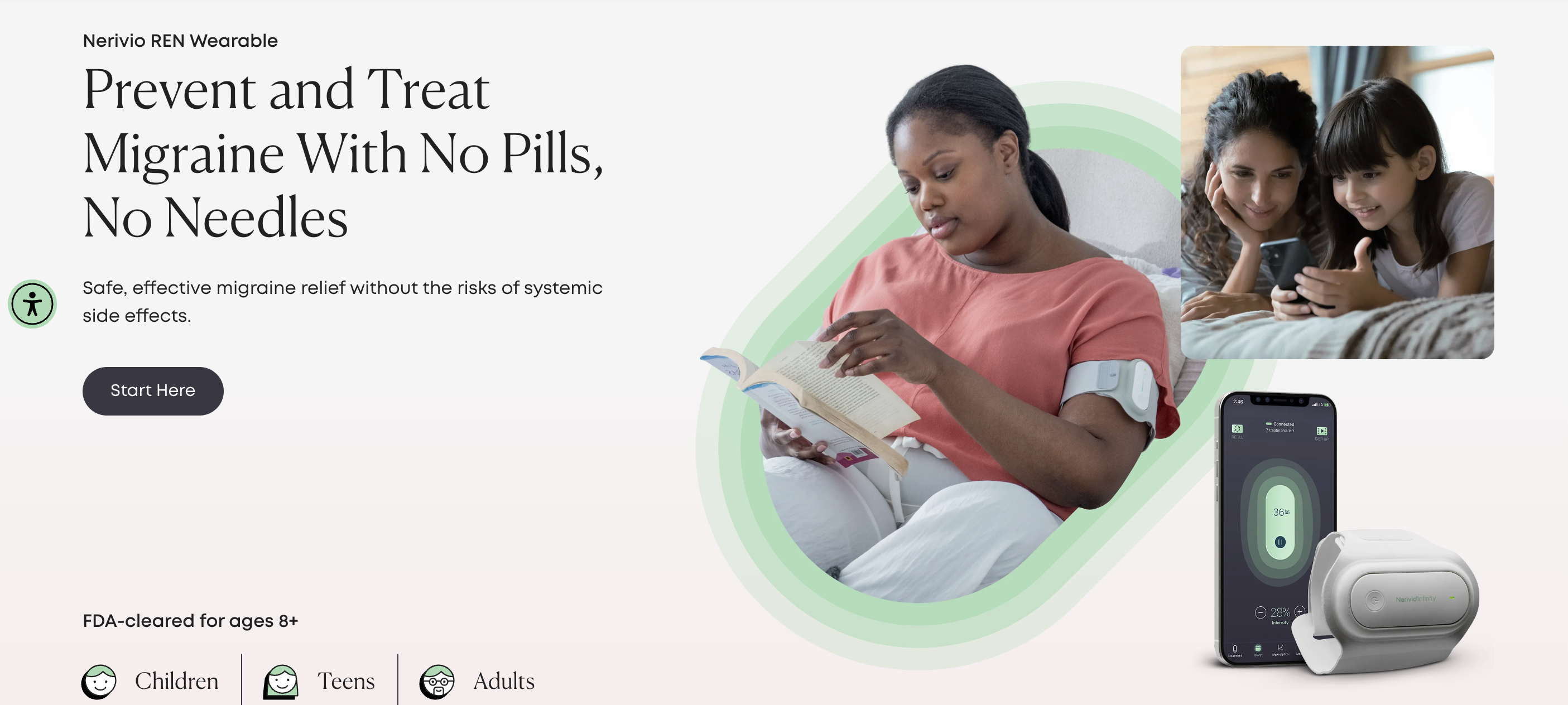
Berlin, Germany – For the millions worldwide who grapple with the debilitating combination of migraine and diabetes, managing both conditions often feels like navigating a complex medical landscape. Many individuals rely on continuous glucose monitoring (CGM) systems to maintain stable blood sugar levels, although similarly seeking effective relief from migraine attacks. Now, a newly published study offers reassuring news: the Nerivio Remote Electrical Neuromodulation (REN) wearable, a non-pharmacological treatment for migraine, can be safely used concurrently with commonly used CGM devices without impacting their accuracy. This finding, published in the Journal of Clinical Medicine, addresses a significant concern for both patients and healthcare providers and opens the door for more integrated and convenient migraine management.
Migraine and diabetes are both chronic conditions with substantial global health impacts. According to the Centers for Disease Control and Prevention, over 37 million Americans have diabetes, and more than 42 million Americans experience migraine. The CDC estimates that approximately 4.5 million people in the United States live with both conditions simultaneously. The interplay between the two can be particularly challenging, as some migraine medications may have metabolic effects, and managing both requires careful consideration. The Nerivio device, developed by Theranica, offers a drug-free alternative for migraine sufferers, utilizing a smartphone-controlled wearable that delivers electrical stimulation to the upper arm to induce conditioned pain modulation – essentially, using a harmless stimulus to block pain signals.
The core question surrounding the use of Nerivio alongside CGM systems stemmed from the fact that both devices rely on Bluetooth technology for data transmission. Concerns arose that the simultaneous operation of both devices could potentially cause interference, leading to inaccurate glucose readings. This new research, still, provides strong evidence to alleviate those concerns. The study, conducted by researchers at Theranica, evaluated 21 adults with diabetes who used their existing CGM systems – Abbott FreeStyle Libre and Dexcom – in conjunction with the Nerivio device during a 45-minute REN session. The results were overwhelmingly positive, demonstrating minimal impact on glucose measurement accuracy.
The Study Findings: Minimal Glucose Reading Deviation
The study meticulously compared glucose measurements taken during active Nerivio stimulation with those taken when the stimulation was paused. Researchers established a stringent threshold for acceptable accuracy – a mean absolute relative difference (MADR) of 5.0%. The results significantly surpassed this benchmark. The median glucose reading deviation across all participants was only 1.6%, well below the predefined limit. Specifically, users of the Abbott FreeStyle Libre system experienced a median deviation of just 1.0%, while Dexcom users showed a deviation of 1.7%. Crucially, the study reported zero instances of Bluetooth disruptions, missed data transmissions, device malfunctions, or any adverse events related to the concurrent use of the devices. The full study details are available in the Journal of Clinical Medicine.
Understanding Remote Electrical Neuromodulation (REN) and Conditioned Pain Modulation
The Nerivio device utilizes a technique called Remote Electrical Neuromodulation (REN). This involves stimulating peripheral nerves in the upper arm, which, in turn, triggers a process known as Conditioned Pain Modulation (CPM). CPM is a naturally occurring analgesic mechanism within the body, where stimulation in one area can inhibit pain in another. Theranica, a neuromodulation therapeutics company, is pioneering drug-free treatments for idiopathic pain conditions, focusing on harnessing this inherent pain-inhibiting capability. According to Theranica’s website, the company’s goal is to provide safe and effective alternatives to traditional pain management strategies, particularly for those seeking to avoid the potential side effects and drug interactions associated with pharmacological interventions.
Implications for Patients and Healthcare Providers
This compatibility study has significant implications for the millions of individuals managing both migraine and diabetes. Previously, some patients and healthcare providers may have hesitated to adopt the Nerivio device due to concerns about potential interference with their CGM systems. These findings now provide reassurance that the two technologies can coexist safely and effectively. Dr. Richelle deMayo, chief medical information officer at Connecticut Children’s Research Institute and a contributing author of the study, emphasized the importance of this validation. “Migraine treatment can be especially complex for individuals with diabetes because many pharmacologic options carry metabolic or cardiovascular considerations,” she noted. “As connected health technologies continue to expand, confirming safe multi-device operation is increasingly important for real-world patient care.”
The Growing Landscape of Digital Therapeutics
The Nerivio device exemplifies the growing field of digital therapeutics – evidence-based therapeutic interventions delivered through software and hardware. These technologies are increasingly being used to manage a wide range of conditions, from mental health disorders to chronic pain. The success of Nerivio and similar devices hinges on demonstrating both efficacy and safety, as well as seamless integration with existing healthcare practices. The recent study underscores the importance of rigorous testing and validation to ensure that these technologies can be safely and effectively incorporated into patient care plans. Theranica has also announced that a study confirms the safety of using the Nerivio wearable simultaneously with contemporary continuous glucose monitoring devices. More information on this study can be found on the Nerivio website.
Looking ahead, further research will likely focus on optimizing the use of REN therapy for different migraine subtypes and exploring its potential applications in other chronic pain conditions. The continued development and validation of digital therapeutics hold promise for transforming the landscape of healthcare, offering patients more personalized, convenient, and effective treatment options. The FDA has been increasingly involved in regulating digital therapeutics, establishing a framework for evaluating their safety and efficacy.
As the number of individuals living with comorbid conditions like migraine and diabetes continues to rise, the need for safe and compatible treatment strategies becomes increasingly critical. The Nerivio device, now validated for use alongside CGM systems, represents a significant step forward in providing comprehensive and integrated care for this vulnerable population.
The next step for Theranica involves ongoing monitoring of real-world patient data to further assess the long-term safety and effectiveness of Nerivio in conjunction with CGM devices. Readers interested in learning more about Nerivio and its potential benefits are encouraged to consult with their healthcare provider and visit the Nerivio website for additional information. We invite you to share your thoughts and experiences with migraine and diabetes management in the comments below.
Worth a look