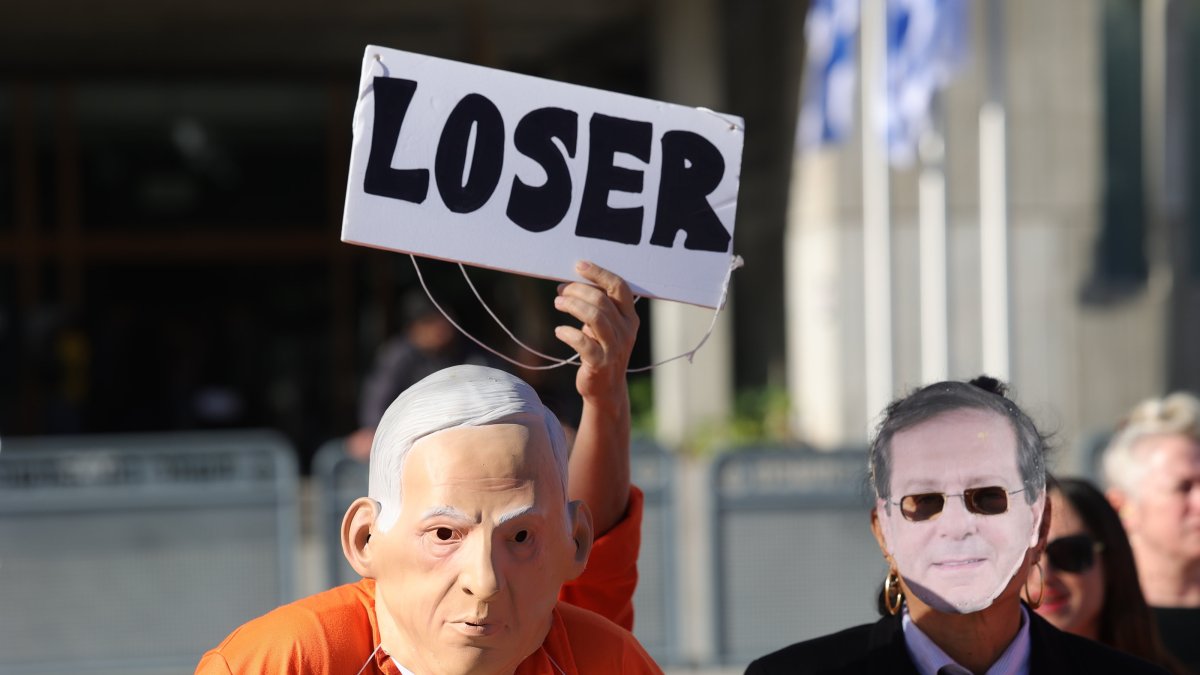
netanyahu’s Legal Battles: A Deep dive into Pardon Requests and Allegations
Benjamin Netanyahu, Israel’s current prime minister, finds himself at a critical juncture, facing both domestic corruption charges and international accusations of war crimes. His recent request for a presidential pardon has ignited a firestorm of debate, further complicating an already fraught political landscape. Let’s break down the situation, exploring the charges, the pardon process, and the implications for Israel and the international community.
The Pardon Request & Political Fallout
On Sunday, Netanyahu formally petitioned President Isaac Herzog for a pardon related to ongoing corruption allegations. Though, the opposition is vehemently urging Herzog to deny the request unless Netanyahu acknowledges wrongdoing and steps down from his position. Adding another layer of complexity, former U.S. President Donald Trump has also reportedly appealed to Herzog on Netanyahu’s behalf.
Supporters of a pardon argue it could foster unity within Israel, aiming to bridge deep societal divisions. Yet, the process is far from straightforward, with reports suggesting herzog’s review could take weeks.
Understanding the Corruption Charges
Netanyahu’s legal troubles stem from three primary cases, each alleging different forms of corruption. He consistently maintains his innocence in all of them. Here’s a closer look:
* Case 1000: This case centers around accusations that Netanyahu and his wife received lavish gifts – including expensive cigars and champagne – from wealthy individuals in exchange for political favors.
* Case 2000: Allegations here involve purported negotiations with Arnon Mozes,the publisher of Yedioth Ahronoth,to secure more favorable media coverage.
* Case 4000: Considered the most serious, this case alleges that Netanyahu provided regulatory benefits to Shaul Elovitch, formerly of Walla and Bezeq, in return for positive media coverage on those platforms.
Currently, Israeli law stipulates that a presidential pardon requires an admission of guilt, a condition Netanyahu has steadfastly refused to meet since the start of his trial.
The International Criminal Court & War Crimes Allegations
The legal challenges extend beyond domestic concerns. In November 2024, the International Criminal Court (ICC) issued arrest warrants for both Netanyahu and former Defense Minister Yoav Gallant.These warrants relate to alleged war crimes and crimes against humanity committed during the conflict in Gaza.
The ICC’s inquiry focuses on the devastating impact of the conflict, where over 70,000 Palestinians, the vast majority of whom are women and children, have been killed as October 2023. These accusations represent a critically important escalation of the legal and political pressure on Netanyahu.
What Does This Mean for you?
This situation has far-reaching implications. For Israelis, it raises questions about leadership, accountability, and the rule of law. For the international community, it highlights the complexities of the Israeli-Palestinian conflict and the importance of upholding international humanitarian law.
You might be wondering what happens next. The coming weeks will be crucial as President Herzog deliberates on the pardon request.Concurrently, the ICC investigation will continue to unfold, possibly leading to further legal proceedings.
Looking Ahead
The confluence of these legal battles presents a profound challenge to Israel’s political stability and its standing on the world stage. Whether Netanyahu will ultimately be granted a pardon, face trial, or be subject to international prosecution remains to be seen. However, one thing is certain: this saga will continue to shape the future of Israel and the region for years to come.
Keep reading
- Woman’s Animal Costume Dance at Gentse Feesten Leads to Huge Surprise from Partner
- Why Iran’s Regime Survives: The Doctrine of Clerical Rule and Repression
- Incident Response Analyst Job at Cisco in Austin, Texas (news-usa.today)
- Rectal Cancer Surgery: Good Radiation Therapy Response May Allow Omission of Lateral Lymph Node Dissection (world-today-news.com)