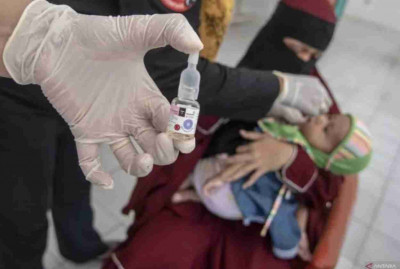
Polio: A Resurgent Public Health Emergency Demanding International Attention
The specter of polio, a disease once nearing eradication, is once again a significant global health concern. Recent outbreaks in multiple countries, coupled with challenges in vaccination efforts, have prompted the World Health Organization (WHO) and other international health bodies to declare a renewed public health emergency. Whereas significant progress has been made in eliminating polio worldwide, the persistence of the virus in certain regions and the emergence of vaccine-derived poliovirus (VDPV) pose a serious threat to global health security. This resurgence underscores the critical importance of sustained vaccination campaigns, robust surveillance systems, and international collaboration to protect vulnerable populations.
Polio, or poliomyelitis, is a highly infectious viral disease that primarily affects young children. The virus invades the nervous system and can cause paralysis, which is often permanent. While there is no cure for polio, it is preventable through immunization. The polio vaccine, available in both inactivated (IPV) and oral (OPV) forms, is highly effective in preventing the disease. Although, achieving and maintaining high vaccination coverage rates is essential to interrupt the transmission of the virus and protect communities.
Understanding the Current Polio Landscape
For decades, the Global Polio Eradication Initiative (GPEI), spearheaded by the WHO, UNICEF, Rotary International, and the U.S. Centers for Disease Control and Prevention (CDC), has been at the forefront of efforts to eliminate polio worldwide. Significant strides were made, with the number of polio cases declining dramatically since the late 1980s. However, the eradication effort has faced numerous challenges, including political instability, conflict, logistical difficulties in reaching remote areas, and vaccine hesitancy.
As of early 2026, polio remains endemic in Afghanistan and Pakistan. These two countries continue to report cases of wild poliovirus type 1 (WPV1), the most dangerous form of the virus. However, the emergence of circulating vaccine-derived poliovirus (cVDPV) in several other countries, including Mozambique, Malawi, and Yemen, has complicated the eradication effort. CVDPV arises in areas with low immunization coverage, where the weakened virus in the oral polio vaccine can mutate and regain the ability to cause paralysis. According to the WHO, outbreaks of cVDPV represent a significant risk to children in under-immunized communities.
The Role of Vaccine-Derived Poliovirus
The oral polio vaccine (OPV) has been instrumental in reducing polio cases globally due to its ease of administration and ability to provide mucosal immunity, which helps prevent the spread of the virus. However, OPV contains a live, attenuated (weakened) virus. In areas with low immunization coverage, this weakened virus can circulate and, in rare cases, mutate back to a form that can cause paralysis – This represents cVDPV. The risk of cVDPV is higher in populations with compromised immune systems.
The WHO and its partners are actively working to address the challenge of cVDPV. Strategies include strengthening routine immunization programs, conducting targeted vaccination campaigns, and improving surveillance systems to detect and respond to outbreaks quickly. In November 2021, the WHO recommended a phased withdrawal of OPV type 2, as it is the most common type associated with cVDPV outbreaks. This transition is being carefully managed to ensure that it does not lead to a resurgence of WPV1 or WPV3.
Challenges to Polio Eradication
Several factors continue to hinder the global polio eradication effort. Conflict and insecurity in countries like Afghanistan and Pakistan build it tricky to access children with vaccines. Political instability and mistrust of health workers can also contribute to vaccine hesitancy. Misinformation and rumors about the polio vaccine, often spread through social media, can further undermine vaccination efforts.
Logistical challenges, such as maintaining the cold chain (the system for keeping vaccines at the correct temperature), are also significant, particularly in remote and underserved areas. The cost of polio eradication is substantial, requiring sustained financial commitment from donor countries and organizations. The WHO estimates that approximately $2.6 billion is needed to fully implement the current polio eradication strategy through 2026.
International Response and Future Strategies
The international community remains committed to eradicating polio. The GPEI continues to coordinate global efforts, providing technical and financial support to countries affected by the virus. The WHO plays a crucial role in surveillance, outbreak response, and vaccine development. UNICEF is responsible for procuring and distributing the polio vaccine, while Rotary International mobilizes resources and advocates for polio eradication.
Recent strategies include the utilize of novel oral polio vaccine type 2 (nOPV2), which is genetically modified to be more stable and less likely to revert to a virulent form. NOPV2 has been deployed in several countries experiencing cVDPV outbreaks and has shown promising results in controlling the spread of the virus. Strengthening routine immunization programs is also a key priority, ensuring that all children receive the recommended doses of the polio vaccine. Improved surveillance systems, including environmental surveillance (testing sewage for the presence of the poliovirus), are essential for detecting and responding to outbreaks quickly.
The WHO emphasizes the importance of a coordinated, multi-faceted approach to polio eradication, involving governments, health workers, community leaders, and international organizations. Addressing the underlying factors that contribute to vaccine hesitancy, such as misinformation and mistrust, is also crucial. Investing in health systems strengthening and improving access to healthcare services are essential for creating a sustainable environment for polio eradication and preventing future outbreaks.
The Importance of Continued Vigilance
The recent resurgence of polio underscores the fragility of progress in disease eradication and the importance of continued vigilance. Even though polio is on the brink of eradication, the virus remains a threat to global health security. Sustained investment in vaccination programs, surveillance systems, and outbreak response is essential to protect vulnerable populations and ensure that future generations are free from the crippling effects of polio.
The global community must remain steadfast in its commitment to polio eradication, recognizing that this is a shared responsibility. By working together, we can overcome the challenges and finally achieve a world free from polio. The next major milestone will be the continued monitoring of vaccination coverage rates and the assessment of the impact of the nOPV2 rollout in affected countries, with updates expected from the WHO in the latter half of 2026.
What can you do? Support organizations like the WHO and UNICEF that are working to eradicate polio. Share accurate information about the polio vaccine and encourage others to get vaccinated. Stay informed about the latest developments in the polio eradication effort and advocate for continued funding and support.
Keep reading