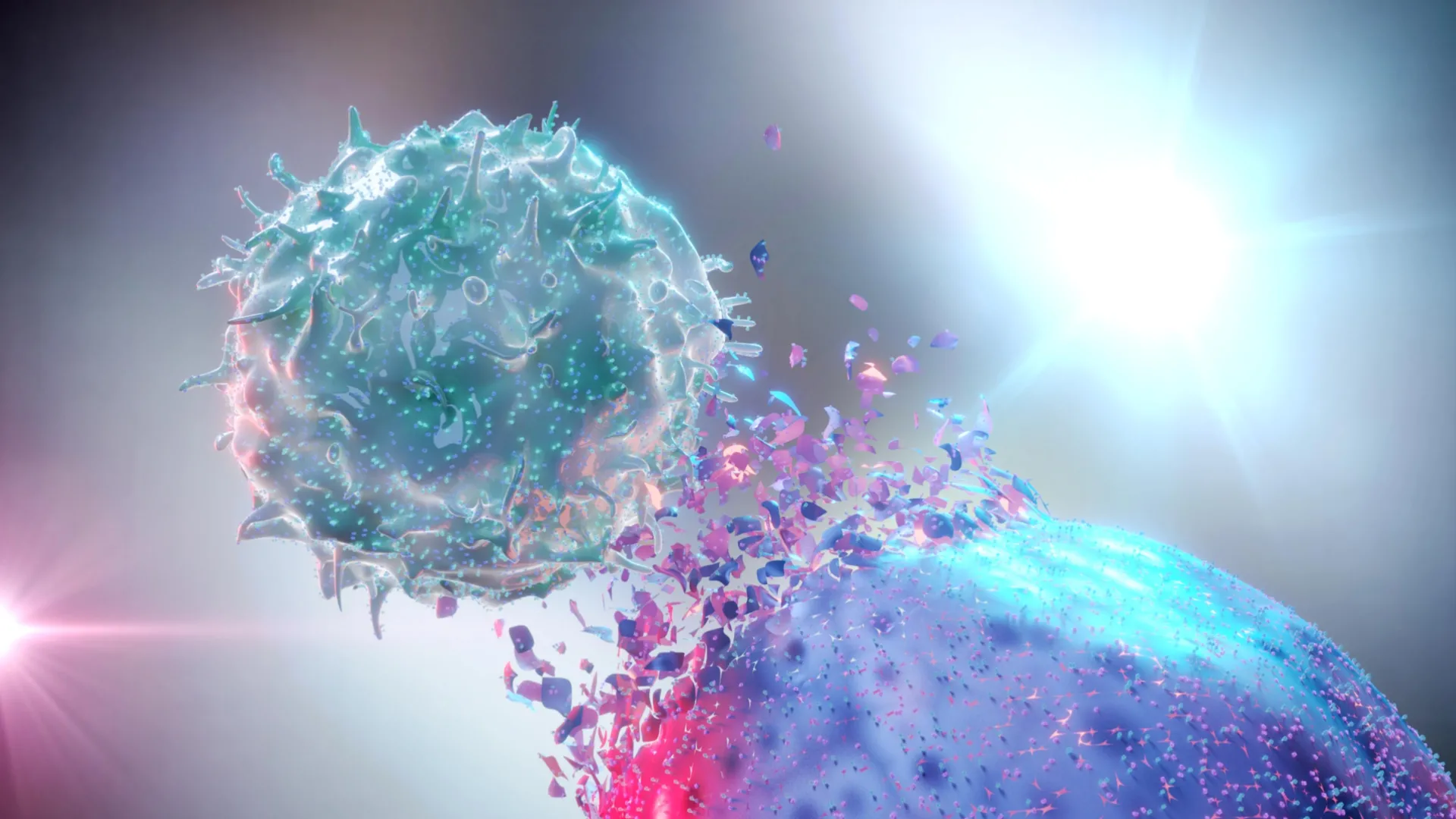
Scientists in Brazil have made a significant advance in cancer immunotherapy by enhancing the power and precision of natural killer (NK) cells, a type of immune cell that can destroy tumors. The research, conducted at the Ribeirão Preto Blood Center and the Center for Cell-Based Therapy (CTC), focused on improving chimeric antigen receptor (CAR) designs in the NK-92 cell line. By incorporating specific signaling components known as 2B4 and DAP12 into the CAR structure, researchers were able to boost the cells’ activation state and readiness to attack cancer cells.
The study, published in Frontiers in Immunology, addresses a key challenge in the development of CAR-NK cell therapies: identifying which internal signaling mechanisms allow these cells to perform at their maximum potential. While CAR-T cell therapies have already transformed treatment for certain blood cancers, optimizing CAR-NK cells remains an active area of research due to their potential for safer, more accessible immunotherapy.
In a surprising finding, the researchers discovered that briefly suppressing the engineered NK cells with a drug before leverage made them even more effective later. This preconditioning step appeared to enhance the cells’ subsequent ability to destroy tumor cells, suggesting a novel strategy to improve the efficacy of cell-based cancer treatments.
The approach could contribute to the development of safer, stronger next-generation cancer immunotherapies. By making immune cells more powerful and precise, scientists aim to reduce side effects while increasing treatment effectiveness, particularly for patients who do not respond to current therapies.
Understanding CAR-NK Cell Therapy
Chimeric antigen receptor (CAR) therapy involves engineering a patient’s immune cells to better recognize and attack cancer cells. In CAR-T cell therapy, T cells are modified in the laboratory to express CARs that target specific antigens on tumor surfaces. Once infused back into the patient, these engineered T cells can seek out and destroy cancer cells.
CAR-NK cell therapy follows a similar principle but uses natural killer cells instead of T cells. NK cells are part of the innate immune system and have the ability to kill tumor cells without prior sensitization. They similarly carry a lower risk of causing graft-versus-host disease or cytokine release syndrome compared to T cells, making them an attractive alternative for allogeneic (off-the-shelf) therapies.
Despite their promise, CAR-NK cells have faced challenges related to persistence, expansion, and tumor-killing efficiency in the body. Researchers have been investigating how different signaling domains within the CAR structure influence NK cell function. The inclusion of costimulatory molecules like 2B4 and DAP12 is intended to provide additional activation signals that enhance the cells’ cytotoxic activity and longevity.
Key Findings from the Brazilian Study
Using the NK-92 cell line—a widely studied model for NK cell research—the team tested CAR constructs incorporating the 2B4 and DAP12 signaling components. These molecules are known to play roles in immune cell activation: 2B4 is a surface receptor involved in NK cell signaling, while DAP12 is an adaptor protein that associates with various immune receptors to trigger intracellular signaling pathways.
The results showed that CAR-NK cells equipped with 2B4 and DAP12 exhibited significantly improved readiness to attack tumors. This heightened activation state translated into greater cytotoxic activity against cancer cells in laboratory tests. The researchers noted that these modifications helped overcome some of the functional limitations observed in earlier CAR-NK designs.
Perhaps most intriguingly, the team found that transient pharmacological suppression of the engineered NK cells prior to use led to enhanced performance afterward. This counterintuitive result suggests that a brief period of inhibition may reset or prime the cells for a more robust response upon reactivation, a phenomenon that warrants further investigation in preclinical models.
Implications for Cancer Treatment
The advancement of CAR-NK cell technology holds particular promise for expanding access to immunotherapy. Unlike CAR-T cells, which are typically manufactured from a patient’s own cells (autologous), NK cells can be sourced from healthy donors and potentially manufactured in large batches for use across multiple patients (allogeneic). This could reduce production time and costs, making the therapy more widely available.
Safety is another potential advantage. NK cells do not typically cause graft-versus-host disease, and their activity is naturally regulated by inhibitory receptors that prevent attacks on healthy tissues. When combined with precise CAR targeting, this may lower the risk of off-target effects.
While the current study was conducted in vitro using the NK-92 cell line, the findings provide a foundation for future research using primary NK cells and in vivo models. The next steps will involve validating these results in more complex biological systems and assessing long-term safety and efficacy.
Broader Context in Immunotherapy Research
The Brazilian study contributes to a growing body of work aimed at refining immune cell engineering for cancer treatment. Recent advances have explored various strategies to enhance CAR functionality, including tuning signaling domains, incorporating cytokine secretion capabilities, and designing logic-gated CARs that respond to specific tumor microenvironment cues.
Other research has focused on overcoming tumor-induced immune suppression, a major barrier to immunotherapy success. Tumors often evade immune detection by reducing major histocompatibility complex (MHC) class I expression, expressing immune checkpoint ligands like PD-L1, or creating an immunosuppressive microenvironment rich in regulatory T cells and cytokines such as TGF-β.
Approaches like the one described in this study—boosting immune cell readiness while exploring preconditioning techniques—may aid counteract these evasion mechanisms. By making immune cells more resilient and responsive, scientists hope to improve outcomes for patients with solid tumors, which have been less responsive to current immunotherapies than hematologic malignancies.
As the field progresses, collaboration between academic institutions, biotechnology companies, and clinical trial networks will be essential to translate laboratory findings into safe and effective treatments. Ongoing clinical trials of CAR-NK cells are already underway for various cancers, including leukemia, lymphoma, and solid tumors such as glioblastoma and ovarian cancer.
For now, the study from Ribeirão Preto and CTC represents a meaningful step forward in the effort to harness the body’s own defenses against cancer. By refining the tools used to engineer immune cells, researchers are working toward therapies that are not only more effective but also safer and more accessible to patients worldwide.
Worth a look