
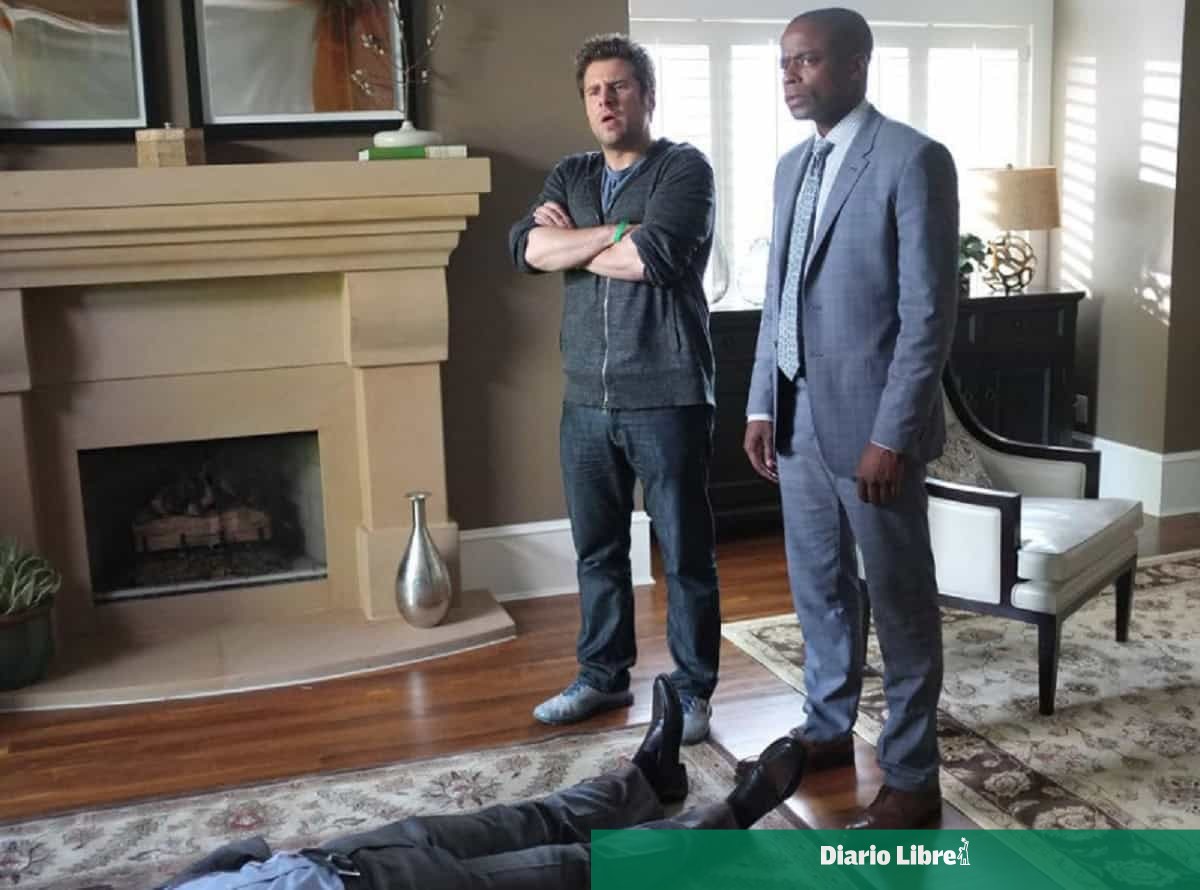
When Psych premiered on USA Network in July 2006, it arrived during a television landscape saturated with procedural dramas. Yet, what began as a quirky take on the detective genre quickly evolved into something far more enduring: a cult phenomenon celebrated for its sharp wit, inventive storytelling, and the deeply felt friendship at its core. Created by Steve Franks, the series followed Shawn Spencer (James Roday Rodriguez), a young man with hyper-observant skills who convinces the Santa Barbara Police Department he’s a psychic to avoid being charged with crimes he solved through sheer intellect. Alongside his reluctant best friend Burton “Gus” Guster (Dulé Hill), Shawn navigated absurd cases, pop-culture-laden banter, and a growing emotional resonance that kept fans engaged for eight seasons and two standalone films.
The show’s premise—blending comedy, mystery, and procedural elements—was initially met with cautious optimism. Critics noted its resemblance to earlier detective comedies like Monk but highlighted its unique tone: less neurotic, more playful, and unafraid to embrace absurdity. Over time, Psych distinguished itself not just through humor, but through its commitment to character continuity and emotional authenticity. Unlike many procedurals that reset weekly, Psych allowed its protagonists to grow, face consequences, and deepen their bond in ways that felt earned rather than forced. This balance of levity and heart became the show’s signature, transforming what could have been a forgettable sitcom into a touchstone for fans seeking both laughter and genuine connection.
Central to Psych’s enduring appeal is the dynamic between Shawn and Gus. Their friendship—rooted in childhood, tested by secrecy, and sustained by mutual loyalty—serves as the emotional anchor of the series. Gus, the responsible, pharmaceutical-sales-minded straight man to Shawn’s chaotic energy, often finds himself dragged into schemes against his better judgment. Yet, his steadfast presence underscores a theme the show returns to repeatedly: that true friendship means showing up, even when it’s inconvenient, embarrassing, or downright dangerous. Their exchanges—filled with rapid-fire references to Star Wars, 80s music, and obscure trivia—function not just as comedy, but as a language of intimacy, a shorthand built over years of shared experience.
This emphasis on platonic love was rare in mid-2000s television, where romantic pairings often dominated narrative focus. By prioritizing Shawn and Gus’s bond, Psych offered an alternative vision of intimacy—one that didn’t require romance to be profound. Their relationship evolved through misunderstandings, job changes, romantic entanglements, and even brief separations, yet always returned to a foundation of trust. In interviews, both Roday Rodriguez and Hill have cited this friendship as the reason they returned for the 2017 and 2020 revival films, Psych: The Movie and Psych 2: Lassie Reach Home, noting that the characters’ growth mirrored their own real-life camaraderie developed over years of collaboration.
The show’s humor operated on multiple levels. Surface-level gags—such as Shawn’s outrageous disguises or Gus’s horrified reactions to absurd situations—delivered immediate laughs. Beneath that lay a sophisticated layer of meta-humor: frequent fourth-wall breaks, parody of police procedural tropes, and self-aware nods to the audience’s own pop-culture knowledge. Episodes often began with cold opens set in the 1980s, depicting young Shawn and Gus learning life lessons from Henry Spencer (Corbin Bernsen), Shawn’s stern but loving father and a former detective. These flashbacks weren’t just nostalgic; they provided context for Shawn’s skills and his complicated need for approval, adding psychological depth to what could have been a one-note gag character.
Structurally, Psych embraced the “case-of-the-week” format while using it as a vehicle for experimentation. Episodes ranged from straightforward mysteries to full-blown genre parodies—Psych tackled horror (“Scary Sherry: Bianca’s Toast”), musicals (“Psych: The Musical”), noir (“He Dead”), and even silent-film homage (“In Plain Fright”). This willingness to play with tone and form kept the series fresh across its run. Notably, the 100th episode, “100 Clues”, was a live-action adaptation of the board game Clue, filmed in real time with multiple endings aired across different time zones—a technical and creative feat that underscored the show’s ambition beneath its comedic veneer.
The series also benefited from a strong supporting cast. Timothy Omundson’s portrayal of Carlton Lassiter, the initially skeptical and rigid head detective, evolved into one of the show’s most beloved arcs. Over seasons, Lassiter softened, revealed vulnerabilities, and formed an unlikely camaraderie with Shawn and Gus—particularly evident in later seasons where he sought their facilitate despite his pride. Similarly, Maggie Lawson’s Juliet O’Hara began as a love interest for Shawn but grew into a capable, independent officer whose relationship with Shawn faced realistic challenges, including trust issues stemming from his deception about his psychic abilities. Her eventual discovery of the truth—and decision to stay with him anyway—added emotional weight to their storyline.
Behind the scenes, Psych was notable for its collaborative atmosphere. Roday Rodriguez, who not only starred but also wrote and directed several episodes, has described the set as a place where creativity was encouraged and failure was tolerated in pursuit of innovation. This environment allowed for risks like the musical episode, which featured original songs and choreography—a departure that could have faltered but instead became a fan favorite. The show’s theme song, “I Know, You Know” by The Friendly Indians, became an earworm synonymous with the series’ upbeat, clever identity.
Though Psych concluded its original run in 2014, its legacy endured through streaming platforms and passionate fan engagement. The decision to revive the franchise with two television movies reflected both audience demand and the creators’ desire to provide closure. Psych: The Movie (2017) reunited the core cast to resolve Shawn and Juliet’s wedding storyline, while Psych 2: Lassie Come Home (2020) focused on Lassiter’s recovery from a stroke—a plotline inspired by real-life health challenges faced by Timothy Omundson, who suffered a cardiac event in 2017. The second film handled the topic with sensitivity, blending humor with genuine concern for the character’s well-being, and allowed the ensemble to showcase dramatic range alongside their comedic timing.
These revivals were more than nostalgia trips; they affirmed that the emotional core of Psych remained intact. By addressing aging, responsibility, and the enduring nature of friendship, the films demonstrated that the characters had grown alongside their audience. Shawn was no longer just the irresponsible trickster; he was a man learning to commit. Gus had evolved beyond the sidekick into a confident partner. Their bond, tested by time and circumstance, remained the constant—a testament to the show’s belief that the most enduring mysteries aren’t solved with clues, but with loyalty.
Today, Psych continues to find new viewers on platforms like Peacock and Netflix, where its blend of humor, heart, and rewatchability appeals to audiences seeking comfort without sacrificing intelligence. Its influence can be seen in later series that balance procedural elements with strong character dynamics and tonal experimentation. Yet few have matched its specific alchemy: a show that made you laugh, believe, and experience—all while celebrating the idea that the best partnerships aren’t built on perfection, but on showing up, again and again, with snacks, sarcasm, and an unspoken promise to always have each other’s back.
As television continues to evolve, Psych stands as a reminder that genre conventions can be reinvented not through cynicism, but through affection—for the characters, the audience, and the shared language of friendship that turns even the most bizarre mystery into something deeply human.