New Hope for Millions: Monash Engineers Develop Heart Pump for Previously Untreatable Heart Failure
for over half of the 64 million people worldwide living with heart failure, treatment options have been limited to medication and palliative care. A notable portion suffers from Heart Failure with Preserved Ejection Fraction (HFpEF), a condition where the heart muscle becomes stiff and thickened, rendering standard heart pump technology ineffective – and potentially harmful. now, groundbreaking research from Monash University engineers is poised to change that, offering a new lifeline to these patients.
This article delves into the innovative work being done to develop a dedicated heart pump for HFpEF, exploring the challenges, the solutions, and the potential impact on millions of lives.
The Challenge of HFpEF: Why Existing Heart Pumps Fail
Traditional ventricular assist devices (vads) are designed for hearts that struggle to pump enough blood. HFpEF, however, presents a different problem: the heart struggles to relax and fill with blood.
* Stiffened Muscle: The thickened heart walls and smaller ventricle space in HFpEF patients mean standard pumps simply don’t fit properly.
* Harmful Strain: Attempting to force a standard pump into this situation can actually worsen the condition and cause further damage.
* Lack of Options: Until now, patients with HFpEF have largely been excluded from mechanical circulatory support, leaving them with limited treatment pathways.
Monash University’s Innovative Solution: A Pump Designed for HFpEF
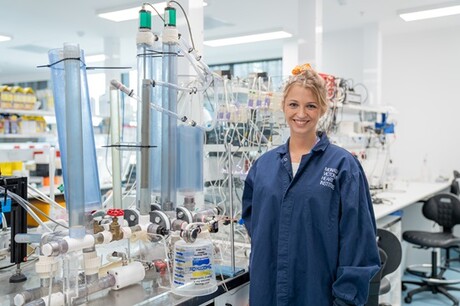
Recognizing this critical gap in care, Nina Langer, a PhD candidate in mechanical engineering at Monash University, embarked on a research journey to adapt existing heart pump technology for HFpEF patients. Her work is now contributing to the growth of the first mechanical circulatory support device specifically tailored for this condition.
Langer’s approach involved:
- Purpose-Built Test Rig: She designed a complex “plumbing system” – a test rig with pipes, pumps, and valves - to accurately simulate cardiovascular conditions.
- Real-Time Adjustments: This allowed for rigorous testing of modifications to existing devices and immediate adjustments based on observed performance.
- Computational Modeling: In collaboration with MIT, Langer developed a computational model, experimentally validated, to further refine pump designs and predict performance.
Key Findings & Publication in Annals of Biomedical Engineering
Langer’s research, recently published in Annals of Biomedical Engineering (doi: 10.1007/s10439-024-03585-y),demonstrates the potential of a dedicated HFpEF heart pump to:
* Bridge to transplant: Keep patients alive and stable while awaiting a donor heart.
* Long-Term Solution: Provide ongoing mechanical support for those ineligible for transplantation.
* Improve Blood Flow: Alleviate strain on the heart and enhance overall cardiovascular function.
The study underscores a crucial point: repurposing existing devices isn’t enough. A dedicated pump, designed specifically for the unique challenges of HFpEF, is essential.
The Artificial Heart Frontiers Program (AHFP) & Future Development
The findings from Langer’s research are directly informing the development of a new mechanical circulatory support device lead by the Monash-led Artificial Heart Frontiers Program (AHFP). as the largest cardiovascular device program in Australia,the AHFP is uniquely positioned to translate this research into a tangible solution for patients.
Watch a video showcasing the Monash University tailored heart pump laboratory set-up
Expert Perspective: The Importance of Targeted Innovation
Professor Shaun Gregory, PhD supervisor to langer and Co-Director of the AHFP, emphasizes the significance of this work: “Nina’s research captures the unmet need for novel, targeted mechanical circulatory support for the largest cohort of patients with heart failure – over half fall into the HFpEF category.” He adds that the study provides “a clearer device development pathway” after years of recognizing this critical need.
Langer herself concludes, “A dedicated pump could transform care for millions, offering a new lease on
Keep reading