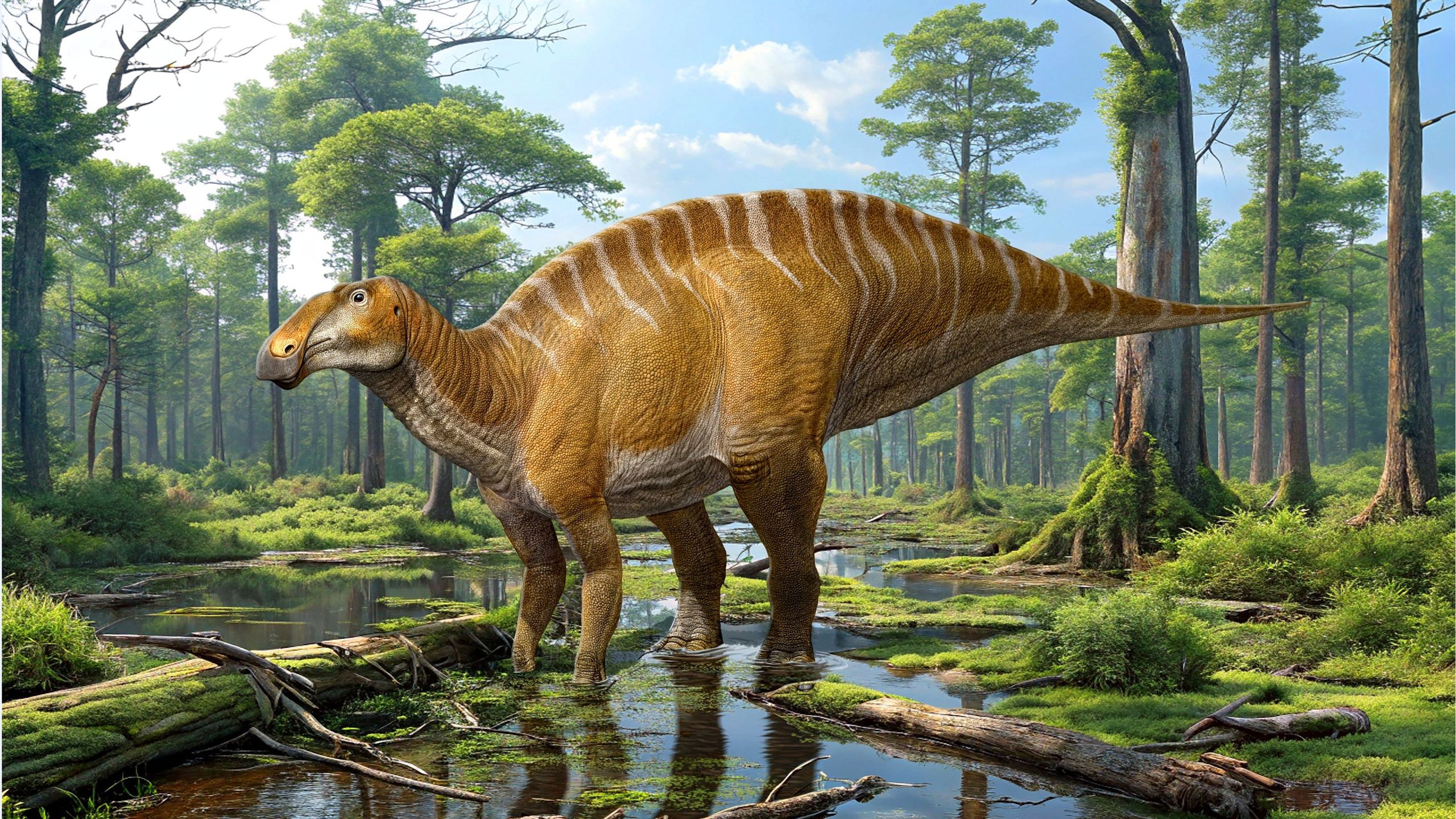
New Giant Duck-Billed Dinosaur Species Unearthed: Meet Acristavus wimani
Paleontologists have identified a new species of massive, duck-billed dinosaur that roamed North america during the Late Cretaceous period. The discovery, detailed in a recent study, sheds new light on the diversity and evolution of these iconic herbivores. Acristavus wimani – meaning “crestless face” – offers valuable insights into a pivotal period in dinosaur history.
A Skull Tells a Story
The identification hinges on a remarkably well-preserved skull, currently housed at the Smithsonian national Museum of Natural History.As Anthony Fiorillo, executive director of the New Mexico Museum of Natural History and Science, explains, “As a general rule… skulls are really the basis for identifying differences in animals.” A unique skull provides far more conclusive evidence than isolated bones like a toe bone.
this particular skull exhibited distinct characteristics when compared to other hadrosaurids (the family of duck-billed dinosaurs). These differences were significant enough to warrant classification as a new genus and species.
Close Relatives, Distinct Paths
acristavus wimani is closely related to Kritosaurus, suggesting their evolutionary paths diverged relatively recently. However, this new species possesses anatomical features that clearly set it apart.
Edward Malinzak,a paleontologist at Penn State university Lehigh Valley,clarifies: “Kritosaurus is still a valid genus with species of it’s own.” The team re-examined a specimen previously categorized as Kritosaurus and determined it deserved its own designation.
What Does This Discovery Mean?
the co-existence of Acristavus wimani and Kritosaurus in the same environment presents an intriguing question. Researchers are now focused on understanding how these related species managed to thrive alongside each other.
Here’s what this discovery contributes to our understanding:
* Increased Diversity: It highlights the remarkable diversity of duck-billed dinosaurs during the Late Cretaceous.
* Evolutionary History: Tracing these lineages helps reconstruct the evolutionary history of hadrosaurids.
* Paleoenvironment: Understanding species distribution provides clues about the ancient environment they inhabited.
* Global Spread: The findings support the idea that this group of dinosaurs experienced a widespread expansion during the Late Cretaceous.
As Malinzak notes, ”it showed that this group not only exploded with diversity across the continent at one point, but also contributed to the world-wide spread of this group in the Late Cretaceous.”
This discovery underscores the importance of continued paleontological research. Each new find refines our understanding of these magnificent creatures and the world they once called home.
Want to stay updated on the latest dinosaur discoveries? [Newslettersignuplink-[Newslettersignuplink-[Newslettersignuplink-[Newslettersignuplink-if available from original source]
Worth a look