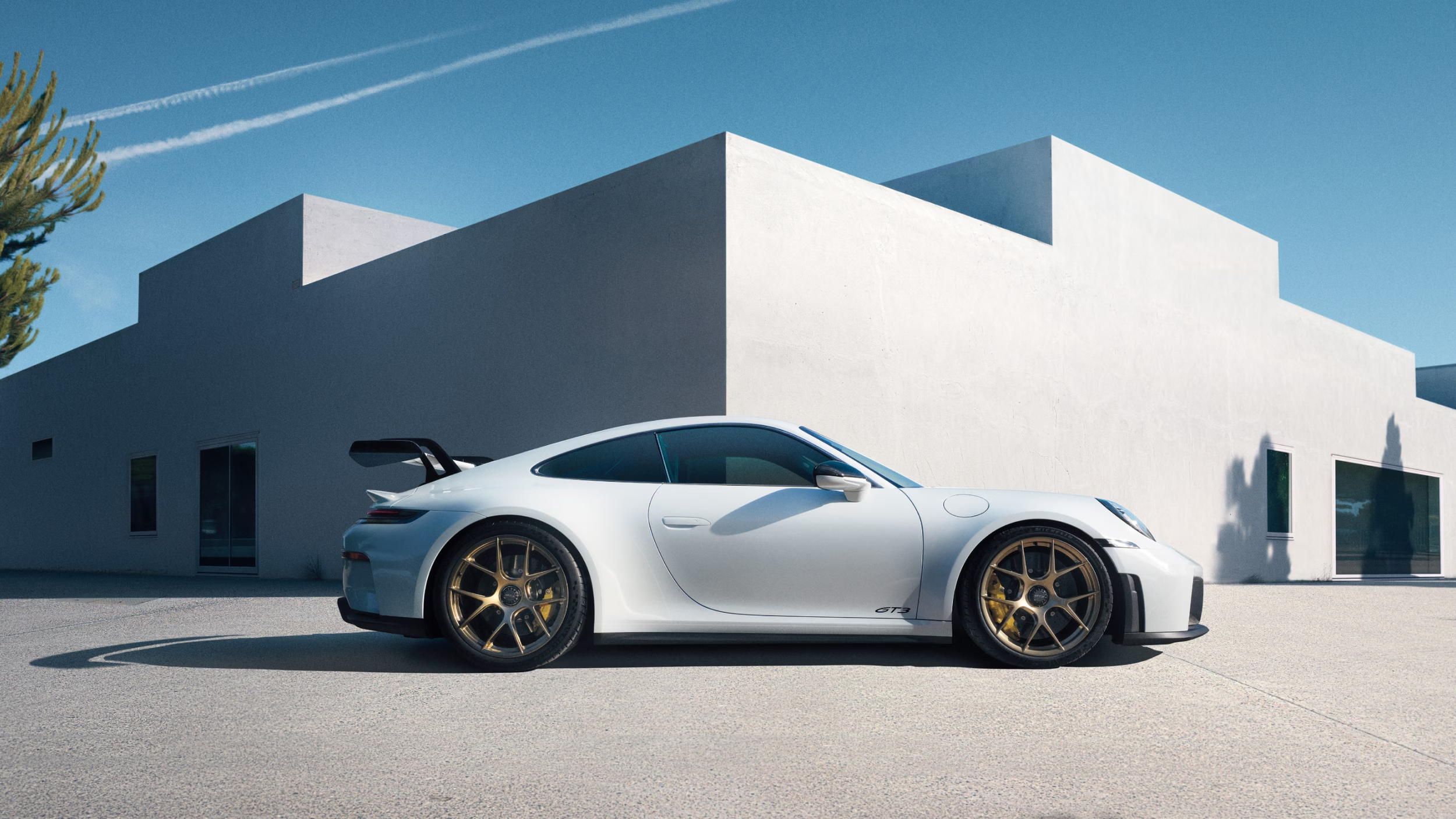
Porsche India has officially opened bookings for the new-generation 911 GT3, with prices starting at ₹3.32 crore (ex-showroom). Prospective buyers can now access the official Porsche configurator online to customize their vehicle specifications. This move marks the beginning of the sales cycle for the 992-generation GT3 in the Indian market.
The announcement comes as Porsche expands its high-performance lineup in India, catering to a growing segment of enthusiasts seeking track-focused, naturally aspirated engines. According to Porsche’s official digital platforms, the booking process allows customers to select specific performance, aesthetic, and interior options before the production of their individual units begins.
What are the pricing and availability details for the Porsche 911 GT3 in India?
The starting price for the Porsche 911 GT3 in India is set at ₹3.32 crore (ex-showroom), according to initial market reports. This figure represents the base model before any optional equipment, performance upgrades, or luxury customizations are added through the manufacturer’s configurator. Because the GT3 is a highly customizable vehicle, the final on-road price for most buyers will likely exceed this base figure once taxes, registration, and individual specifications are factored in.

Porsche has made its digital configurator live for the Indian market, allowing buyers to begin the “speccing” process immediately. This tool is critical for GT3 buyers, as the model’s value often lies in its specific combination of lightweight materials, aerodynamic components, and interior finishes. The configurator enables users to choose everything from paint colors and wheel designs to specialized performance packages that alter the car’s handling characteristics.
While the base price is established, Porsche has not yet provided a specific delivery timeline for the standard specification units in India. Typically, high-demand models like the GT3 involve a waiting period that depends on production capacity and the complexity of the chosen configuration. Potential owners are encouraged to coordinate directly with authorized Porsche India dealerships to receive localized timelines and specific availability updates.
How does the 992-generation GT3 differ from previous models?
The current 911 GT3, part of the 992 generation, introduces several engineering shifts designed to improve aerodynamic efficiency and mechanical grip. One of the most visible changes is the implementation of a “swan-neck” rear wing. Unlike traditional rear wings that attach to the underside of the airfoil, the swan-neck design attaches to the top. This modification allows for cleaner airflow underneath the wing, which increases downforce without adding excessive drag.

The front suspension has also undergone a significant evolution. Porsche engineers implemented a double-wishbone front axle setup, a feature derived from racing technology. This change aims to improve steering precision and stability during high-speed cornering, addressing the feedback from drivers regarding the agility of previous generations. These mechanical updates are intended to bridge the gap between a road-legal vehicle and a dedicated track machine.
In terms of the powertrain, the 911 GT3 continues to utilize a 4.0-liter naturally aspirated flat-six engine. This choice of engine is a significant differentiator in a market increasingly dominated by turbocharged powerplants. The naturally aspirated configuration allows for a linear power delivery and a high-revving capability, with the engine capable of reaching approximately 9,000 rpm. This high redline provides the tactile engine note and immediate throttle response that define the GT3 brand.
Comparing the 992 GT3 to the 991.2 GT3 specifications
To understand the evolution of the model, it is helpful to look at how the 992 generation compares to its predecessor, the 991.2. While both vehicles share the core philosophy of a high-revving, naturally aspirated flat-six, the 992 offers refinements in aerodynamics and chassis architecture.
| Feature | Porsche 911 GT3 (991.2) | Porsche 911 GT3 (992) |
|---|---|---|
| Engine Type | 4.0L Flat-Six | 4.0L Flat-Six |
| Max Power (Approx) | 500 hp | 518 hp |
| Front Suspension | MacPherson Strut | Double Wishbone |
| Rear Wing Design | Standard GT Wing | Swan-neck Aerodynamics |
| Transmission Options | PDK / 6-speed Manual | PDK / 6-speed Manual |
The data above highlights the incremental power gains and the fundamental shift in suspension geometry. The move to the double-wishbone front axle in the 992 generation represents one of the most substantial technical upgrades in the history of the GT3 line.
Why the Porsche configurator is essential for buyers
For luxury automotive buyers, the configurator is more than a visual tool; it is a technical requirement for managing the vehicle’s performance profile. Porsche’s configuration system allows for the integration of specific “Weissach Packages” or other performance-oriented options that are not available on standard 911 models. These packages often include carbon-fiber-reinforced plastic (CFRP) components to reduce weight, which is a primary goal for the GT3.
The configurator also gives buyers control over the interior environment, allowing for the selection of specialized racing seats, Alcantara upholstery, and various driver-centric technologies. Because the GT3 is often used as a track tool, the ability to select lightweight interior components can have a direct impact on the vehicle’s power-to-weight ratio. This level of granular control ensures that the final product meets the specific driving requirements of the owner, whether they intend to use the car for weekend rallies or closed-circuit racing.
Technical breakdown of the 4.0-liter engine
The heart of the 911 GT3 is its 4.0-liter naturally aspirated engine. Unlike turbocharged engines that rely on forced induction to increase torque at lower RPMs, the GT3 relies on high-velocity airflow and high engine speeds to generate power. This results in a distinct driving characteristic where the most intense performance is found at the top end of the rev range.

The engine’s architecture is designed to handle the extreme stresses of 9,000 rpm operation. This includes specialized pistons, lightweight connecting rods, and a highly optimized valvetrain. The lack of turbochargers also reduces the overall weight of the engine assembly and minimizes the delay between throttle input and engine response, a factor critical for precision driving on technical tracks. This engineering focus ensures that the GT3 remains one of the few remaining high-performance vehicles that prioritizes atmospheric induction over forced induction technology.
Key Takeaways for Prospective Buyers
- Starting Price: ₹3.32 crore (ex-showroom) in India.
- Customization: Official online configurator is active for personalized builds.
- Engine: 4.0-liter naturally aspirated flat-six with a high redline.
- Major Upgrades: New double-wishbone front suspension and swan-neck rear wing.
- Availability: Bookings are now open through Porsche India channels.
The next official update regarding delivery timelines for the first batch of 911 GT3 units in India is expected from Porsche India’s press office. Interested buyers should monitor official Porsche communications for updates on localized availability and dealership-specific booking windows.
What are your thoughts on the 911 GT3’s pricing in the Indian market? Do you prefer the naturally aspirated engine over newer turbocharged alternatives? Share your comments below and share this article with fellow enthusiasts.