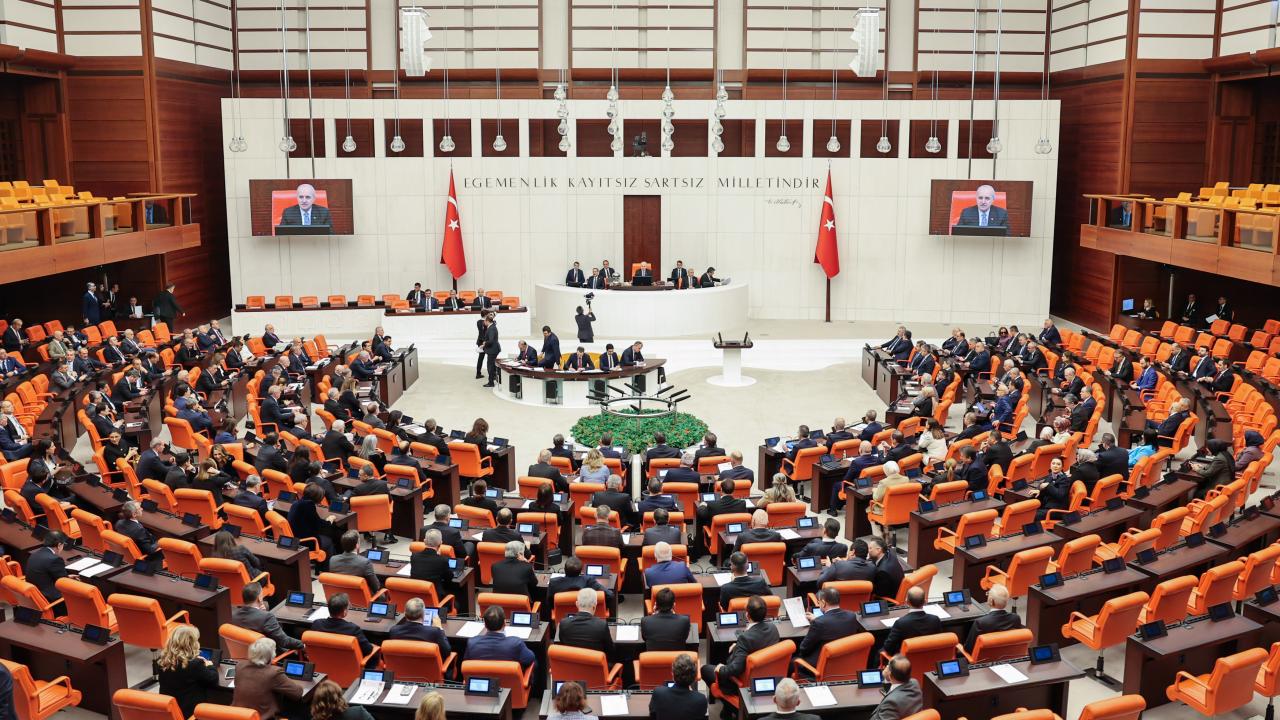
The Grand National Assembly of Turkey (TBMM) has approved a comprehensive legislative package that introduces wide-ranging financial and administrative rights for families of fallen service members and veterans, according to parliamentary records and national broadcasting reports.
The new legislation, passed during a session in the General Assembly where 382 lawmakers cast votes, addresses gaps in welfare provisions for military personnel, security guards, public officials, and civilians affected by terrorism or the July 15 coup attempt, as detailed by NTV.
Officials emphasized the state’s obligation to support those who suffered injuries or lost family members in the line of duty. AK Party Secretary-General İnan stated that authorities will consistently support the families entrusted to the nation by fallen personnel.
Financial Guarantees and Pension Adjustments for Families of Fallen Personnel
The newly enacted law establishes a financial safety net for the parents of fallen service members and public officials. According to reports from CNN Türk, the legislation institutes a formal minimum income guarantee for the total monthly pension allocated to the mothers and fathers of fallen personnel, removing previous categorical restrictions within the Turkish Republic Pension Fund Law.
Under the updated framework, the total monthly payment distributed to the parents of any fallen duty invalid will not fall below the net amount of a monthly minimum wage, as verified by NTV. Furthermore, the legislation updates the indicator tables and recalculates pensions for erbaş (non-commissioned officers/specialized sergeants), er (privates), security guards, military students, and civilians who sustained injuries during counter-terrorism operations or the July 15 events but were previously classified outside standard invalidity provisions.
The reforms modernize calculation methods. Vazife malullüğü pensions will now be calculated based on specific baseline civil service grades—establishing at least the 10th degree and 1st kademe for general recipients, and the 8th degree and 1st kademe for four-year university graduates, regardless of prior educational discrepancies, while preserving any higher entitlements earned through specific public service roles.
Expanded Rights and Care Allowances for Veterans and the Injured
The legislation broadens criteria for individuals who sustained physical trauma during anti-terror missions or defense of the constitutional order but did not initially meet strict regulatory thresholds for formal invalid status. According to NTV, individuals injured by firearms or during the events of July 15 who underwent official board assessments under the relevant regulations will now receive formal titles, updated index scales, and regular monthly payments.
For severely disabled veterans requiring constant assistance, financial support has been increased. The monthly care allowance provided to dependent veterans and invalids has been raised from twice the net minimum wage to 2.5 times the net minimum wage, providing enhanced resources for families managing complex medical needs.
Additionally, the examination age limit for duty and war invalids experiencing deteriorating health conditions has been raised from 41 to 55 years old, according to CNN Türk.
Official Responses and Implementation Roadmap
Minister of Family and Social Services Mahinur Özdemir Göktaş released a statement regarding the passage of the bill, noting that the measures mark the beginning of a strengthened support era for households connected to national defense and public safety. “We are opening the doors to a new era that strengthens the rights of the precious families of our martyrs, who are entrusted to us, and our heroic veterans who put their lives on the line for our homeland,” Göktaş stated via social media, as reported by NTV.
The minister confirmed that the provisions address pensions for individuals previously left out of compensation frameworks, elevate support minimums for parents, and boost specialized care stipends for severely disabled veterans.
Related reading