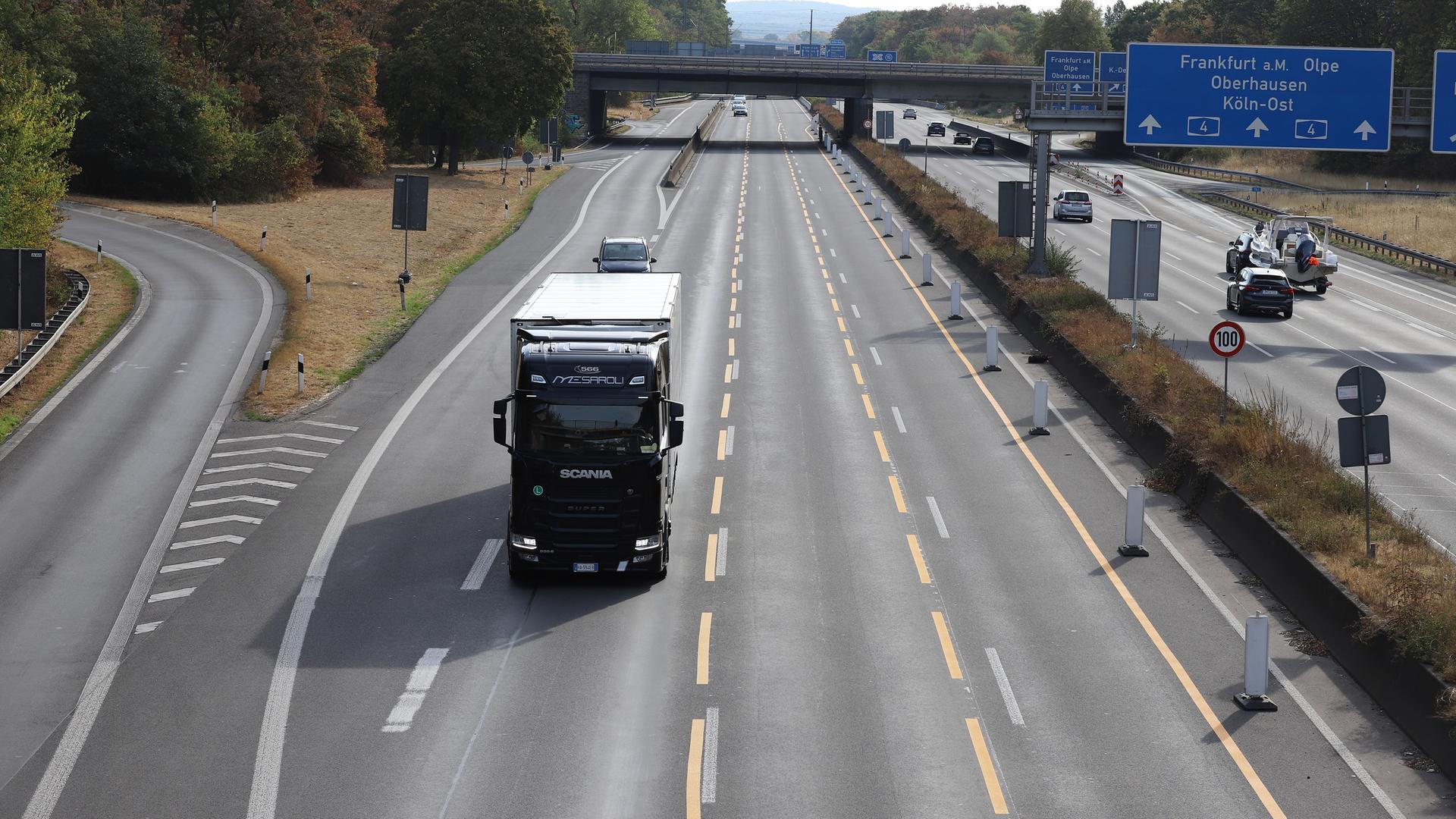
Prolonged drought conditions and critically low water levels across major German waterways have forced several federal states to partially lift mandatory truck driving bans, igniting a sharp political and environmental debate over supply chain resilience and climate policy. According to reporting verified by regional sources, administrative exemptions implemented in North Rhine-Westphalia, Lower Saxony, Rhineland-Palatinate, and Saarland aim to keep commercial freight moving as cargo vessels on key rivers like the Rhine operate at only a fraction of their standard capacity due to shallow channels.
Germany typically enforces strict limitations on heavy goods transport under federal traffic regulations, banning truck operations on Sundays and public holidays from midnight to 10:00 p.m., as well as on summer holiday Saturdays between 7:00 a.m. and 8:00 p.m. To counteract severe shipping bottlenecks, Federal Transport Minister Steffen Bilger announced emergency coordination measures during a stakeholder summit in Bonn, clearing the path for regional authorities to issue exemptions for essential cargo. The adjustments have drawn immediate praise from industrial manufacturing groups while triggering sharp warnings from environmental organizations regarding carbon emissions and long-term river infrastructure management.
Industrial Sector Welcomes Supply Chain Flexibilities
Business associations have welcomed the federal government’s willingness to adapt traffic rules to unfolding weather extremes. Holger Lösch, deputy BDI-Hauptgeschäftsführer, told the Rheinische Post that the emergency measures demonstrate operational agility during an acute crisis. Lösch noted that shifting freight from low-water waterways onto the nation’s roads and rail networks helps buffer disruptions and stabilize manufacturing value chains.
At the same time, industry representatives caution that road transport cannot fully replace the immense cargo capacity normally handled by inland shipping fleets. According to Bayerischer Rundfunk coverage, the BDI has emphasized that safeguarding long-term transport resilience requires deeper investments in climate-resilient transport infrastructure, faster administrative approval procedures, and enhanced support for the acquisition of shallow-water-optimized vessels.
Environmental Critics Warn of Climate and Traffic Pressures
Environmental groups have strongly opposed the weekend and holiday driving exemptions, arguing that highway transit is an inadequate substitute for efficient waterway logistics. Olaf Bandt, Verbandsvorsitzender of the Federation for the Environment and Nature Conservation Germany (BUND), told the Rheinische Post that replacing ship transport with hundreds or thousands of additional truck journeys places an avoidable burden on the climate and local communities.
Bandt contended that policymakers are treating low river levels as an isolated logistics glitch rather than a direct symptom of ongoing climate change. According to Bayerischer Rundfunk, BUND maintains that dredging riverbeds or expanding highway freight fails to address root ecological imbalances. The organization advocates for restored river landscapes to improve natural water retention, alongside accelerated modernization of railway infrastructure to absorb freight shifts more effectively during environmental crises.
Next Steps for Freight and Waterway Management
As regional ministries monitor river gauges across the Rhine, Danube, and Elbe basins, further operational updates are expected from state transport authorities regarding the duration of the emergency exemptions. Stakeholders across both the logistics and environmental sectors continue to press federal ministries for long-term adaptation strategies ahead of subsequent seasonal dry spells. Readers seeking official traffic advisories and regulatory updates can consult regional transport ministry portals across affected federal states.
What are your thoughts on balancing industrial supply chains with environmental protection during extreme weather? We invite you to share your perspectives in the comments below.
Keep reading