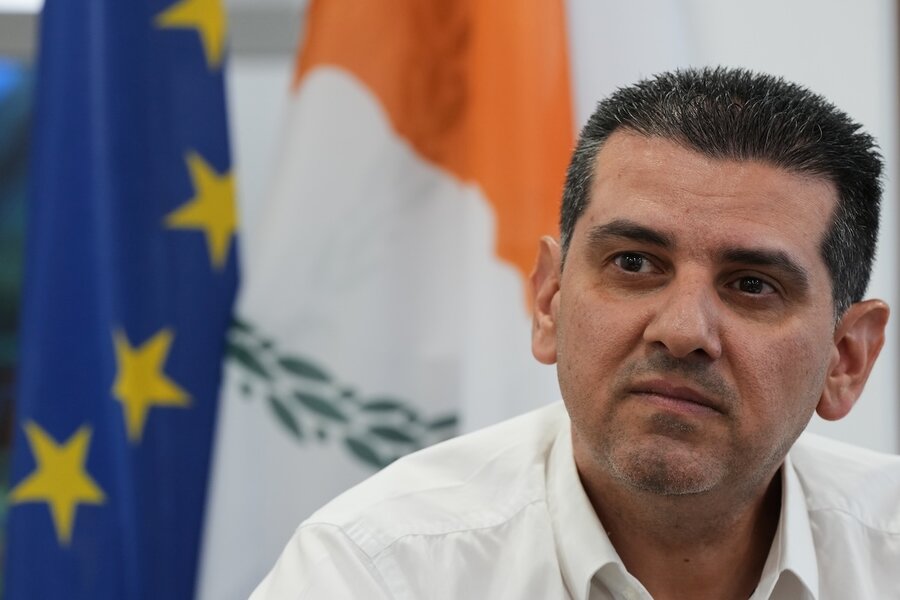
The move marks a significant shift for the East Mediterranean, which is increasingly positioned as a vital alternative energy source for European nations seeking to move away from Russian supplies following the invasion of Ukraine.
The development of the Cronos natural gas field, located within Cyprus’ Exclusive Economic Zone, follows a final investment decision reached last month by a consortium led by France’s TotalEnergies and Italy’s Eni. According to reporting by the Associated Press, the project represents the first instance of gas from East Mediterranean deposits being directed specifically to European markets. The energy minister noted that regional instability in the Middle East has further accelerated the strategic necessity of diversifying the continent’s energy imports.
Development Strategy for the Cronos Field
The technical approach to extracting gas from the Cronos field prioritizes cost-efficiency and existing infrastructure. The consortium plans to construct a pipeline connecting the field to the massive Zohr natural gas deposit in Egypt, which lies approximately 105 kilometers (65 miles) away. Construction on this link is expected to commence later this year and is projected to span up to 18 months, as reported by ABC News.
Once the gas reaches the Egyptian coast, it will be processed at the Damietta facility, where it will be liquefied for transport via ship to Europe. This strategy is considered the most economically viable option, with development costs estimated at approximately $2 billion (1.73 billion euros). By utilizing existing infrastructure in Egypt, the project cost is roughly half of what would be required to develop other, more isolated gas fields within Cypriot waters.
Energy Reserves and Future Exploration
While the agreement stipulates that the majority of the more than 3 trillion cubic feet (tcf) of gas discovered in the Cronos field is destined for European markets, a clause exists allowing approximately one-fifth of the total to address Egypt’s domestic energy requirements. The Cypriot energy ministry described this as a small reserve, emphasizing that the primary value of the project lies in the country’s emergence as a formal gas producer.
Beyond Cronos, Cyprus has identified several other significant deposits within its maritime boundaries. The Glaucus and Pegasus fields, currently being managed by a partnership between ExxonMobil and QatarEnergy, are estimated to hold a combined 6.9 tcf of natural gas. According to guidance provided by the developers, production from these sites is not expected to commence until 2033. Minister Papanastasiou indicated that ExxonMobil is expected to secure additional licenses to expand its exploration activities in the region, noting the company’s history of adhering to strict project timelines.
The Aphrodite Field and Regional Connectivity
The Aphrodite field, which was the first natural gas deposit discovered off the coast of Cyprus approximately 15 years ago, contains an estimated 5.6 tcf. A final development decision by a Chevron-led joint venture is anticipated by the summer of 2027. Under existing agreements, this gas is slated to be transported via pipeline directly to Egyptian facilities to support that nation’s domestic consumption needs.
Complications regarding the field remain, as a portion of the deposit extends into Israeli waters. An ongoing arbitration process is expected to determine the exact percentage of the resources to which Israel is entitled, with a decision anticipated as early as next month. Meanwhile, the broader effort to integrate regional energy grids continues through the Great Seas Interconnector project. This initiative, which has gained support from the French investment firm Meridiam, aims to link the power grids of Cyprus, Israel, and the European Union. While the project is viewed as a crucial step toward ending regional energy isolation, it is currently experiencing delays due to internal reviews regarding its total cost, which has exceeded initial estimates of $2.2 billion.
The next major checkpoint for these initiatives involves the upcoming decision on the Aphrodite field’s maritime boundaries, followed by the release of a report from the European Investment Bank expected in the coming months, which is slated to provide clarity on the financial requirements for the Great Seas Interconnector.