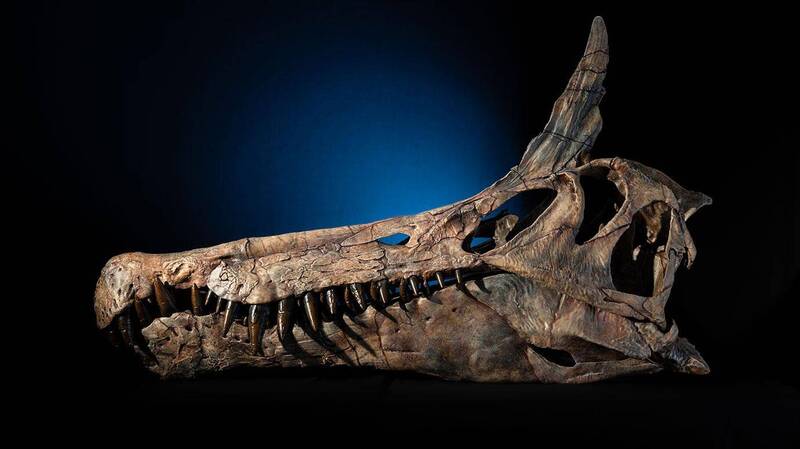
The Sahara Desert has yielded a remarkable discovery that is rewriting our understanding of spinosaurid dinosaurs. An international team of paleontologists has unearthed the fossil of a previously unknown species, Spinosaurus mirabilis, distinguished by a striking, scimitar-shaped crest. The uncover, detailed in a recent study published in the journal Science, challenges previous assumptions about the lifestyle and habitat of these massive predators, suggesting they weren’t exclusively aquatic hunters but thrived in a diverse, forested riverine environment far from any coastline.
The discovery of Spinosaurus mirabilis marks the first indisputable identification of a new spinosaur species in over a century. Led by Professor Paul Sereno of the University of Chicago, a 20-person research team excavated the fossils from a remote region of the central Sahara in Niger. This location, hundreds of kilometers inland, is a significant departure from previous spinosaur discoveries, which were largely concentrated in coastal deposits. The implications of this inland find are profound, prompting scientists to re-evaluate the ecological niche occupied by these dinosaurs.
A New Species Emerges: Unveiling Spinosaurus mirabilis
The initial discovery in November 2019 consisted of fragments of the distinctive crest and jawbones. Paleontologists initially didn’t fully grasp the significance of their find. It wasn’t until a return expedition in 2022, yielding two additional crests, that the team realized they had uncovered a new species. The crest itself is a defining characteristic of Spinosaurus mirabilis, described as enormous and scimitar-shaped. Analysis of the crest’s texture and the network of blood vessel channels within it indicates it was covered in keratin, the same material that forms human fingernails. Researchers believe this crest was likely brightly colored and served as a visual display, potentially for attracting mates or establishing dominance.
“This find was so sudden and amazing, it was really emotional for our team,” said Professor Sereno, as reported by the University of Chicago. “I’ll forever cherish the moment in camp when we crowded around a laptop to look at the new species for the first time, after one member of our team generated 3D digital models of the bones we found to assemble the skull – on solar power in the middle of the Sahara. That’s when the significance of the discovery really registered.”
Challenging the Aquatic Lifestyle Hypothesis
For years, the prevailing theory suggested that spinosaurids were primarily aquatic predators, similar to modern crocodiles, spending much of their time in the water hunting fish. However, the discovery of Spinosaurus mirabilis in an inland river system, coupled with the geological context of the find, casts doubt on this hypothesis. The fossils were unearthed in deposits indicative of a forested waterway, hundreds of miles from the nearest coastline. This suggests that spinosaurids were capable of thriving in freshwater environments and weren’t solely reliant on marine ecosystems.
The skull of Spinosaurus mirabilis provides further evidence supporting this revised understanding. Like other spinosaurids, it possesses interdigitating teeth – where the teeth of the lower jaw protrude between those of the upper jaw – a feature commonly found in fish-eating animals, including ichthyosaurs, crocodiles, and pterosaurs. Researchers at the University of Chicago suggest this adaptation allowed Spinosaurus mirabilis to effectively trap slippery fish. However, the presence of this dinosaur alongside fossils of long-necked dinosaurs in nearby river sediments indicates a more complex ecosystem than a purely aquatic environment would support. Professor Sereno envisions Spinosaurus mirabilis as a “hell heron,” wading in shallow waters and stalking fish in forested waterways.
Implications for Spinosaur Evolution
The discovery of Spinosaurus mirabilis adds significant new evidence to our understanding of the final phase of spinosaurid evolution. The unique characteristics of this species, particularly its crest, demonstrate the diversity within the spinosaurid family. The find also highlights the importance of continued paleontological research in under-explored regions like the Sahara Desert. The remote location of the discovery underscores the potential for uncovering further insights into the lives of these fascinating creatures.
Dating the Discovery and Future Research
The fossils of Spinosaurus mirabilis were initially discovered in November 2019, with a larger excavation effort taking place in 2022. The research team, led by Professor Paul Sereno, spent years meticulously excavating, analyzing, and reconstructing the skeletal remains. The findings were published in the journal Science on February 23, 2026. According to ScienceDaily, the discovery is rewriting what we thought we knew about spinosaur dinosaurs.
Future research will focus on further analyzing the skeletal remains of Spinosaurus mirabilis, including detailed studies of its muscle attachments and biomechanics. Scientists also plan to investigate the surrounding geological context to gain a more comprehensive understanding of the environment in which this dinosaur lived. The team hopes to uncover additional fossils that will shed further light on the evolution and behavior of spinosaurids.
Key Takeaways
- Spinosaurus mirabilis is a newly discovered species of spinosaurid dinosaur, distinguished by its large, scimitar-shaped crest.
- The discovery challenges the long-held belief that spinosaurids were primarily aquatic predators.
- The fossils were found in an inland river system in Niger, suggesting spinosaurids could thrive in freshwater environments.
- The unique characteristics of Spinosaurus mirabilis contribute to our understanding of spinosaurid evolution and diversity.
The ongoing research into Spinosaurus mirabilis promises to reveal even more about these remarkable dinosaurs and their place in the prehistoric world. The team plans to continue excavations in the region, hoping to uncover further evidence that will refine our understanding of spinosaurid paleobiology. The next phase of research will involve detailed analysis of the dinosaur’s bone structure to determine its growth rate and lifespan.
What are your thoughts on this incredible discovery? Share your comments below, and don’t forget to share this article with your friends and colleagues!
Keep reading