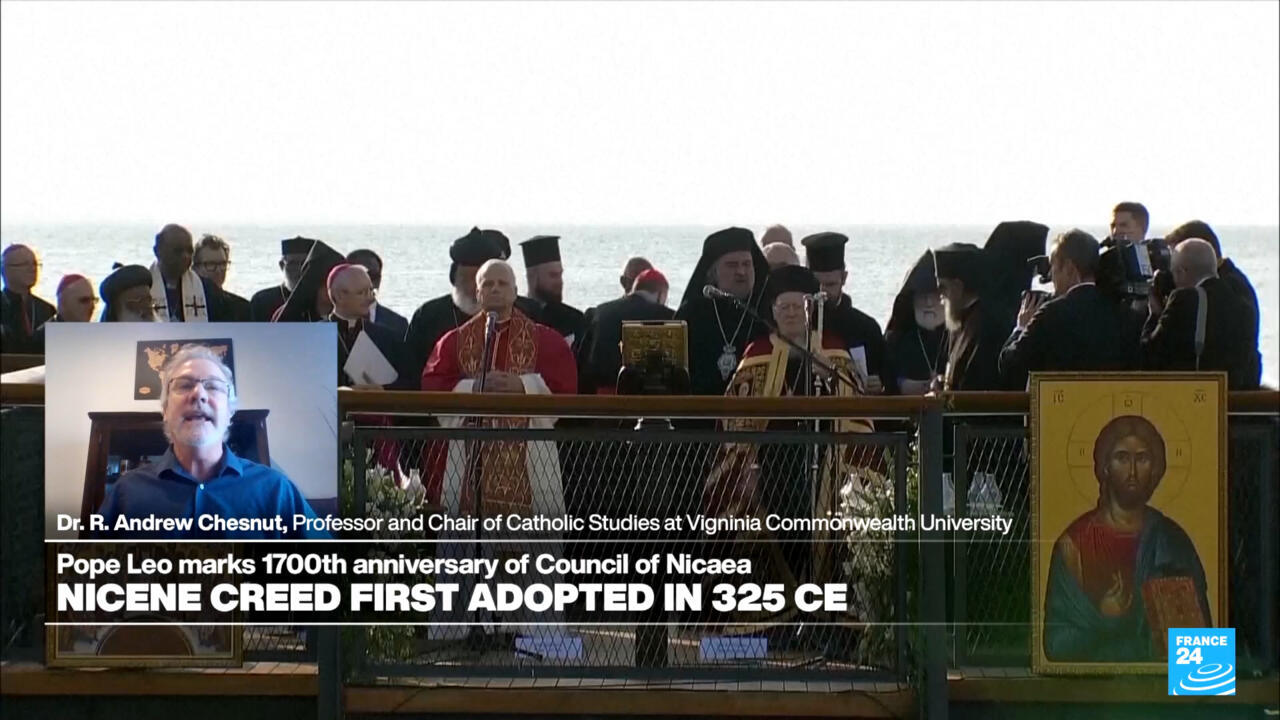
The enduring Legacy of Nicaea: Pope Leo XIV’s Call for Christian Unity
Have you ever wondered about the historical roots of Christian beliefs and the ongoing quest for unity within the faith? The recent gathering on the shores of Lake Iznik, formerly known as Nicaea, marked a meaningful moment in that journey. Pope Leo XIV’s presence alongside patriarch Bartholomew I, spiritual leader of Orthodox Christians, commemorated 1,700 years since the First Council of Nicaea – a pivotal event that shaped Christian doctrine.This article delves into the historical importance of Nicaea, the significance of the Pope’s visit, and the current state of ecumenical relations.We’ll also explore what this means for the future of christianity and address common questions about this landmark event.
The First Council of Nicaea: A Foundation of Faith
In 325 AD, the Roman Emperor constantine convened the First Council of Nicaea. This wasn’t merely a political gathering; it was a watershed moment for the nascent Christian church. The primary purpose? To address the Arian controversy, a theological dispute threatening to fracture the early church.
* Arius, a priest from Alexandria, argued that Jesus Christ was a created being, subordinate to God the Father.
* This challenged the core belief in the divinity of Christ, a concept central to Christian faith.
* the Council, comprised of over 300 bishops, ultimately condemned Arianism and affirmed the Nicene Creed.
The Nicene Creed, still recited by Christians today, established the fundamental belief in one God in three persons: Father, son, and Holy Spirit. It provided a unified statement of faith, solidifying the theological foundations of Christianity. Understanding the history of Christian councils is crucial to grasping the evolution of doctrine. This council wasn’t just about theological debate; it was about establishing a cohesive identity for a rapidly growing religion.
Pope Leo XIV’s Visit to Iznik: A Modern Echo of Ancient Dialog
Pope Leo XIV’s recent visit to Iznik wasn’t simply a historical commemoration. It was a powerful symbolic gesture, a deliberate attempt to bridge the centuries-old divide between the Catholic and Orthodox churches. Flying to the ancient city, the Pope joined Patriarch Bartholomew I in an ecumenical prayer service, demonstrating a shared commitment to Christian unity.
This visit builds upon decades of improving relations. The ecumenical movement, seeking to restore visible unity among Christian denominations, has gained momentum in recent years. Recent research from the Pew Research Center (November 2023) indicates a growing openness to interfaith dialogue among younger Christians. The Pope’s presence underscored the importance of continued conversation and collaboration. He specifically called for unity among all Christians, emphasizing shared values and a common mission. This resonates with the growing desire for interdenominational cooperation in addressing global challenges.
Navigating the Complexities of Catholic-Orthodox Relations
While the pope’s visit signifies progress,it’s important to acknowledge the historical and theological complexities that continue to separate the catholic and Orthodox churches. The Great Schism of 1054 formally divided Christianity into Eastern Orthodoxy and Western Catholicism. Key points of contention include:
* Papal Authority: The catholic Church recognizes the Pope as the supreme head of the Church, while the Orthodox Church views the Patriarch of Constantinople as “first among equals.”
* The Filioque Clause: A disagreement over the wording of the Nicene Creed concerning the procession of the Holy Spirit.
* Liturgical Differences: Variations in practices such as the use of leavened or unleavened bread in the Eucharist.
Addressing these differences requires ongoing dialogue, mutual respect, and a willingness to compromise. The concept of Christian reconciliation is a long-term process, demanding patience and understanding. Moreover, geopolitical factors, such as the situation in Ukraine, can influence the dynamics between the churches.
Practical Steps Towards Greater Understanding
You might be wondering how you can contribute to fostering greater understanding and unity within Christianity. Here are a few actionable steps:
- **
Worth a look