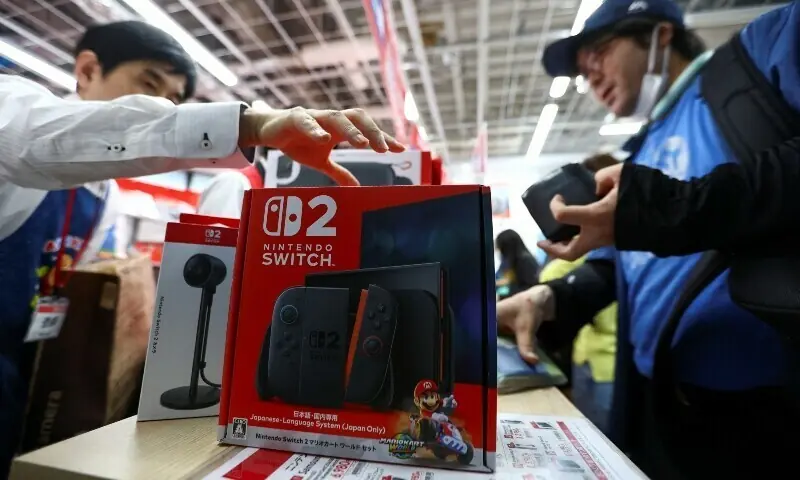
Nintendo has announced a retail price increase for its flagship Nintendo Switch 2 system in multiple global markets, citing a volatile business environment and surging component costs. The Japanese gaming giant is adjusting its MSRP in the United States and Japan, while also warning of a projected decline in hardware sales for the coming fiscal year.
The Nintendo Switch 2 price hike is a direct response to what the company describes as changes in market conditions and the broader global business outlook. According to official company communications, the price adjustment is primarily driven by an unprecedented rise in the cost of memory chips—a critical component for the console’s operation.
In the United States, the MSRP of the Nintendo Switch 2 will increase by $50, moving from $449.99 to $499.99, effective September 1, 2026. This revision was formally detailed in a price revision notice on Nintendo’s official website.
The ‘Memory Crunch’ and the AI Boom
The primary catalyst for the price increase is a significant spike in the cost of memory chips. This “memory crunch” is not an isolated event within the gaming industry but is instead tied to the massive global expansion of artificial intelligence (AI) data centers. As demand for high-performance memory grows to support AI infrastructure, the cost of these components has risen sharply, impacting hardware manufacturers across the electronics sector.
Nintendo noted that the decision to raise prices followed a careful consideration of the global business outlook. The company has been forced to navigate a supply chain where essential hardware components are seeing price volatility driven by industrial demand outside of the consumer electronics market. According to reporting from CNBC, these memory chip price increases have been described as unprecedented.
This trend is not unique to Nintendo. The company’s rival, Sony, previously implemented price increases of up to $150 for its flagship PlayStation 5 in March, signaling a broader industry struggle to maintain margins in the face of rising Bill of Materials (BOM) costs.
Declining Sales Forecasts for Fiscal Year 2027
Alongside the price adjustments, Nintendo has issued a cautious sales forecast for its newest hardware. The company expects to sell 16.5 million units of the Switch 2 in the fiscal year ending March 31, 2027. This represents a notable decline from the 19.86 million units sold during the previous fiscal year.
The combination of a higher retail price and a downward trend in unit sales suggests a challenging period for the company’s hardware division. While the Switch 2 initially saw strong global demand, the projected dip to 16.5 million units indicates that the company is bracing for a cooling market or the impact of the price hike on consumer demand.
Despite these hardware headwinds, Nintendo continues to engage its user base through software and live events. The company is currently hosting the “Pokémon Pokopia” event, reflecting its strategy to maintain ecosystem engagement through its powerhouse intellectual properties.
Global Price Adjustments
The price revisions are not limited to the North American market. Nintendo is implementing a tiered increase across different regions to offset the rising cost of production:
- United States: Increasing from $449.99 to $499.99 (Effective September 1, 2026).
- Japan: Increasing from 49,980 yen to 59,980 yen (Effective May 25, 2026).
- Canada and Europe: Nintendo has confirmed that prices for the Switch 2 will also increase in these regions, though specific figures for these markets were not detailed in the primary announcement.
The Japanese market is seeing one of the most immediate impacts, with the price hike taking effect in late May. This aggressive timeline suggests an urgent need to align retail pricing with the current cost of memory components.
Market Impact and Industry Outlook
The decision to raise prices during a period of declining sales forecasts puts Nintendo in a precarious position. Historically, gaming consoles often see price decreases as they mature in their lifecycle to attract a wider audience. However, the current economic reality—characterized by the AI-driven memory chip shortage—has inverted this trend.

The “global business outlook” cited by Nintendo highlights a systemic issue where the gaming industry is competing for the same silicon and memory resources as the AI sector. Because data centers operate with significantly higher budgets and volumes, consumer electronics manufacturers often find themselves at a disadvantage in price negotiations with chip suppliers.
For consumers, this means the era of stable or declining console prices may be pausing. The precedent set by Sony in March and now followed by Nintendo suggests that the cost of high-performance hardware is becoming more expensive to produce and maintain.
The next critical checkpoint for the company will be its financial reporting for the current quarter, which will reveal whether the September 1 price hike in the U.S. Has an immediate impact on sales velocity or if the revised MSRP successfully stabilizes profit margins.
World Today Journal encourages readers to share their thoughts on the price increase in the comments below. Do you believe the AI boom is making gaming hardware unaffordable?
Worth a look