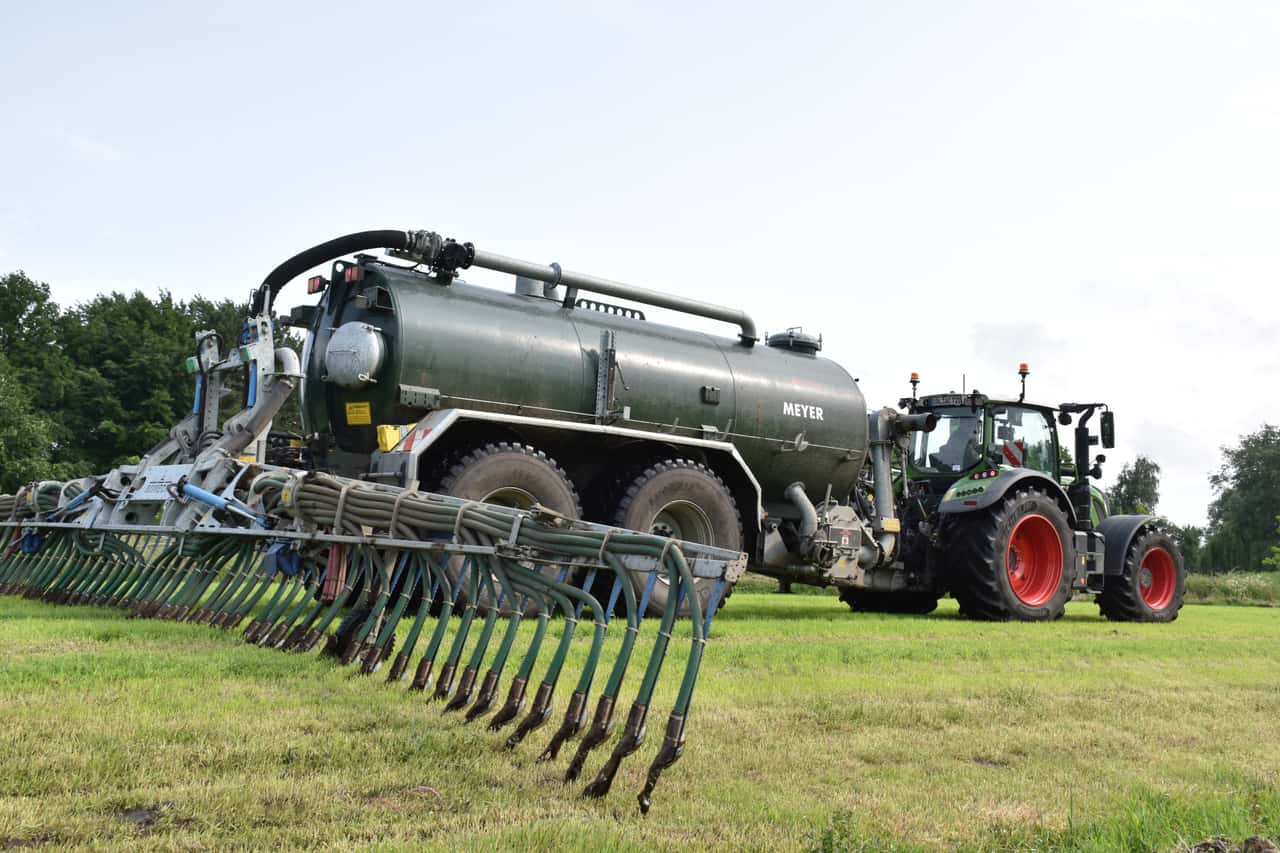
Berlin – A legal challenge has been launched in Germany concerning agricultural practices in areas designated as “Rote Gebiete” – or “Red Zones” – due to high nitrate levels. Deutsche Umwelthilfe (DUH), a leading environmental organization, has filed an urgent application with the administrative court in Lüneburg, Lower Saxony, alleging insufficient enforcement of regulations aimed at reducing nitrogen fertilizer use in these sensitive regions. The move underscores growing concerns about the impact of agricultural runoff on water quality and ecosystems.
The core of the dispute centers around the implementation of the German Fertilizer Ordinance (Düngeverordnung) and its specific requirements for areas identified as particularly vulnerable to nitrate pollution. These “Red Zones,” officially designated under § 13a of the German Water Resources Act, are subject to stricter regulations on fertilizer application, including a mandatory 20% reduction in nitrogen use compared to standard levels. The DUH argues that authorities in Lower Saxony are failing to adequately monitor and enforce these rules, leading to continued nitrate contamination of groundwater and surface water.
Nitrate pollution poses a significant threat to both human health and the environment. Excessive nitrate levels in drinking water can be harmful, particularly to infants, and contribute to the eutrophication of waterways, leading to algal blooms, oxygen depletion, and the loss of biodiversity. The “Red Zones” were established to address this issue by limiting the amount of nitrogen entering the water cycle from agricultural sources.
The 20% Reduction Rule and its Implementation
The regulations governing “Red Zones” require a 20% reduction in the overall nitrogen fertilizer applied across all fields within the designated areas. According to guidance from the state of Hesse, this reduction can be applied either as a blanket reduction across all fields or distributed individually among farms, provided the overall reduction target is met. The Hessian Agency for Agriculture and Rural Development details that the reduced nitrogen amount can be applied universally, decreasing the nitrogen requirement on each field by 20%.
However, the DUH contends that the enforcement of this 20% reduction has been lax in Lower Saxony, with insufficient checks to ensure farmers are complying with the regulations. They claim that many farms continue to apply excessive amounts of nitrogen, exceeding the permitted limits and contributing to ongoing nitrate pollution. The organization points to a lack of adequate monitoring, insufficient penalties for violations, and a general lack of political will to enforce the rules effectively.
The legal challenge specifically targets the Lower Saxony Ministry of Agriculture, accusing it of failing to fulfill its legal obligation to protect water resources from nitrate contamination. The DUH is seeking a court order compelling the ministry to take immediate action to enforce the regulations and ensure compliance with the 20% reduction rule.
Broader Context: The German Fertilizer Ordinance and Nitrate Action Program
The regulations governing “Red Zones” are part of a broader effort to address nitrate pollution in Germany, stemming from the EU’s Nitrates Directive. This directive requires member states to identify areas affected by nitrate pollution and implement action programs to reduce nitrate levels in water. Germany’s response has been the Fertilizer Ordinance (Düngeverordnung), which sets out rules for the application of fertilizers, including limits on nitrogen use, requirements for soil testing, and restrictions on the timing of fertilizer application.
The current Fertilizer Ordinance, dating back to 2017, has been subject to ongoing debate and revision. In January 2026, the implementation of an updated “Execution Ordinance to the Fertilizer Ordinance” (Ausführungsverordnung zur Düngeverordnung – AVDüV) was temporarily suspended in Hesse, highlighting the complexities and political sensitivities surrounding fertilizer regulations. As noted by the Hessian Agency for Agriculture and Rural Development, further changes are possible, emphasizing the need for ongoing monitoring of the legal framework.
Beyond the “Red Zones,” the Fertilizer Ordinance also addresses nitrate pollution in areas designated as phosphate-eutrophic, which encompass a larger geographical area than the nitrate-sensitive zones. These areas are subject to specific regulations aimed at reducing phosphate runoff, another major contributor to water pollution.
Impact on Farmers and Agricultural Practices
The stricter regulations in “Red Zones” have raised concerns among farmers about their impact on agricultural productivity and profitability. The 20% reduction in nitrogen use can potentially lead to lower yields, particularly for crops with high nitrogen requirements, such as corn (maize). However, proponents of the regulations argue that sustainable agricultural practices, such as the use of organic fertilizers, crop rotation, and precision farming techniques, can help mitigate these impacts and maintain yields although reducing environmental harm.
The DLG (German Agricultural Society) has published research indicating that while the current permitted nitrogen levels may not always achieve optimal yields and quality, reducing nitrogen use by 20% in “Red Zones” is a key step towards protecting water resources. According to a DLG report, the existing allowances are insufficient for achieving optimal results, but the reduction is necessary.
The debate over fertilizer regulations also highlights the broader tension between agricultural production and environmental protection. Finding a balance between ensuring food security and safeguarding water quality is a major challenge for policymakers and stakeholders in the agricultural sector.
The Role of Organic Fertilizers and Alternative Approaches
The Fertilizer Ordinance places restrictions on the application of organic and organo-mineral fertilizers, limiting the total nitrogen content to 130 kg/ha per year. This restriction aims to prevent excessive nitrogen loading from manure and other organic sources. However, the use of organic fertilizers is also encouraged as a more sustainable alternative to synthetic nitrogen fertilizers, as they can improve soil health and reduce reliance on fossil fuel-based inputs.
The North Rhine-Westphalia Chamber of Agriculture highlights the special requirements in nitrate and eutrophic areas to protect waters from contamination. Their guidelines detail deviations and additions to the implementation of the Fertilizer Ordinance.
Other approaches to reducing nitrate pollution include the implementation of buffer strips along waterways, the use of cover crops to absorb excess nitrogen, and the adoption of precision farming technologies that allow farmers to apply fertilizers more efficiently and target specific crop needs.
Key Takeaways
- Deutsche Umwelthilfe (DUH) has filed a legal challenge against the enforcement of fertilizer regulations in Lower Saxony’s “Red Zones.”
- The regulations require a 20% reduction in nitrogen fertilizer use in areas designated as vulnerable to nitrate pollution.
- The legal challenge highlights the ongoing debate between agricultural production and environmental protection.
- Sustainable agricultural practices and the use of organic fertilizers are seen as potential solutions to reduce nitrate pollution.
The outcome of the legal challenge in Lower Saxony could have significant implications for agricultural practices and water quality protection across Germany. The case is expected to draw attention to the challenges of implementing and enforcing environmental regulations in the agricultural sector and the need for a more sustainable approach to fertilizer management. The next step will be a hearing before the administrative court in Lüneburg, where the DUH will present its case and the Lower Saxony Ministry of Agriculture will have an opportunity to respond. Readers interested in following the case can monitor updates on the DUH website and through reports in German agricultural media.
Related reading
- ICE shared Medicaid data it wasn’t supposed to have with Palantir
- Les médecins ne jurent que par la règle des 8-8-8 pour garder un cerveau jeune et protéger le cœur – Journal des Femmes Santé
- The Mpemba Effect: Why Hot Water Sometimes Beats Cold to Freeze (daybreakwire.com)
- Breathe Easier in Virginia, Minnesota, US with Our Air Quality Interactive Map (archyde.com)