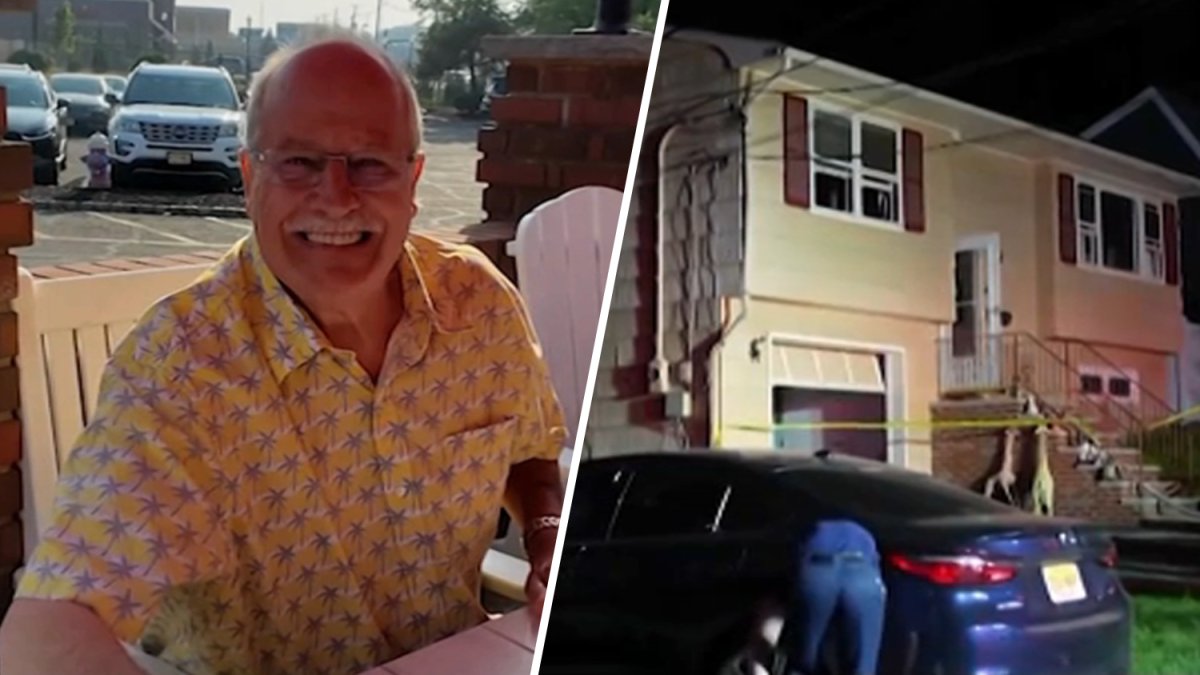
From Hero to Suspect: The Shocking Turn in the Virginia Cranwell Murder Case
The quiet suburban streets of Fanwood, New Jersey, were shaken this December with a stunning revelation: William Ahle, initially hailed as a hero for attempting to rescue his 82-year-old neighbor, Virginia Cranwell, from a house fire, has now been arrested and charged with her murder. This case,initially perceived as a tragic accident,has unfolded into a complex investigation revealing a disturbing betrayal of trust and a chilling alleged act of premeditation. But what led investigators to suspect the man once considered a neighborhood pillar? And what does this case tell us about the complexities of truth and perception in the wake of tragedy?
The Initial Response: A Neighbor’s Bravery
On July 25th, shortly after 1:30 a.m., emergency services responded to a frantic 911 call reporting a house fire at Cranwell’s residence on Kempershall Terrace. First responders discovered Cranwell inside the burning home and,despite their efforts,she was pronounced dead shortly after. The Union County Medical Examiner later classified her death as a homicide, immediately raising suspicions beyond a simple accidental fire.
Initially, William Ahle, 70, was portrayed as a valiant neighbor.his son, matthew Ahle, recounted a dramatic scene: “He just looked, saw the flames, went in. He apparently opened the bedroom door and all the flames just burst out,he fell backwards and I guess that’s how he got all his burns… I’m happy he tried,he tried his best.” ahle himself was treated for second-degree burns sustained during the alleged rescue attempt, further solidifying the narrative of a selfless act. He was even described by some as the “street mayor” – a beloved and well-respected figure in the community.
A Months-Long Investigation Uncovers a Dark Truth
However, the seemingly straightforward story began to unravel as the Union County Prosecutor’s Office launched a meticulous, months-long investigation. Detectives meticulously examined the fire scene, interviewed neighbors, and analyzed forensic evidence. This painstaking process ultimately led to a shocking conclusion: the fire was not accidental.It was intentionally set. And the prime suspect? William Ahle.
On Thursday, December 10th, Ahle was arrested and charged with first-degree murder, first-degree burglary, and second-degree aggravated arson. The charges represent a dramatic shift in the case,transforming a story of heroism into one of alleged malice and deception. As of this writing, attorney information for Ahle is not publicly available.
What Motivated the Alleged Crime?
Perhaps the most pressing question surrounding this case is why? Prosecutors have remained tight-lipped regarding a potential motive, leaving the community grappling with unanswered questions.The lack of a clear description has fueled speculation and deepened the sense of disbelief. Was it a dispute over property? A long-held grudge? Or something else entirely?
Recent data from the FBI’s Uniform Crime Reporting (UCR) Program shows that arson-related homicides, while relatively rare, often stem from personal disputes or financial gain. (FBI, Crime Data Explorer, 2023). Understanding the underlying motive will be crucial in bringing closure to this tragic case.
The Impact on the Community
The arrest has understandably sent shockwaves through the Fanwood neighborhood.Many residents expressed their disbelief and sorrow,struggling to reconcile the image of Ahle as a helpful neighbor with the accusations now leveled against him.
“Since the fire, you know, we all just thought he was a hero,” one neighbor confided, requesting anonymity. “I feel bad for the family, I really do like them.” This sentiment reflects the widespread sense of betrayal and confusion that has gripped the community. The case highlights the fragility of trust and the devastating consequences of hidden malice.
Navigating the Legal Process & Future Outlook
William Ahle is currently being held at the Middlesex county jail pending his next court appearance. The legal proceedings will likely be complex and protracted, involving extensive evidence presentation and possibly expert testimony regarding fire forensics and psychological profiling.
The prosecution will need to demonstrate beyond a reasonable doubt that ahle intentionally set the fire and that his actions directly resulted in Cranwell’s death. The defense will likely challenge the evidence and attempt to establish reasonable doubt.
Related Subtopics & Considerations:
* arson Investigation Techniques: Modern arson investigations utilize advanced forensic science,including accelerant detection,fire pattern analysis,and digital reconstruction.[NationalFire[NationalFire[NationalFire[NationalFire
Worth a look