The dawn of Designer Materials: How Metal-Organic Frameworks are Reshaping Our World – And Why the Nobel Prize Got It Right
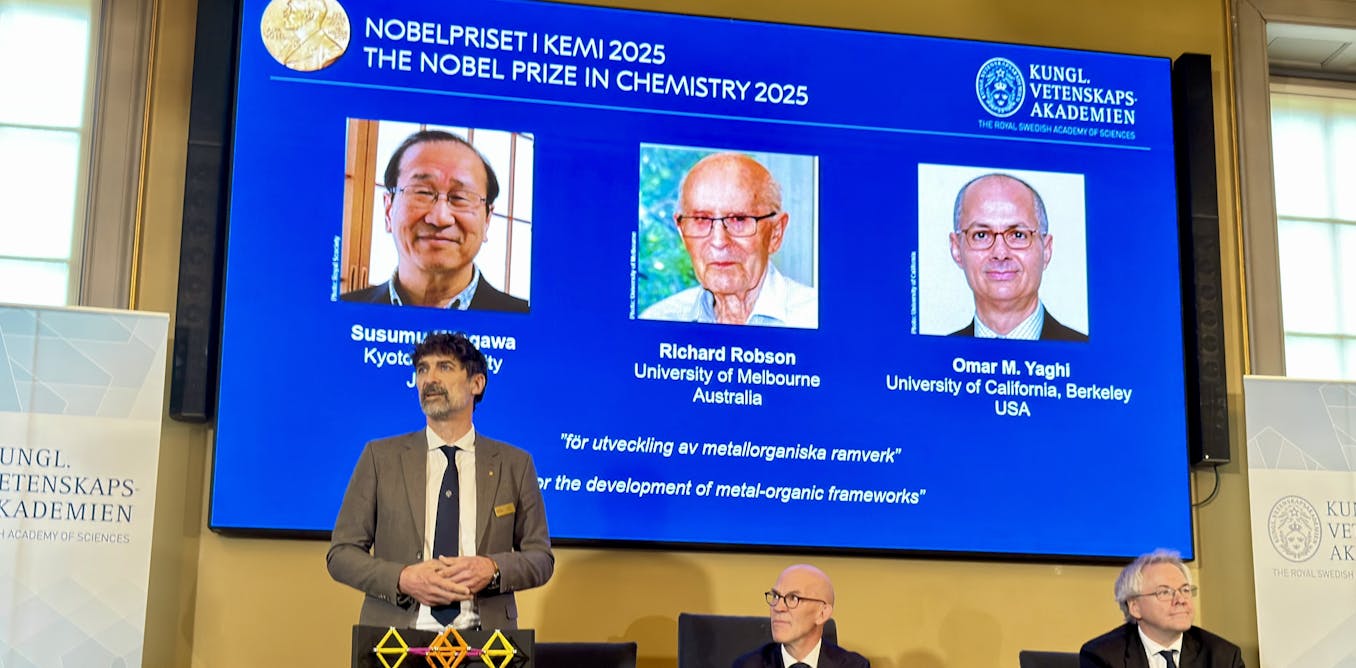
For years, the world of materials science felt limited by what was, rather then what could be. Then came metal-organic frameworks (MOFs) – a revolutionary class of materials poised to redefine industries from energy to environmental science. And now, with the 2025 Nobel Prize in Chemistry recognizing the groundbreaking work of Richard Robson, Susumu Kitagawa, and Omar Yaghi, the potential of MOFs is firmly in the spotlight.
As someone who’s spent years immersed in this field, witnessing its evolution firsthand, I can tell you this isn’t just an award for three brilliant scientists. It’s a party of a collaborative spirit, a testament to the power of imaginative chemistry, and a signal that the future of materials is here.
From Lab Curiosity to Industrial Reality: The MOF Journey
Initially, MOFs were intriguing but fragile. The idea was simple: build porous structures from metal ions connected by organic molecules. But early materials were notoriously sensitive to moisture and heat, limiting their practical applications.
My own introduction to MOFs came through MIL-125, a titanium-based framework pioneered by the late Gérard Férey. What struck me wasn’t just its notable porosity, but its robustness. I used the same two-gram batch, stored in an open vial on my bench, for my entire Ph.D. research – no glovebox, no desiccator, just reliable performance. This experience was a pivotal moment.
This seemingly simple anecdote highlights a crucial shift. MOFs have “grown up.” through clever chemical design, we’ve created materials that can:
* Withstand harsh conditions: Resisting degradation from water, heat, and repeated use.
* Exhibit tailored properties: Beyond porosity, MOFs now demonstrate electrical conductivity, light responsiveness, and catalytic activity.
* Scale for industrial applications: Moving beyond milligram-scale research to gram, kilogram, and even ton-scale production.
This scaling is the critical bridge between laboratory discovery and real-world impact. We’re no longer just studying MOFs; we’re engineering them for deployment.
What Can mofs do? The Expanding Applications
The versatility of MOFs is truly remarkable. They aren’t just theoretical marvels; they’re powering tangible solutions to some of the world’s most pressing challenges.Here are just a few examples:
* Gas Storage & Safety: MOFs can safely and efficiently store gases like hydrogen, crucial for a clean energy future.
* Water Harvesting: Imagine pulling potable water directly from the air, even in arid environments. MOFs are making this a reality.
* Energy-Efficient Cooling: New MOF-based technologies are paving the way for air conditioners that consume significantly less energy.
* Catalysis: MOFs act as highly selective catalysts,accelerating chemical reactions and reducing waste.
* Battery technology: My own research focuses on using conductive MOFs to enhance battery safety and performance.
* Carbon Capture & Conversion: Turning harmful waste gases into valuable chemicals using sunlight – a truly circular economy approach.
The Future of MOFs: Challenges and Opportunities
Despite the amazing progress, challenges remain. Further improvements in stability and scalability are essential to unlock the full potential of MOFs. But the momentum is undeniable.
Startups are already translating these advances into commercial technologies, and research continues at a rapid pace. We’re entering an era where materials aren’t just found; they’re designed.
Why This Nobel Prize matters
The 2025 Nobel Prize isn’t simply recognizing past achievements. It’s validating a philosophy: that chemistry is fundamentally a creative endeavor. We can engineer matter with inventiveness, and sometimes, the most powerful structures are built on emptiness.
I remember attending my first MOF conference as a young Ph.D. student, listening to the pioneers of the field with a sense of awe. They felt like magical sponges, capable of absorbing and transforming the world around them. That sense of wonder has fueled my own research, and it’s a feeling I hope will inspire the next generation of materials scientists.
This prize is a powerful reminder that pushing the boundaries of what’s possible requires vision, collaboration