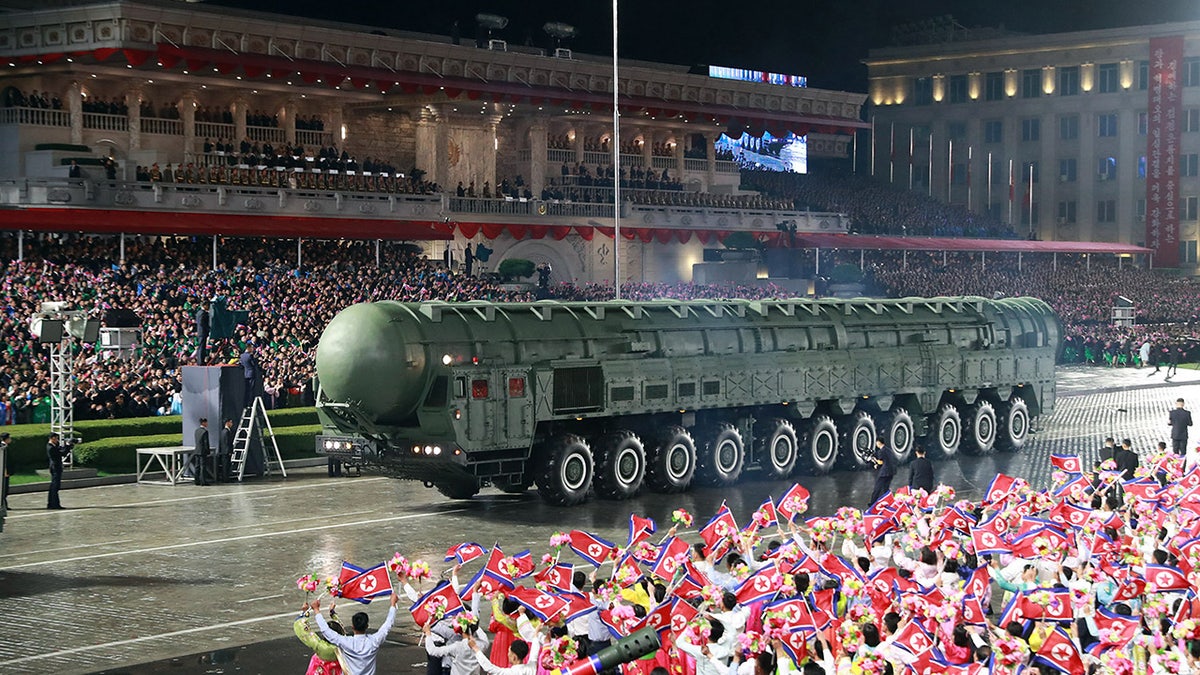
North Korea has declared its nuclear weapons program “irreversible,” a move that directly challenges United States denuclearization efforts just one day before Chinese President Xi Jinping arrives for a high-stakes visit to Pyongyang. The defiant stance, articulated by Kim Yo-jong, signals that the Democratic People’s Republic of Korea (DPRK) intends to maintain its nuclear status regardless of international diplomatic pressure or shifting relations with Beijing.
The declaration comes at a critical diplomatic juncture. Following a meeting between President Donald Trump and President Xi Jinping last month, the United States indicated that both leaders shared a goal of denuclearizing the Korean peninsula. However, North Korean officials have dismissed these interpretations, characterizing the push for denuclearization as a relic of the past.
Why North Korea views its nuclear status as “irreversible”
Kim Yo-jong, the sister of North Korean leader Kim Jong-un and the head of the Workers’ Party’s general affairs department, issued the warning via the state-run Korean Central News Agency (KCNA). She characterized the United States’ long-standing calls for denuclearization as an “anachronistic dream,” suggesting that the era of negotiating away the country’s nuclear arsenal has ended.
According to the KCNA report, Kim emphasized that the development of the nation’s nuclear capabilities is a matter of national survival and sovereignty. She stated that “steadily beefing up the nuclear war deterrent for self-defence … is an irreversible final conclusion to be carried out unconditionally.”
Kim further reinforced the country’s position by stating that the DPRK’s status as a nuclear weapons state is a “line of no retreat.” She asserted that this status remains a “stark reality whether anyone recognises it or not,” effectively telling the international community that North Korea does not recognize the legitimacy of any external pressure to disarm.
The significance of Xi Jinping’s visit to Pyongyang
The timing of these statements is highly strategic, occurring just before President Xi Jinping begins a two-day visit to North Korea. This marks Xi’s first trip to the country in seven years, a period of significant geopolitical volatility in Northeast Asia. The visit is expected to serve as a major test for the stability and direction of China-North Korea relations.

Diplomatic observers are closely monitoring whether Xi Jinping will address the issue of Pyongyang’s nuclear arsenal during his discussions with the North Korean leadership. While the United States and China have previously expressed shared interests in regional stability, North Korea’s recent rhetoric suggests they may be using the visit to solidify their bilateral ties without making concessions on their nuclear program.
The visit is expected to focus on several key areas:
- Bilateral Security: Strengthening the strategic alignment between Beijing and Pyongyang.
- Nuclear Policy: Determining if China will press for restraint or accept the DPRK’s current status.
- Regional Stability: Managing the complex dynamics involving the United States and neighboring powers.
Challenging the US denuclearization agenda
The North Korean government’s recent comments serve as a direct rebuttal to the diplomatic framework established by the United States. While the U.S. has consistently pursued a policy of denuclearization for the Korean peninsula, Pyongyang has increasingly framed its nuclear program as an essential tool for self-defense and sovereignty.
Kim Yo-jong specifically targeted the “false information” surrounding recent diplomatic discussions. By labeling the U.S. position as “anachronistic,” the DPRK is signaling a refusal to return to previous negotiating models that required the dismantling of their nuclear infrastructure in exchange for sanctions relief or security guarantees.
North Korea maintains that its nuclear weapons are the “key to self-defence” and has stated that the government will “never compromise as regards the issue of defence and sovereignty.” This hardline stance creates a significant hurdle for any future multilateral negotiations involving the U.S., China, and the international community.
Core Developments at a Glance
- Nuclear Status: North Korea officially declared its nuclear program “irreversible” and “unconditional.”
- Key Figure: Kim Yo-jong, head of the Workers’ Party’s general affairs department, led the verbal offensive.
- Diplomatic Context: The announcement precedes Chinese President Xi Jinping’s first visit to North Korea in seven years.
- U.S. Relation: Pyongyang rejected the U.S. denuclearization goal as an “anachronistic dream.”
- China-U.S. Backdrop: The statements follow a meeting between Trump and Xi last month regarding peninsula denuclearization.
The international community will be watching closely as President Xi Jinping arrives in Pyongyang to see how the relationship between the two neighbors evolves in the face of North Korea’s renewed nuclear defiance.
Next Checkpoint: Official updates regarding the commencement of President Xi Jinping’s two-day visit to North Korea are expected within the next 24 hours.
What are your thoughts on the shifting dynamics between North Korea and China? Let us know in the comments below and share this article with your network.
Keep reading