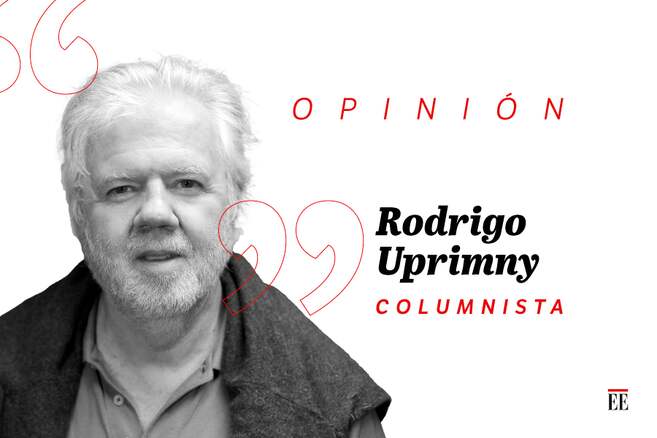
Legal scholar Rodrigo Uprimny has characterized the current political climate in Colombia as the most significant constitutional crisis the nation has faced since the 1991 enactment of its current constitution. The assessment centers on escalating tensions between the executive branch and independent judicial and oversight bodies, raising concerns about the stability of the country’s democratic framework and the separation of powers.
For over three decades, the 1991 Constitution has served as the bedrock of Colombian governance, designed to decentralize power and provide robust protections for human rights following years of internal instability. Uprimny, a prominent jurist and researcher at the Dejusticia think tank, argues that recent institutional friction—marked by public disputes between the Presidency and institutions like the Prosecutor General’s Office and the Constitutional Court—threatens to erode the legal safeguards that have defined the post-1991 era. According to the Constitutional Court of Colombia, the court remains the final arbiter of constitutional interpretation, serving as a check on executive actions that may exceed constitutional limits.
The Evolution of Institutional Friction
The tension Uprimny describes is not an isolated event but a culmination of ongoing debates regarding the scope of executive authority. Under the current administration, several high-profile legislative and policy initiatives have faced intense scrutiny from the judiciary. These include reforms to the health system, labor laws, and environmental policies, which frequently end up before the Constitutional Court for review. When the judiciary intervenes to strike down or modify these proposals, the executive branch has occasionally responded with public criticism, labeling the judicial oversight as an obstruction to its “Change” platform.
This dynamic has prompted warnings from various sectors of civil society. Legal analysts point to the importance of the “system of checks and balances” as established in the 1991 text, which sought to prevent the concentration of power in any single branch of government. The Office of the United Nations High Commissioner for Human Rights has consistently emphasized the necessity of protecting the independence of the judiciary to ensure the rule of law in Colombia. The current discourse, however, suggests a deepening divide over how these powers should be exercised in practice.
Impact on Democratic Stability
The core of the debate concerns whether the current administration’s rhetoric toward oversight bodies constitutes a structural challenge to constitutional order. Uprimny’s analysis suggests that when the head of state repeatedly questions the legitimacy of independent institutions, it risks diminishing public trust in these bodies. This erosion of confidence can lead to a weakening of the very institutions meant to protect citizens from potential abuses of power.
Data from recent public opinion polls often reflect this polarization. While the government maintains a base of support that views the judiciary as an obstacle to necessary social reforms, a significant portion of the legal community and international observers express alarm at the potential for “democratic backsliding.” The International Institute for Democracy and Electoral Assistance (International IDEA) has previously highlighted that the health of a democracy depends on the mutual respect between elected leaders and non-elected institutional safeguards.
Historical Context of the 1991 Constitution
To understand the gravity of the current situation, it is necessary to look at the origins of the 1991 Constitution. Drafted by a National Constituent Assembly, the document replaced the 1886 Constitution, which was seen as overly centralized and exclusionary. The 1991 reform introduced the *tutela*—a legal mechanism that allows any citizen to seek immediate judicial protection for their fundamental rights. This mechanism has become one of the most utilized tools in the country, with millions of filings processed annually, according to reports from the Defensoría del Pueblo.
The crisis, as defined by Uprimny, arises when the executive branch appears to challenge the authority of the courts to interpret these rights or to block policies that may infringe upon them. If the executive ignores or heavily pressures the judiciary, it undermines the 35-year effort to build a state where the law, rather than the political will of the moment, dictates the boundaries of authority.
Looking Ahead: The Role of Oversight Bodies
The next major checkpoint in this constitutional discourse will involve upcoming sessions of the Constitutional Court, where several petitions regarding the constitutionality of major government decrees are currently pending. These rulings will serve as a litmus test for the resilience of the judicial branch in the face of executive pressure. Observers will also look to the Procuraduría General de la Nación, which is tasked with investigating the conduct of public officials, to see how it manages potential conflicts involving high-ranking government members.
As the debate continues, the focus remains on whether the Colombian political system can accommodate these intense ideological differences without dismantling the legal structures established in 1991. The stability of the nation’s governance depends on the adherence of all actors to the constitutional rules of the game. For those following the situation, official updates regarding court rulings and legislative proceedings can be found on the portals of the respective branches of government. We encourage readers to monitor these developments and share their perspectives on the future of Colombian institutional integrity in the comments section below.