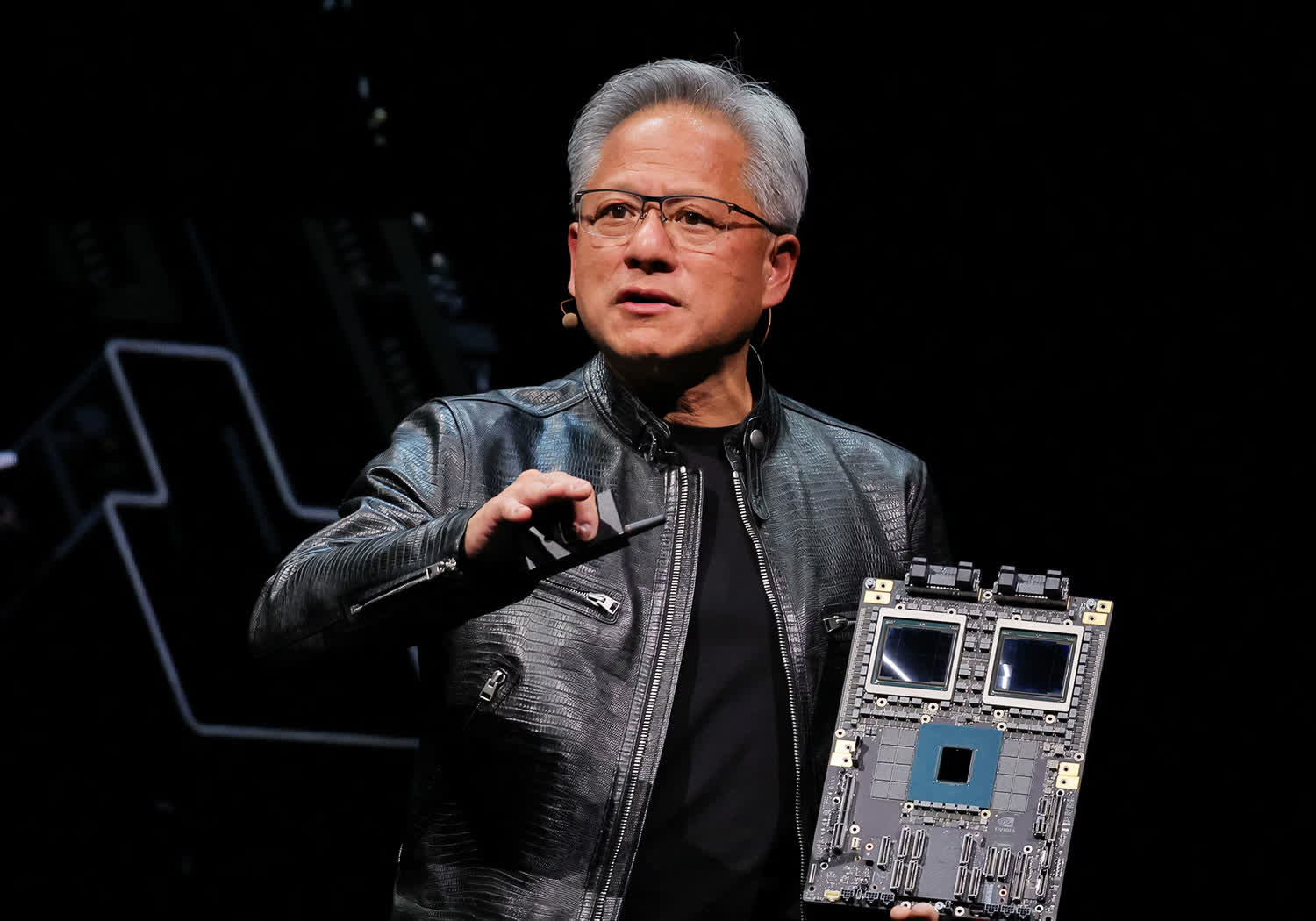
San Francisco – Nvidia, the semiconductor giant powering much of the current artificial intelligence boom, signaled it’s unlikely to create further equity investments in companies like OpenAI and Anthropic, despite reaping substantial benefits from their growth. The shift in strategy, articulated by Nvidia CEO Jensen Huang, reflects a growing complexity in the relationship between the hardware provider and the AI developers building software on its platform. This comes as Nvidia increasingly occupies a unique position in the tech landscape: both a critical supplier and a shareholder in the companies it supplies.
Huang’s comments, reported by TechSpot and now widely discussed within the industry, suggest Nvidia is reassessing its role as a venture capitalist in the generative AI space. While the initial investments in OpenAI and Anthropic proved lucrative, the company appears to be prioritizing its core business of designing and manufacturing graphics processing units (GPUs) – the essential components for training and deploying AI models. The move underscores a potential tension between Nvidia’s interests as a supplier and its interests as an investor, a dynamic that could become increasingly pronounced as the generative AI market matures.
Nvidia’s Dominance in the Generative AI Landscape
Nvidia’s GPUs have become the industry standard for generative AI workloads, largely due to their parallel processing capabilities, which are ideally suited for the complex calculations required by deep learning models. The company’s success isn’t limited to hardware; it’s also building a comprehensive software stack to support AI development and deployment. Nvidia AI is positioned as the most advanced platform for generative AI, trusted by leading innovators, according to the company itself. Nvidia’s website details its commitment to providing a continuously updated platform for enterprise-level generative AI applications.
This dominance extends beyond simply providing the chips. Nvidia is actively developing tools and frameworks to streamline the entire AI lifecycle, from model training to inference. Nvidia Dynamo, an open-source, low-latency inference framework, is designed to scale AI workloads across large GPU fleets, optimizing resource scheduling and data transfer. As outlined on the NVIDIA Developer website, Dynamo supports all major AI inference backends, making it a versatile solution for deploying generative AI models in distributed environments. Other offerings include NVIDIA NIM, a set of microservices for accelerating deployment, and NVIDIA TensorRT, an ecosystem of APIs for high-performance deep learning inference.
The Shifting Dynamics of Supplier and Shareholder
Nvidia’s initial investments in OpenAI and Anthropic were strategic moves to foster innovation and secure a foothold in the burgeoning generative AI market. These investments provided Nvidia with valuable insights into the evolving needs of AI developers and helped to shape the development of its hardware and software offerings. However, as these companies have matured and attracted significant funding from other sources, the rationale for further investment has diminished.
The core of the issue lies in the potential for conflicts of interest. As a major supplier to OpenAI and Anthropic, Nvidia has a vested interest in ensuring their success. However, as a shareholder, it also has a financial stake in their profitability. This dual role could create tensions if, for example, Nvidia were to prioritize its own financial interests over the needs of its customers. The arrangement, once mutually reinforcing, now appears increasingly tangled, as originally reported by TechSpot.
Beyond Investment: Nvidia’s Focus on Infrastructure
Huang’s indication that further equity investments are unlikely suggests Nvidia is doubling down on its core competency: providing the underlying infrastructure for generative AI. The company is investing heavily in developing more powerful GPUs, advanced software tools, and comprehensive AI platforms. This strategy allows Nvidia to capture a larger share of the overall AI market without taking on the risks associated with venture capital investing.
Nvidia’s recent advancements in generative AI platforms demonstrate this commitment. NVIDIA Cosmos, for example, is a platform of foundation models and data processing pipelines designed to accelerate the development of physical AI systems, such as robots and self-driving cars. According to NVIDIA’s developer resources, Cosmos aims to streamline the creation of highly performant AI systems. Similarly, NVIDIA Nemotron is a family of multimodal models with open datasets and recipes for building agentic AI, offering developers a robust toolkit for creating sophisticated AI applications.
Retrieval-Augmented Generation (RAG) and the Future of AI
Nvidia is also actively exploring techniques like Retrieval-Augmented Generation (RAG) to enhance the capabilities of generative AI models. RAG integrates external knowledge sources, enabling AI to retrieve and synthesize up-to-date and contextually relevant information. This approach improves accuracy and allows AI to tackle more complex tasks, such as creating realistic images from text descriptions or building intelligent chatbots. The ability to augment AI with external knowledge is becoming increasingly important as generative AI models are deployed in real-world applications.
Implications for the Generative AI Ecosystem
Nvidia’s shift in strategy could have significant implications for the broader generative AI ecosystem. While OpenAI and Anthropic have secured substantial funding from other investors, including Microsoft and Amazon, Nvidia’s decision to step back from equity investments could signal a broader trend among hardware providers. It may encourage these companies to focus on building independent, self-sustaining businesses rather than relying on strategic investments from their suppliers.
This could also lead to increased competition among hardware providers, as they vie to become the preferred platform for generative AI development. Companies like AMD and Intel are actively developing their own AI-focused hardware and software solutions, challenging Nvidia’s dominance. The race to provide the most powerful and efficient AI infrastructure is likely to intensify in the coming years.
Generative AI enables smarter content creation, deeper data insights, streamlined automation, and enhanced AI performance, according to Nvidia’s solutions page. The future of generative AI will likely be shaped by the interplay between hardware innovation, software development, and strategic partnerships.
The next key development to watch will be Nvidia’s earnings call scheduled for May 21, 2026, where further details regarding their investment strategy and future product roadmap are expected to be revealed. Investors and industry analysts will be closely scrutinizing the company’s guidance for the remainder of the year, looking for signs of continued growth and innovation in the generative AI space.
What are your thoughts on Nvidia’s decision? Share your insights in the comments below, and don’t forget to share this article with your network!