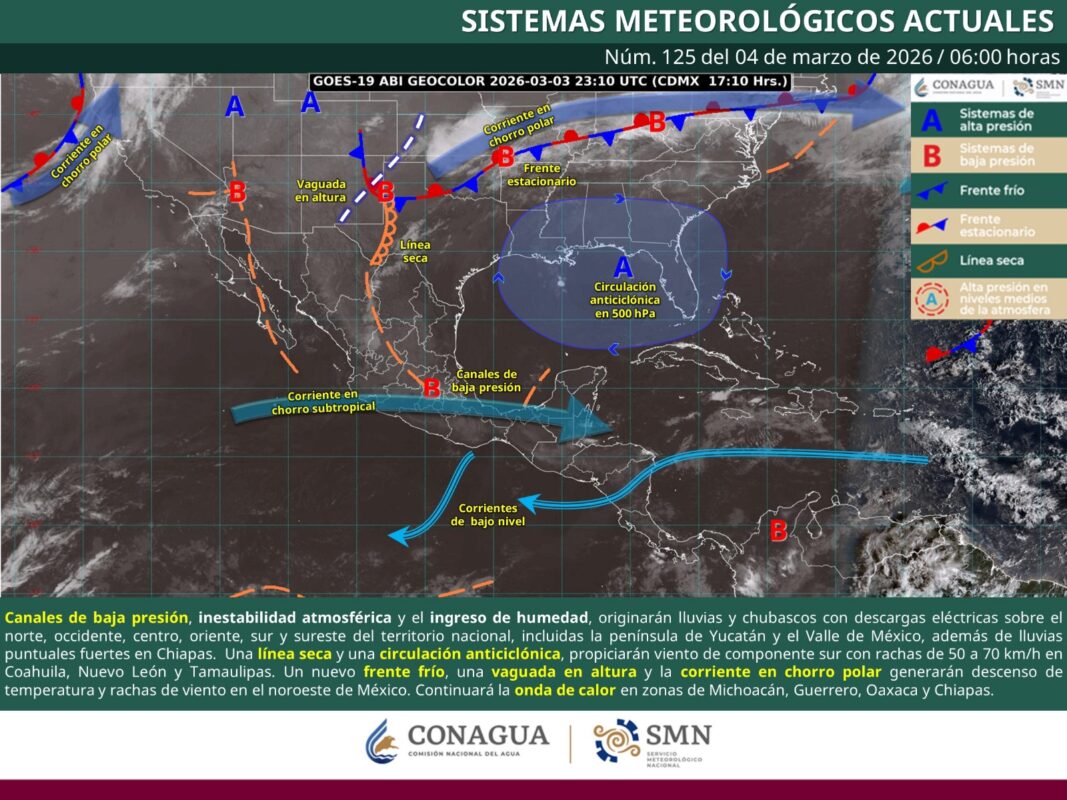
Oaxaca, Mexico is bracing for a day of intense heat and potential air quality concerns, according to recent advisories from the state’s Civil Protection and Risk Management Coordination (CEPCyGR). The forecast, issued on March 4, 2026, indicates stable atmospheric conditions coupled with rising temperatures, particularly in coastal regions, the Sierra Sur, and the Isthmus of Tehuantepec. These conditions necessitate heightened awareness and preparedness among residents and visitors alike.
The CEPCyGR reports that a high-pressure system is maintaining stable weather patterns, leading to sunny to partly cloudy skies with a possibility of isolated afternoon thunderstorms. However, the primary concern centers around a shift in wind direction to the south and southeast. This change is expected to drive temperatures upwards, potentially exceeding 38 degrees Celsius (100.4 degrees Fahrenheit) in localized areas of the aforementioned regions. The combination of heat and atmospheric conditions also raises concerns about air quality, with periods of haze – known as *calima* – anticipated, especially during the early morning hours. This haze, combined with cooler temperatures overnight in higher elevations, could impact respiratory health.
Regional Temperature Outlook
Detailed temperature forecasts for various regions of Oaxaca, as released by the National Water Commission (Conagua), paint a picture of significant regional variation. The Valles Centrales (Central Valleys) are expected to experience a minimum of 13 degrees Celsius (55.4 degrees Fahrenheit) and a maximum of 33 degrees Celsius (91.4 degrees Fahrenheit). The Isthmus of Tehuantepec, known for its hot and humid climate, will likely see temperatures range from a low of 23 degrees Celsius (73.4 degrees Fahrenheit) to a high of 36 degrees Celsius (96.8 degrees Fahrenheit). The Cuenca del Papaloapan basin is forecast to have a minimum of 18 degrees Celsius (64.4 degrees Fahrenheit) and a maximum of 33 degrees Celsius (91.4 degrees Fahrenheit). Coastal areas will experience a minimum of 23 degrees Celsius (73.4 degrees Fahrenheit) and a maximum of 35 degrees Celsius (95 degrees Fahrenheit). Inland, the Mixteca region is predicted to have a low of 12 degrees Celsius (53.6 degrees Fahrenheit) and a high of 33 degrees Celsius (91.4 degrees Fahrenheit). The Sierra de Flores Magón mountains will see temperatures between 15 and 34 degrees Celsius (59 and 93.2 degrees Fahrenheit), while the Sierra de Juárez mountains will be cooler, ranging from 9 to 26 degrees Celsius (48.2 to 78.8 degrees Fahrenheit). Finally, the Sierra Sur mountains are expected to experience a minimum of 10 degrees Celsius (50 degrees Fahrenheit) and a maximum of 28 degrees Celsius (82.4 degrees Fahrenheit).
Understanding *Calima* and its Health Implications
The anticipated *calima* – a phenomenon common in the Canary Islands and other regions with arid climates – is caused by dust and other particulate matter lifted from the Sahara Desert and transported by prevailing winds. While often visually striking, *calima* can pose health risks, particularly for individuals with pre-existing respiratory conditions such as asthma or chronic obstructive pulmonary disease (COPD). Exposure to these fine particles can irritate the lungs and exacerbate symptoms. The World Health Organization (WHO) emphasizes the importance of protecting vulnerable populations during periods of high air pollution, including limiting outdoor activity and using air purifiers when possible. The WHO provides detailed information on the health effects of air pollution and preventative measures.
Beyond respiratory issues, *calima* can also cause eye and skin irritation. Health officials recommend wearing sunglasses and protective clothing, and staying hydrated to mitigate these effects. The CEPCyGR is urging residents to stay informed about air quality updates and heed any advisories issued by local authorities. The presence of *calima* can also reduce visibility, potentially impacting transportation, particularly air travel.
Protección Civil Recommendations and Safety Measures
The CEPCyGR is actively disseminating safety recommendations to the public, emphasizing the importance of proactive measures to mitigate the risks associated with the heat and *calima*. These recommendations include staying hydrated by drinking plenty of water, avoiding strenuous activity during the hottest parts of the day, and seeking shade whenever possible. Individuals are also advised to wear light-colored, loose-fitting clothing and to protect their skin from the sun with sunscreen and hats. For those with pre-existing health conditions, it is crucial to follow medical advice and take necessary precautions.
The agency also stresses the importance of staying informed about weather updates through official channels, including their Facebook page (@CEPCYGRGobOax) and X account (@CEPCyGR_GobOax). Capitanías de Puerto (port authorities) are also issuing advisories to maritime traffic, urging caution and adherence to safety protocols. The CEPCyGR is coordinating with local municipalities to ensure that emergency services are prepared to respond to any incidents that may arise due to the extreme weather conditions. This includes ensuring adequate staffing levels and the availability of necessary resources, such as ambulances and medical supplies.
Staying Informed and Prepared
Given the potential for rapidly changing conditions, it is vital for residents and visitors to remain vigilant and proactive. Monitoring official weather forecasts and heeding the advice of local authorities are essential steps in ensuring personal safety. The National Meteorological Service of Mexico (Servicio Meteorológico Nacional) provides detailed and up-to-date weather information for the country, including Oaxaca. Regularly checking this resource can help individuals stay ahead of potential hazards.
it is advisable to have a basic emergency kit prepared, including water, non-perishable food, a first-aid kit, and any necessary medications. Knowing the location of the nearest emergency shelter can also be beneficial in the event of severe weather. The CEPCyGR website provides information on emergency shelters and other preparedness resources.
The current weather situation in Oaxaca underscores the importance of preparedness and resilience in the face of climate-related challenges. By staying informed, taking appropriate precautions, and following the guidance of local authorities, residents and visitors can minimize the risks associated with extreme heat and air quality concerns. The CEPCyGR will continue to monitor the situation closely and provide updates as needed. The next official update from the CEPCyGR is scheduled for March 5, 2026, at 10:00 AM local time.
What are your thoughts on the preparedness measures being taken in Oaxaca? Share your comments below and help spread awareness by sharing this article with your network.
Worth a look