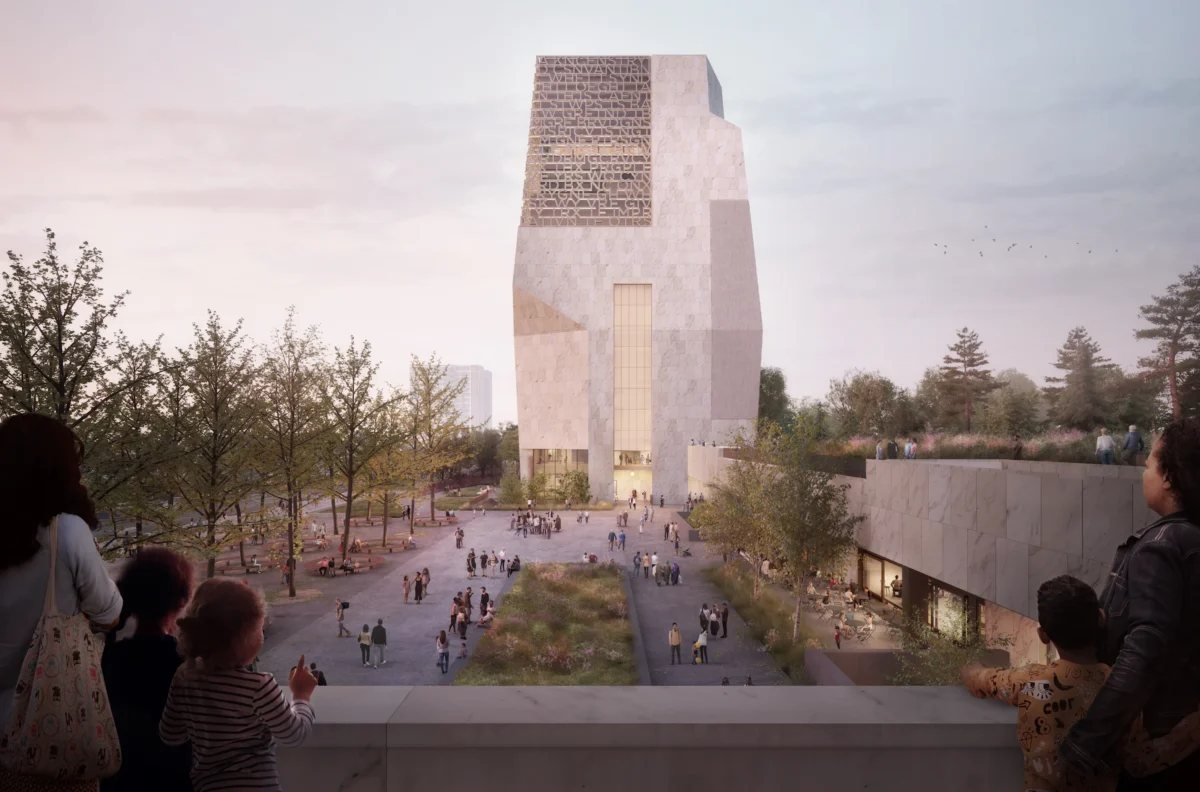
As the landscape of Chicago’s Jackson Park undergoes a significant transformation, the rising silhouette of the Obama Presidential Center serves as a focal point for both architectural ambition and public discourse. Spearheaded by the Obama Foundation, this expansive project aims to move beyond the traditional concept of a presidential library, positioning itself instead as a community-centered hub for civic engagement and education. With a project budget that has seen various estimates climb toward the $830 million mark, the initiative represents one of the most substantial private investments in the city’s South Side in recent decades.
The development, which broke ground in 2021, is designed to be more than a repository for the records of the 44th President of the United States. According to official project documentation, the campus will feature a museum, a public library branch, a forum for community gatherings and extensive green space intended to revitalize the surrounding neighborhood. For observers of American political history, the project is a tangible manifestation of Barack Obama’s post-presidency focus on leadership development and grassroots organizing.
A Shift in Presidential Legacy Construction
Traditionally, presidential libraries have functioned as static archives managed by the National Archives and Records Administration. However, the Obama Presidential Center represents a departure from this federal model. The Obama Foundation has opted for a private, philanthropic model, meaning the center will not be part of the federal presidential library system. This structural choice allows the foundation greater flexibility in programming and operations, though it also places the burden of fundraising and long-term endowment squarely on private donors, as detailed in the official project overview provided by the Obama Foundation.

The scale of the project, which encompasses approximately 19 acres of the historic Jackson Park, has invited intense scrutiny. Critics and local advocacy groups have raised concerns regarding potential gentrification and the displacement of longtime residents in the surrounding communities. Conversely, supporters argue that the center will act as an economic engine, creating thousands of construction and permanent jobs while attracting tourism to an area that has historically seen less investment than Chicago’s downtown core. The City of Chicago’s official planning portal confirms that the project includes community benefits agreements aimed at addressing these socioeconomic concerns.
Architectural Vision and Community Impact
The design of the center, led by Tod Williams Billie Tsien Architects, emphasizes transparency and integration with the existing parkland. The main tower, designed to evoke the imagery of a lighthouse, is intended to symbolize the “hope and change” rhetoric that defined Obama’s 2008 campaign. Despite the aesthetic aspirations, the project has faced legal and environmental challenges, including a multi-year review process under the National Environmental Policy Act and Section 106 of the National Historic Preservation Act, which ensures that federal undertakings consider their impact on historic properties.

By the numbers, the project is staggering. The Associated Press has reported that the total cost is estimated at approximately $830 million, a figure that includes both construction costs and the necessary endowment to sustain operations. This investment is being met through a massive private fundraising campaign, reflecting the continued influence and fundraising capacity of the former president and first lady, Michelle Obama.
Key Project Milestones and Outlook
- Groundbreaking: Construction officially commenced in September 2021, following years of legal and community reviews.
- Funding Model: The center is privately funded by the Obama Foundation, distinguishing it from the traditional federal presidential library system.
- Economic Projections: The foundation estimates the center will generate significant regional economic activity, though independent analysts continue to monitor the long-term impact on local housing markets.
- Project Completion: Current projections from the Obama Foundation target a grand opening for the center in 2026.
As the construction reaches its final phases, the focus is shifting toward the programming that will fill the halls of the center. The foundation has emphasized that the museum will not only document the history of the Obama presidency but will also serve as a space to discuss the broader civil rights movement and the challenges of modern democracy. It is a bold effort to turn a personal monument into a functional, living institution.
What Comes Next for the Obama Center
The coming months will be critical as the foundation transitions from the heavy construction phase to the installation of exhibits and the finalization of operational partnerships. For those interested in the ongoing development, the Obama Foundation regularly publishes progress updates and construction timelines, providing a transparent view into the project’s evolution. Whether the center succeeds in its goal of serving as a catalyst for community growth remains a subject of active debate, but its physical presence in Chicago is already a defining feature of the city’s modern landscape.

As we continue to cover the intersection of politics, history, and urban development, we invite our readers to join the conversation. How do you view the role of modern presidential centers in our society? Are they essential tools for civic education, or do they represent an outdated approach to legacy building? Please share your thoughts in the comments section below, and stay tuned to World Today Journal for further updates as we approach the scheduled 2026 completion date.
Worth a look