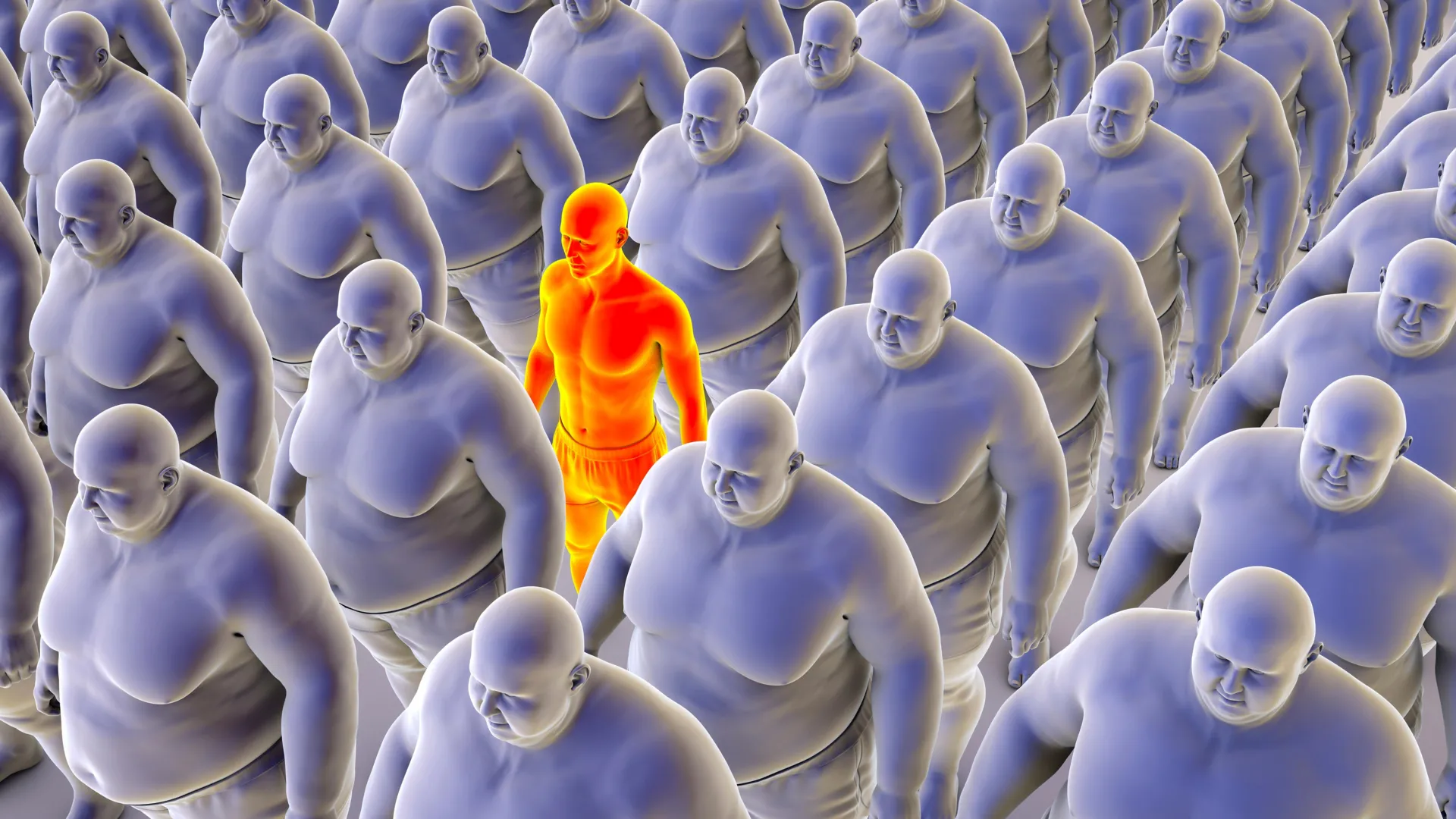
Rethinking Obesity: New Guidelines Reveal a Considerably Larger Population at Risk
For decades, Body Mass Index (BMI) has been the primary tool for assessing obesity, a critical risk factor for numerous chronic diseases. However, a growing body of evidence highlights the limitations of relying solely on BMI, which doesn’t account for crucial factors like body fat distribution.Now, groundbreaking research and a consensus among leading medical organizations are driving a paradigm shift in how we define and address obesity. This new approach, detailed in recent findings, reveals a far more widespread prevalence of obesity then previously understood and underscores the urgent need for revised treatment strategies.
Beyond BMI: Introducing “BMI-Plus-anthropometric Obesity” and “Anthropometric-Only Obesity”
Customary obesity diagnosis centers on a high BMI. But the new guidelines, endorsed by over 76 organizations including the American Heart Association and The Obesity Society, introduce a more nuanced classification system.This system recognizes that individuals can be at increased health risk even without a high BMI.
The new framework categorizes obesity as follows:
* BMI-Plus-Anthropometric Obesity: Individuals wiht a high BMI and at least one elevated anthropometric measure (like waist circumference or hip circumference).
* anthropometric-Only Obesity: Individuals with a normal BMI but possessing at least two elevated anthropometric measures.
This distinction is critical. It acknowledges that where you carry your weight – notably abdominal fat – is a powerful predictor of health risks, independant of overall weight. Furthermore, the guidelines categorize obesity into “preclinical” and “clinical” forms, with ”clinical obesity” defined by the presence of obesity-related physical impairment or organ dysfunction.
A Dramatic Increase in Obesity Prevalence
A recent study analyzing data from over 300,000 participants in the National Institutes of Health All of Us Research Program demonstrates the significant impact of thes new definitions. Using the revised criteria, researchers found that 68.6% of participants met the criteria for obesity, a ample jump from the 42.9% identified using traditional BMI-based methods.
Importantly, the entire increase in obesity prevalence was driven by individuals classified as having anthropometric-only obesity. This highlights a previously underrecognized population at significant health risk. The study also revealed that obesity rates increase dramatically with age, with nearly 80% of adults over 70 meeting the new criteria.
Elevated Health Risks in the Newly Identified Group
The implications of this expanded definition are profound.The research revealed that individuals categorized as having anthropometric-only obesity - those who woudl have been considered “normal weight” under previous standards – exhibited higher rates of diabetes, cardiovascular disease, and mortality compared to individuals without obesity.
This finding directly challenges the assumption that a normal BMI equates to good health. It emphasizes the importance of assessing body composition and fat distribution, even in individuals within a “healthy” weight range. Roughly half of all participants meeting the new obesity definition were classified as having clinical obesity, a percentage only slightly lower among those with anthropometric-only obesity.
Expert Perspective: The Limitations of BMI and the Future of Obesity Treatment
“We have always recognized the limitations of BMI as a single marker for obesity because it doesn’t take into account body fat distribution,” explains Dr. Steven Grinspoon, MD, Chief of the Metabolism Unit at Mass General Brigham. “Seeing an increased risk of cardiovascular disease and diabetes in this new group of people with obesity, who were not considered to have obesity before, brings up interesting questions about obesity medications and othre therapeutics.”
This research underscores the need to move beyond a simplistic focus on weight and towards a more extensive assessment of metabolic health.
What This Means for Treatment and Future Research
The researchers emphasize that further investigation is crucial to understand the underlying mechanisms driving anthropometric-only obesity and to identify the most effective treatment strategies. The research team is already exploring novel therapies, including those aimed at reducing waist circumference, and plans to evaluate their efficacy in this newly defined population.
As Dr. Fourman succinctly states, “Identifying excess body fat is very crucial as we’re finding that even people with a normal BMI but with abdominal fat accumulation are at increased health risk. Body composition matters – it’s not just pounds on a scale.”
This shift in understanding demands a re-evaluation of current obesity prevention and treatment strategies. It calls for a more personalized approach that considers individual body composition, risk factors, and the potential benefits of targeted interventions.
Sources:
* (Original article content – links to the original source should be included here for transparency and E-E-A-T)
Disclaimer: This article provides general information and should not be considered medical advice. Consult with a qualified healthcare professional for personalized guidance on obesity assessment and treatment.
**Key
Related reading