
The deep ocean has long been regarded as Earth’s final frontier, a vast and silent expanse that remains largely inaccessible to human eyes. Yet, recent developments suggest that we are only just beginning to scratch the surface of what lies beneath the waves. In a massive leap for marine biology, the Ocean Census has announced the identification of 1,121 previously unknown ocean species, a figure that underscores the staggering scale of our remaining “planetary blindspot.”
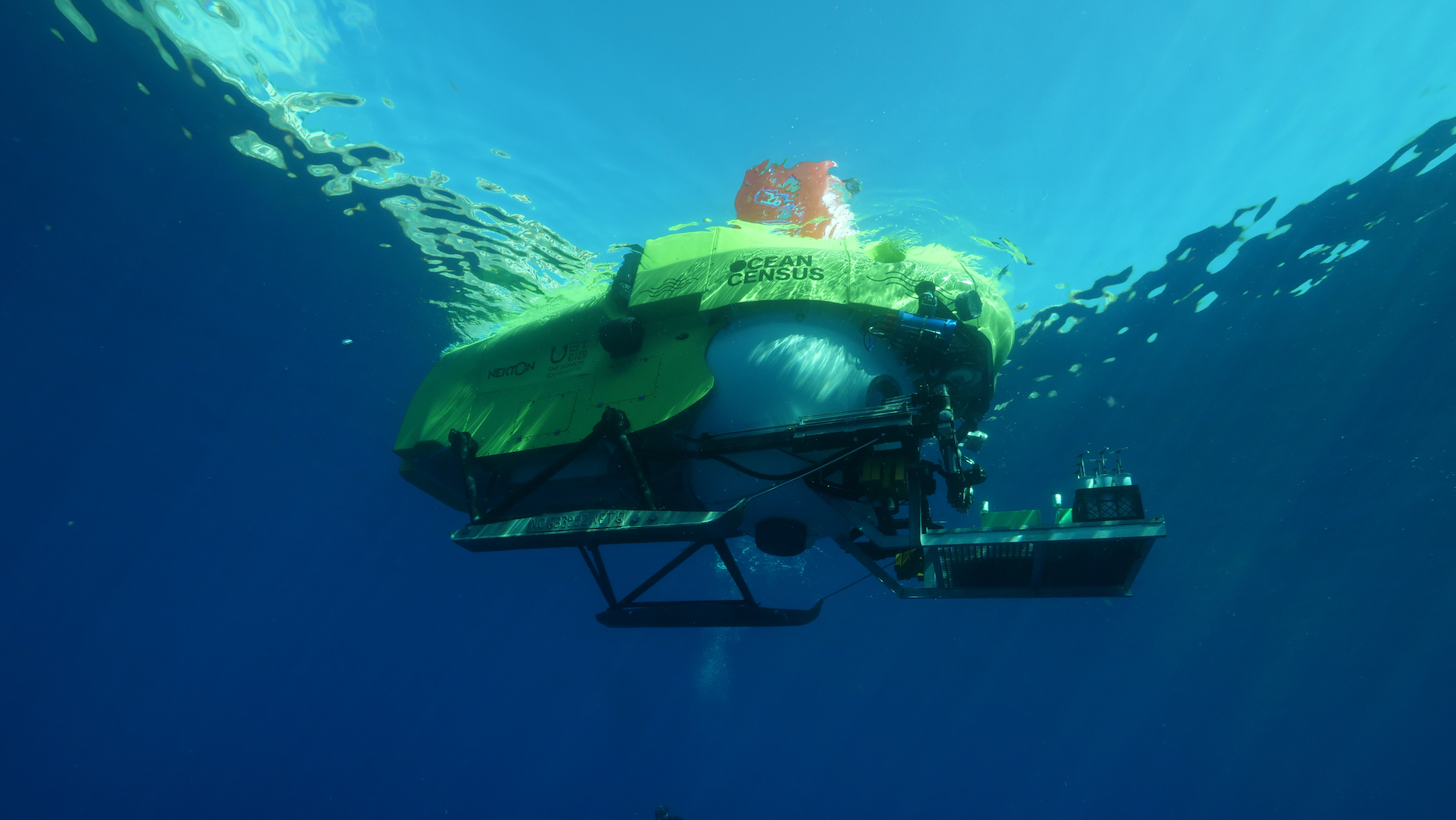
This surge in discovery marks a significant milestone for the Ocean Census, a collaborative mission between the UK-based nonprofit Nekton and Japan’s Nippon Foundation. By deploying high-tech submersibles and working alongside expert taxonomists, the project aims to accelerate the documentation of marine life before it vanishes. The sheer volume of these findings—ranging from microscopic worms to charismatic deep-sea fish—serves as a powerful reminder that the majority of life on our planet remains undocumented.
For scientists and conservationists alike, these findings are both exhilarating and sobering. While the discovery of new life forms offers a glimpse into the incredible biodiversity of our oceans, it also highlights a critical race against time. As deep-sea environments face increasing pressures, the gap between discovering a species and formally protecting it through scientific and legal frameworks remains a significant challenge for global ocean governance.
From Glass Castles to Ghost Sharks: A Glimpse of the Unknown
The recent expeditions have unveiled a menagerie of creatures that seem almost alien in their morphology and habitat. One of the most striking examples is Dalhousiella yabukii, a species of polychaete worm found inhabiting the crystalline interior of a glass sea sponge. These worms reside in the cold, dark waters off the coast of Japan, living within the glass-like skeletons of their hosts.
In Southeast Asia, near the waters of Timor-Leste, researchers documented a vibrant ribbon worm. Its striking colors are believed by scientists to serve as a defensive mechanism, potentially signaling to predators that the organism produces toxins. Beyond the biological curiosity, such chemical compounds hold significant promise for the pharmaceutical industry; researchers have previously explored similar toxins for their potential role in treating cognitive disorders, including Alzheimer’s disease.

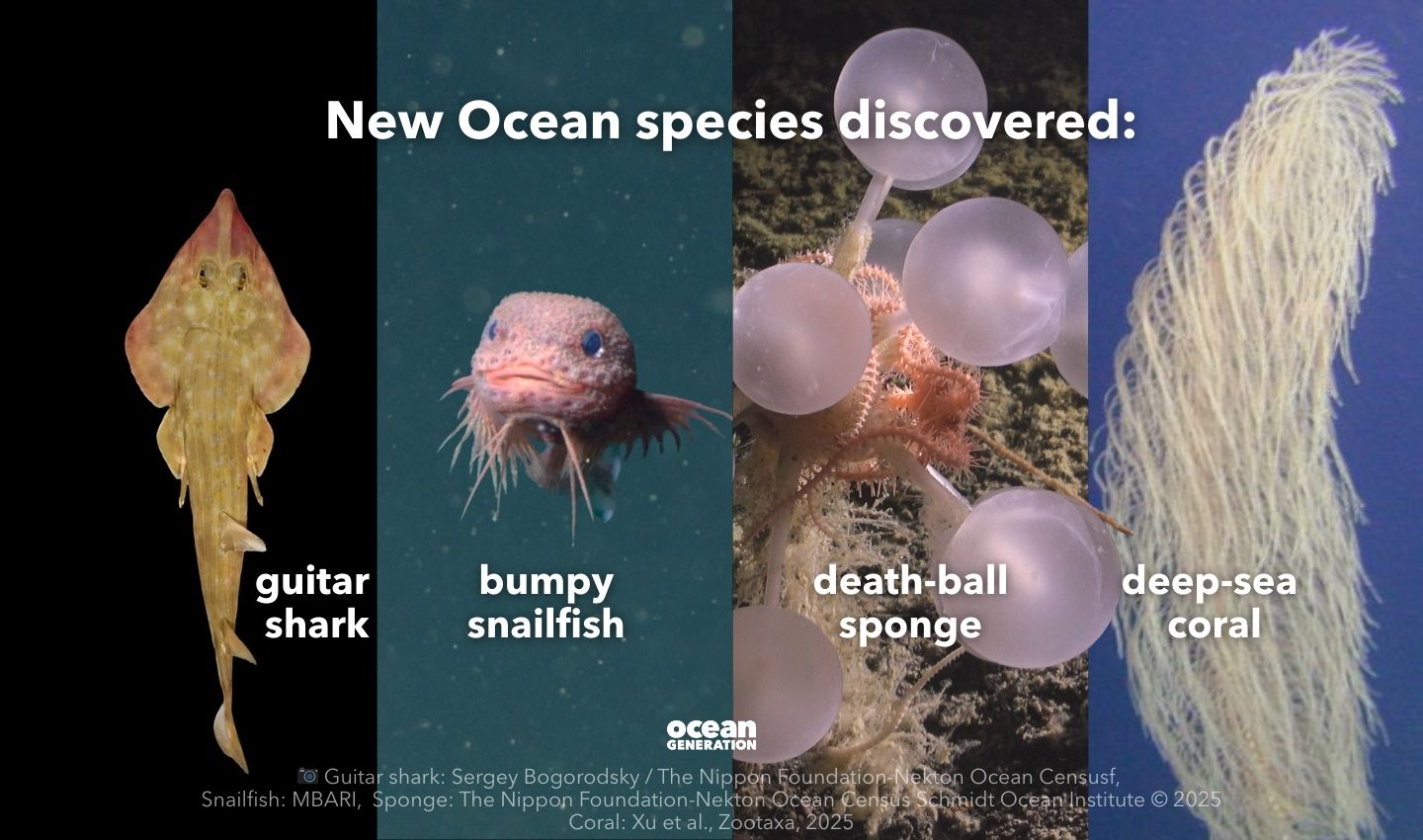
The expeditions also successfully identified larger, more charismatic animals that have long evaded detection due to their extreme depths. Among these is a new species of “ghost shark” discovered off the Australian coast. Despite the name, ghost sharks are not true sharks but are classified as chimaeras—deep-sea fish characterized by skeletons made of cartilage rather than bone.

The Australian waters, particularly within the Coral Sea Marine Park, also yielded an unknown species of ray and an unfamiliar specimen of catshark. These bottom-dwelling creatures, belonging to the genus Apristurus, are known for their slender bodies and deep-sea habitats, which have historically made them difficult to study.


Further south, in the South Atlantic near Antarctica, the mission uncovered organisms that challenge traditional perceptions of animal behavior. This includes a potentially new species of “ping-pong ball sponge.” This carnivorous sponge utilizes ball-like structures covered in tiny, Velcro-like hooks to entrap drifting prey, such as small crustaceans.

Also located in the South Atlantic was an unidentified variety of “sea pen,” a type of soft coral found more than 2,600 feet below the surface. Rather than a single organism, the sea pen exists as a colony consisting of thousands of genetically identical polyps, creating a soft-bodied, tentacled structure on the ocean floor.

The Taxonomy Bottleneck: Why Discovery Is Only the First Step
While the announcement of 1,121 “new” species is a major achievement, marine taxonomists urge a degree of scientific caution. In the scientific community, there is a critical distinction between “discovering” a specimen and “formally describing” a species. The former refers to the physical encounter and documentation of an organism, while the latter is a rigorous, multi-year process required to officially name and validate a species as new to science.
To formally describe a species, taxonomists must conduct exhaustive research, combing through existing museum collections and academic literature to prove that the organism possesses unique anatomical or genetic traits. This evidence must then undergo a stringent peer-review process before publication. According to Greg Rouse, a marine taxonomist at the Scripps Institution of Oceanography, many of the species currently being celebrated by the Ocean Census have not yet completed this level of due diligence.
This creates what experts call a “bottleneck” in marine science. On average, the time elapsed between the initial collection of a species and its formal description is approximately 13 years. This delay poses a significant risk: there is a very real possibility that some marine species could face extinction before they are even officially recognized in the scientific record.
Karen Osborn, a taxonomist at the Smithsonian National Museum of Natural History, noted that while these discoveries are a “step in the right direction,” discovery alone does not grant a species the status of being “described.” Without the completed work of proving uniqueness, the scientific community cannot fully integrate these findings into the broader understanding of global biodiversity.
The High Stakes of Scientific Naming and Conservation Policy
The necessity of formal description extends far beyond academic curiosity; We see a fundamental requirement for environmental protection and international policy. In the realm of conservation, a species effectively “does not exist” for legal purposes until it has a formally recognized name. This lack of nomenclature creates a massive hurdle for policy makers attempting to implement protections for endangered marine life.
Tammy Horton, a research scientist at the UK’s National Oceanography Centre, emphasized that the formal description process provides the “passport” for a new species. Without this official record, unnamed species cannot be included in conservation laws, habitat protection mandates, or international treaties designed to prevent overexploitation.
Oliver Steeds, director of the Ocean Census and founder of Nekton, acknowledged that a significant number of the species uncovered by their partners may already be described in existing literature. However, he maintained that the primary objective of the Ocean Census is to “accelerate discovery,” which serves as the essential first stage of the scientific pipeline. “Our job is discovery and to accelerate discovery,” Steeds stated, noting that species discovery and description remain a continuous, evolving hypothesis.

As the Ocean Census continues its global expeditions, the focus will shift from the initial excitement of encounter to the painstaking work of verification. The ultimate goal is to transform these “alien” sightings into a robust, documented evidence base that can drive meaningful ocean conservation policy and protect the planet’s remaining biological mysteries.
Key Takeaways
- Massive Discovery: The Ocean Census identified 1,121 potentially new marine species during recent global expeditions.
- The Taxonomy Gap: There is an average 13-year delay between discovering a species and formally describing it through peer-reviewed science.
- Conservation Risk: Species that are not formally named cannot be protected under existing environmental laws and policies.
- Biological Potential: New species, such as certain ribbon worms, may contain chemical compounds useful for medical breakthroughs.
The scientific community awaits the next round of formal taxonomic publications and peer-reviewed descriptions resulting from these expeditions. For updates on marine biodiversity and ocean conservation policy, follow official announcements from the Ocean Census and the Schmidt Ocean Institute.
What do you think about the race to document our oceans before they change forever? Share your thoughts in the comments below and share this article to spread awareness about our planet’s hidden biodiversity.
Related reading