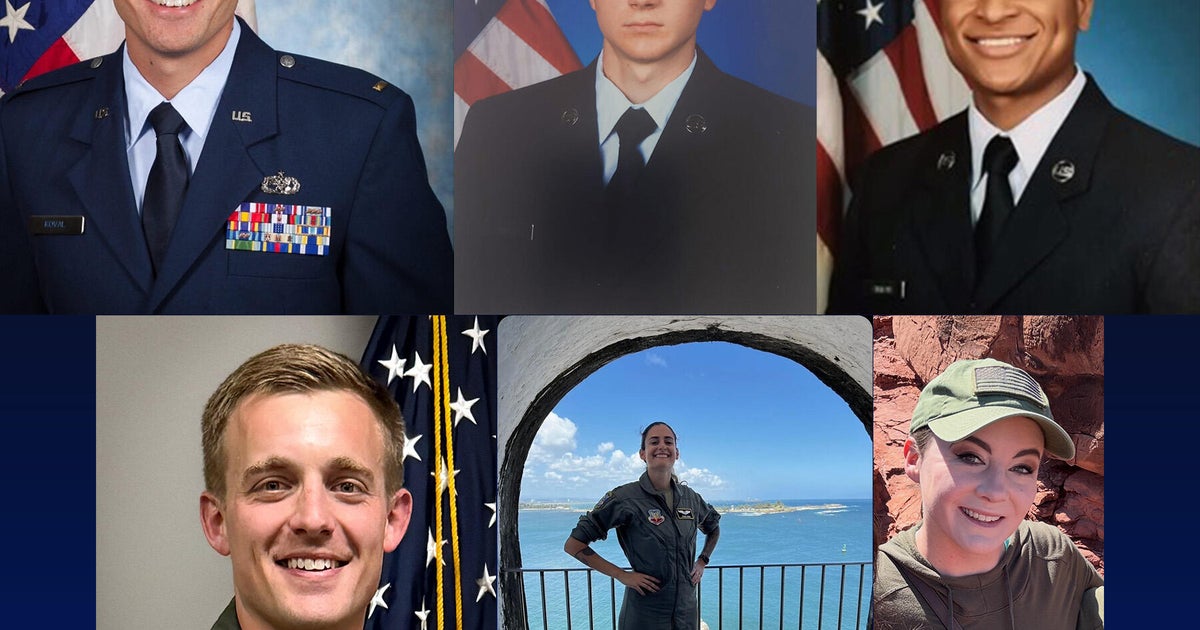
BAGHDAD, Iraq – Six U.S. Service members were killed last week when a KC-135 Stratotanker refueling aircraft crashed in western Iraq, near the border with Jordan. The Department of Defense on Saturday formally identified the fallen service members, revealing a mix of personnel from the Ohio Air National Guard and the Florida-based 6th Air Refueling Wing. The incident, which occurred during operations in the region, is currently under investigation, raising questions about the circumstances surrounding the crash and the ongoing military presence in the Middle East.
The service members have been identified as Captain Seth R. Koval, 38, of Mooresville, Indiana; Captain Curtis J. Angst, 30, of Wilmington, Ohio; Technical Sergeant Tyler H. Simmons, 28, of Columbus, Ohio; Major John A. Klinner, 33, of Auburn, Alabama; Captain Ariana G. Savino, 31, of Covington, Washington; and Technical Sergeant Ashley B. Pruitt, 34, of Bardstown, Kentucky. Koval, Angst and Simmons were assigned to the 121st Air Refueling Wing at Rickenbacker Air National Guard Base in Columbus, Ohio, while Klinner, Savino, and Pruitt were stationed at MacDill Air Force Base in Florida, home to the 6th Air Refueling Wing.
The loss has resonated deeply within the communities connected to these airmen. Ohio Governor Mike DeWine ordered flags to be flown at half-staff in their honor, a testament to the sacrifice made by these individuals and their families. The crash underscores the inherent risks faced by military personnel deployed in active conflict zones, even in roles considered to be support functions like aerial refueling. The KC-135 Stratotanker is a critical component of U.S. Air power, providing in-flight refueling capabilities that extend the range and operational endurance of other aircraft.
Details Emerge About the Fallen Airmen
The families of the fallen service members are beginning to grapple with the devastating news. Mylo Simmons, father of Technical Sergeant Tyler Simmons, described his son as a “trailblazer” and “the light of the party,” recalling how teachers consistently praised his good behavior. Cheryl Simmons, Tyler’s mother, spoke of the inevitability of deployment given the escalating tensions in the region, acknowledging the inherent dangers of military service. “We cannot fight a war without having tankers, without gas you can’t have a war,” she stated, emphasizing the vital role her son played in supporting military operations. CBS News reported on the family’s poignant reflections.
Captain Seth Koval, 38, of Stoutsville, Ohio, had 19 years of service and served as an aircraft commander. Captain Curtis Angst, 30, of Columbus, Ohio, was a KC-135 pilot with 10 years of experience. Technical Sergeant Tyler Simmons, a graduate of Eastmoor Academy High School, had served for eight years as a boom operator, responsible for the critical task of transferring fuel to receiving aircraft. Details regarding the careers and backgrounds of Major Klinner, Captain Savino, and Technical Sergeant Pruitt are still emerging.
Investigation Underway Following Mid-Air Incident
U.S. Central Command (CENTCOM) has stated that the crash followed an unspecified incident involving two aircraft operating in “friendly airspace.” Notably, the other aircraft involved in the incident landed safely. The precise nature of the incident remains unclear, and a full investigation is underway to determine the cause of the crash. The incident occurred as the U.S. Military continues to conduct operations in Iraq and the broader Middle East, primarily focused on countering the influence of Iran and supporting regional partners. The KC-135 was operating in support of these ongoing operations at the time of the crash.
Air Force General Dan Caine, Chairman of the Joint Chiefs of Staff, confirmed that the crew was on a combat mission but emphasized that the crash occurred over friendly territory. Defense Secretary Pete Hegseth has publicly praised the fallen service members as “American heroes.” The investigation will likely focus on a range of factors, including mechanical failure, human error, and potential external threats. The KC-135 Stratotanker, while a reliable aircraft, has been in service for decades and is undergoing ongoing modernization efforts to ensure its continued operational effectiveness. The aircraft first entered service in 1956 and has been a mainstay of the U.S. Air Force’s aerial refueling fleet ever since.
The Role of Aerial Refueling in Modern Warfare
Aerial refueling, the process of transferring fuel from a tanker aircraft to another aircraft in flight, is a critical capability for modern military operations. It significantly extends the range and endurance of combat aircraft, allowing them to conduct missions over greater distances and remain on station for longer periods. Without aerial refueling, many complex military operations would be impossible. The KC-135 Stratotanker is specifically designed for this role, capable of carrying large quantities of fuel and transferring it to a wide range of aircraft. The loss of a KC-135 and its crew highlights the inherent risks associated with this vital support function.
The 121st Air Refueling Wing, based at Rickenbacker Air National Guard Base in Columbus, Ohio, plays a crucial role in providing aerial refueling support to the U.S. Military. The wing is responsible for maintaining and operating a fleet of KC-135 Stratotankers and deploying personnel to support operations around the world. The 6th Air Refueling Wing at MacDill Air Force Base in Florida also provides critical aerial refueling capabilities, supporting operations in multiple theaters of operation. The combined loss of personnel from both wings underscores the widespread impact of this tragedy.
Looking Ahead: Investigation and Remembrance
The investigation into the crash is expected to seize several weeks or months to complete. The findings will be crucial in determining the cause of the incident and identifying any necessary steps to prevent similar tragedies in the future. In the meantime, the families of the fallen service members are receiving support from the military and their communities. The flags of the United States and the State of Ohio have been ordered to be flown at half-staff in honor of Captains Koval and Angst, and Technical Sergeant Simmons, as decreed by Governor DeWine, remaining lowered until sunset on the day of their funerals.
The loss of these six service members serves as a stark reminder of the sacrifices made by those who serve in the U.S. Military. Their dedication and commitment to duty will not be forgotten. Further updates on the investigation and funeral arrangements will be released by the Department of Defense as they become available. The focus now shifts to supporting the families of the fallen and ensuring that their service is honored and remembered.
The Department of Defense has not yet announced a timeline for the completion of the investigation. Readers seeking more information are encouraged to visit the official Department of Defense website at defense.gov for the latest updates. We encourage readers to share their condolences and memories of the fallen service members in the comments below.
Related reading