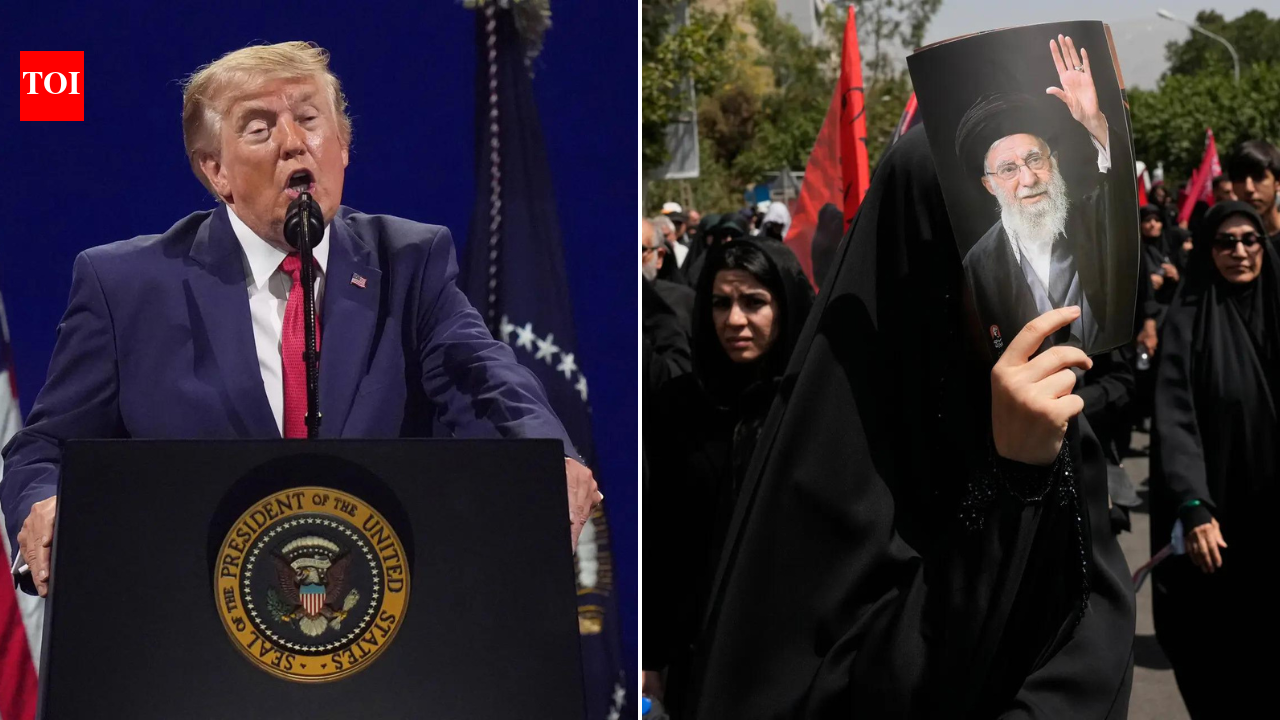
Donald Trump stated that leaders of the Iranian government are “within reach,” claiming that a single precision strike could eliminate them. The comments signal a potential return to the “maximum pressure” strategy used during his first term, emphasizing the U.S. military’s capability to target high-ranking officials in Tehran to deter regional aggression.
The remarks come as the President-elect outlines his approach to Middle East stability and the ongoing conflict involving Iran-backed proxies. Trump’s assertion focuses on the vulnerability of the Iranian leadership, suggesting that the U.S. possesses the intelligence and kinetic capabilities to execute a high-impact operation if deemed necessary for national security.
This rhetoric mirrors the posture that led to the January 3, 2020, drone strike that killed Qasem Soleimani, the commander of the Quds Force, at Baghdad International Airport. According to official reports from the U.S. Department of Defense, that operation was conducted to neutralize an imminent threat to U.S. embassies and personnel.
The prospect of renewed targeted strikes against the Islamic Revolutionary Guard Corps (IRGC) or senior government officials raises significant questions about the risk of direct escalation between Washington and Tehran.
What prompted the comments on Iranian leadership?
Trump’s recent assertions about the vulnerability of Iranian leaders stem from his broader critique of current U.S. foreign policy and his desire to project strength against adversaries. He has argued that a perceived lack of resolve from the current administration has encouraged Iran to expand its influence through proxies in Lebanon, Yemen, and Iraq.

By claiming that Iranian leaders can be taken out in “one shot,” Trump is positioning himself as a leader capable of decisive action. This approach is designed to create a psychological deterrent, suggesting that the cost of aggression against U.S. interests would be the personal survival of Iran’s top decision-makers.
Analysts note that this strategy differs from traditional diplomacy, which focuses on negotiations and sanctions. Instead, it relies on the threat of asymmetrical warfare and precision strikes to force a change in behavior from the Iranian regime.
How does this relate to the 2020 Soleimani assassination?
The current rhetoric is a direct extension of the precedent set in 2020. The assassination of Qasem Soleimani demonstrated the U.S. ability to penetrate Iranian security circles and execute a strike on a high-value target in a third country.
During his first term, Trump implemented a “maximum pressure” campaign that combined severe economic sanctions with targeted military actions. A central pillar of this policy was the withdrawal of the U.S. from the Joint Comprehensive Plan of Action (JCPOA), the 2015 nuclear deal, which occurred on May 8, 2018, as documented by the U.S. Department of State.
The 2020 strike was viewed by supporters as a necessary move to degrade Iran’s ability to coordinate attacks. However, critics at the time argued it increased the risk of a full-scale war and led to Iranian missile strikes on U.S. bases in Iraq shortly thereafter.
What are the risks of a renewed ‘Maximum Pressure’ campaign?
A return to aggressive targeting of Iranian leadership could trigger several geopolitical consequences. The primary risk is a direct military response from Iran, which has previously used ballistic missiles and drone swarms to target U.S. assets.
Regional stability is also at stake. Iran maintains a network of “Axis of Resistance” allies, including Hezbollah in Lebanon and the Houthis in Yemen. A strike on Tehran could prompt these groups to increase attacks on U.S. bases in the region or target commercial shipping in the Strait of Hormuz, a critical chokepoint for global oil supplies.
Furthermore, there is the issue of Iran’s nuclear program. The International Atomic Energy Agency (IAEA) has repeatedly reported that Iran has increased its stockpile of enriched uranium. Some experts argue that extreme military pressure could push Tehran to accelerate its efforts to develop a nuclear weapon as a final deterrent against regime change.
How has Iran responded to U.S. threats?
Tehran has historically responded to U.S. threats with a mixture of public defiance and strategic escalation. Following the Soleimani strike, Iran’s leadership vowed “harsh revenge,” which manifested in the missile attack on the Al-Asad Airbase in Iraq.

Iranian officials typically frame U.S. actions as “state terrorism” and use such threats to consolidate domestic support and justify the expansion of their missile programs. The IRGC continues to emphasize its ability to strike targets across the Middle East as a counter-weight to U.S. precision capabilities.
Despite the rhetoric, Iran has also shown a willingness to engage in indirect negotiations, often using third parties like Qatar or Oman to manage tensions and avoid a direct, all-out war with the United States.
The current geopolitical landscape is further complicated by the relationship between the U.S., Israel, and Iran. Israel has frequently called for a more aggressive stance against the Iranian regime, particularly regarding its nuclear ambitions and support for regional proxies.
As the U.S. transitions leadership, the focus remains on whether the coming administration will prioritize the “maximum pressure” model of targeted strikes and sanctions or seek a new diplomatic framework to constrain Iran’s regional activities.
The next confirmed checkpoint for U.S. foreign policy direction will be the official transition meetings and the formal inauguration on January 20, 2025, where the new administration’s national security priorities will be established.
Do you believe a “maximum pressure” strategy is the most effective way to handle regional tensions? Share your thoughts in the comments below.