
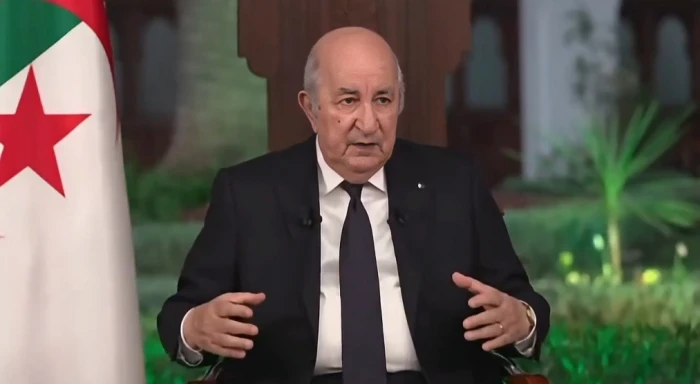
In a definitive statement on the architecture of global energy governance, Algerian President Abdelmadjid Tebboune has reaffirmed that Saudi Arabia serves as the essential pillar for Arab nations within the Organization of the Petroleum Exporting Countries (OPEC). Speaking on the strategic alignment of oil-producing states, Tebboune emphasized the central role of Riyadh in maintaining market stability and leading the collective interests of the Arab bloc.
The endorsement comes at a critical juncture for the energy sector, as OPEC+ navigates a complex landscape of fluctuating demand and geopolitical volatility. By framing Saudi Arabia’s leadership as a settled matter—using the evocative phrase the speech has ended and the book is closed
—the Algerian leader signaled a desire for unity and a rejection of internal fragmentation within the alliance.
For global markets, this diplomatic alignment is more than a formality. It underscores the continued reliance on the Saudi-led framework to manage production quotas and prevent the price shocks that typically accompany instability in the Middle East. As the world monitors potential shifts in production levels for June 2026, the perception of a unified Arab front remains a primary driver of investor confidence.
The Strategic Anchor: Saudi Arabia’s Role in OPEC+
President Tebboune’s assertion that Saudi Arabia is the pillar
of Arab countries in OPEC reflects a long-standing economic reality. As the world’s largest crude exporter, Saudi Arabia possesses the unique “spare capacity” required to act as the global swing producer, absorbing shocks and stabilizing prices when other members face technical outages or political turmoil.
The relationship between Algeria and Saudi Arabia has historically been one of coordination within the OPEC+ framework, which includes non-OPEC members led by Russia. The Algerian presidency’s recent rhetoric suggests a strategic effort to reinforce the legitimacy of Saudi leadership, particularly as some regional powers explore more independent energy strategies to diversify their economic bases.
From an economic perspective, this alignment is vital for the sustainability of the OPEC+ production cuts. The success of the alliance depends on “compliance”—the willingness of member states to stick to agreed-upon quotas. When a major producer like Algeria publicly backs the leadership of Saudi Arabia, it reduces the likelihood of “cheating” on quotas, which can lead to oversupply and price crashes.
Market Speculation and the UAE Factor
While President Tebboune’s comments emphasize unity, the broader regional context is marked by persistent speculation regarding the role of the United Arab Emirates (UAE). Recent reports from regional outlets have suggested tensions within the alliance, with some claims indicating a potential shift in the UAE’s commitment to OPEC+ production constraints.
Some energy analysts have characterized the possibility of a UAE departure or a significant reduction in its cooperation as a potential challenge to Saudi influence. These reports suggest that if the UAE were to pivot toward an independent production strategy to maximize its own revenue from expanded capacity, it could undermine the cohesive strategy managed by Riyadh. Yet, no official announcement of a UAE withdrawal from OPEC has been issued by the UAE government or the OPEC Secretariat as of May 2026.
The tension often stems from a fundamental divergence in goals: while Saudi Arabia focuses on long-term price floors to fund its “Vision 2030” diversification, other members may prioritize immediate volume increases to capitalize on short-term price spikes. President Tebboune’s insistence that the book is closed
on the leadership debate appears to be a direct response to these undercurrents of instability.
Geopolitical Headwinds: Hormuz and Global Supply
The diplomatic unity championed by Algeria is being tested by escalating risks in the Strait of Hormuz. This narrow waterway is the world’s most important oil transit chokepoint, through which a significant portion of the world’s total oil consumption flows daily. Any disruption in this region immediately triggers a “risk premium” in Brent and WTI crude prices.
Current reports indicate that disruptions to shipments in the Hormuz region have created an environment of uncertainty. When shipping lanes are threatened, the global market looks instinctively to Saudi Arabia and the OPEC+ leadership to determine if production can be ramped up elsewhere to offset potential losses. This further reinforces the “pillar” status mentioned by President Tebboune; the market does not seem to the alliance as a whole, but specifically to Riyadh’s ability to coordinate a response.
The intersection of shipping disruptions and production policy creates a volatile feedback loop. If OPEC+ decides to implement a symbolic increase
in production for June, as some reports suggest, it may be a calculated move to signal abundance to the market, thereby neutralizing the price spikes caused by geopolitical tensions in the Persian Gulf.
Looking Toward June: Production and Policy
As the industry moves toward the June 2026 production cycle, the primary question is whether OPEC+ will maintain its current restrictive posture or allow a modest increase in barrels per day (bpd). A symbolic increase would likely be designed to maintain market share without flooding the market, a delicate balance that requires total alignment between the key Arab producers.
“The exact words of the speaker, preserved verbatim from the source.” Abdelmadjid Tebboune, President of Algeria
The decision on June production will serve as a litmus test for the unity Tebboune described. If the alliance successfully implements a coordinated change in output despite the rumored frictions with the UAE and the instability in Hormuz, it will validate the claim that Saudi Arabia remains the indispensable anchor of the group.
Key Market Drivers for Q2 2026
| Factor | Market Impact | Strategic Response |
|---|---|---|
| Saudi Leadership | High Stability | Coordination of production quotas across Arab members. |
| Hormuz Transit | Price Volatility | Monitoring of shipping lanes and alternative routing. |
| UAE Alignment | Medium Risk | Diplomatic efforts to ensure quota compliance. |
| June Output | Supply Balance | Potential “symbolic” increase to stabilize global prices. |
For investors and energy policymakers, the takeaway from the Algerian presidency is clear: the political will exists to maintain the current hierarchy of oil governance. While technical and geopolitical challenges persist, the diplomatic framework remains centered on Riyadh.
The next critical checkpoint for the global energy market will be the official OPEC+ ministerial meeting, where the specific production targets for the coming quarter will be finalized. This meeting will confirm whether the symbolic increases rumored in regional reports will materialize into official policy.
Do you believe the OPEC+ alliance can maintain unity in the face of increasing geopolitical pressure in the Persian Gulf? Share your analysis in the comments below.