The landscape of artificial intelligence is undergoing a significant shift as OpenAI continues to evolve its suite of developer tools, most notably through the integration of its coding agent, Codex, into broader cloud-based workflows. While the era of purely chat-based AI interfaces is not necessarily ending, the focus has moved toward systems that can autonomously execute tasks, manage code repositories, and interface directly with development environments like GitHub. This transition marks a departure from simple conversational models toward functional, agentic tools designed for software engineering efficiency.
For developers and enterprise users, this evolution means that AI is no longer just a source of text-based suggestions. According to official developer documentation provided by OpenAI, Codex is now positioned as a coding agent capable of reading, editing, and running code. By connecting a GitHub account, users can enable these tools to interact with their repositories, create pull requests, and perform complex tasks in the background using dedicated cloud environments. These capabilities are currently accessible to users across Plus, Pro, Business, Edu, and Enterprise plans, though some enterprise workspaces may require internal administrative configuration before access is granted.
How Codex Integrates with Development Workflows
The integration of coding agents into standard development practices represents a move toward automated task delegation. Developers can now use the IDE extension to initiate tasks in the cloud, allowing the agent to handle time-consuming processes while the user focuses on higher-level architecture. Once a task is completed, the agent proposes changes that can be applied locally, effectively bridging the gap between cloud-based AI reasoning and local codebases. This workflow is designed to reduce the friction often associated with switching between a chat interface and a development environment.
Furthermore, OpenAI has implemented features that allow for more granular control over these autonomous processes. Users can configure specific environments, choosing the repositories, setup steps, and necessary tools the agent should utilize. There is also an option to manage internet access for these cloud environments, providing a layer of security for teams that need to restrict the agent’s ability to pull from or interact with public web resources. These settings are managed through the developer portal, which serves as the central hub for configuring how these agents interact with private code.
The Shift Toward Agentic Coding Tasks
The transition toward agentic AI—systems that perform actions rather than just generating responses—is a key development in the current tech ecosystem. By allowing users to tag the coding agent directly on issues and pull requests, the platform aims to automate the proposal of code changes, potentially accelerating the software development lifecycle. This represents a functional expansion of the technology, moving beyond the limitations of text-only interaction to provide tangible utility in technical environments.
Effective usage of these tools often requires a nuanced approach to prompting. According to the platform’s developer resources, writing clearer prompts, establishing strict constraints, and providing the appropriate level of detail are essential for achieving high-quality results. The platform encourages users to adopt proven patterns for delegating tasks, reviewing agent-generated changes, and managing the transition from AI-proposed code to finalized pull requests. This guidance underscores the importance of human oversight, even as the agents take on more substantive technical roles.
What Comes Next for Enterprise AI
As organizations continue to integrate these tools, the focus remains on security and administrative control. For those operating within an enterprise context, the setup process involves coordination with workspace administrators to ensure that the agentic workflows align with internal security policies and compliance requirements. This structure is intended to maintain the integrity of private code repositories while leveraging the productivity gains offered by automated coding assistants.
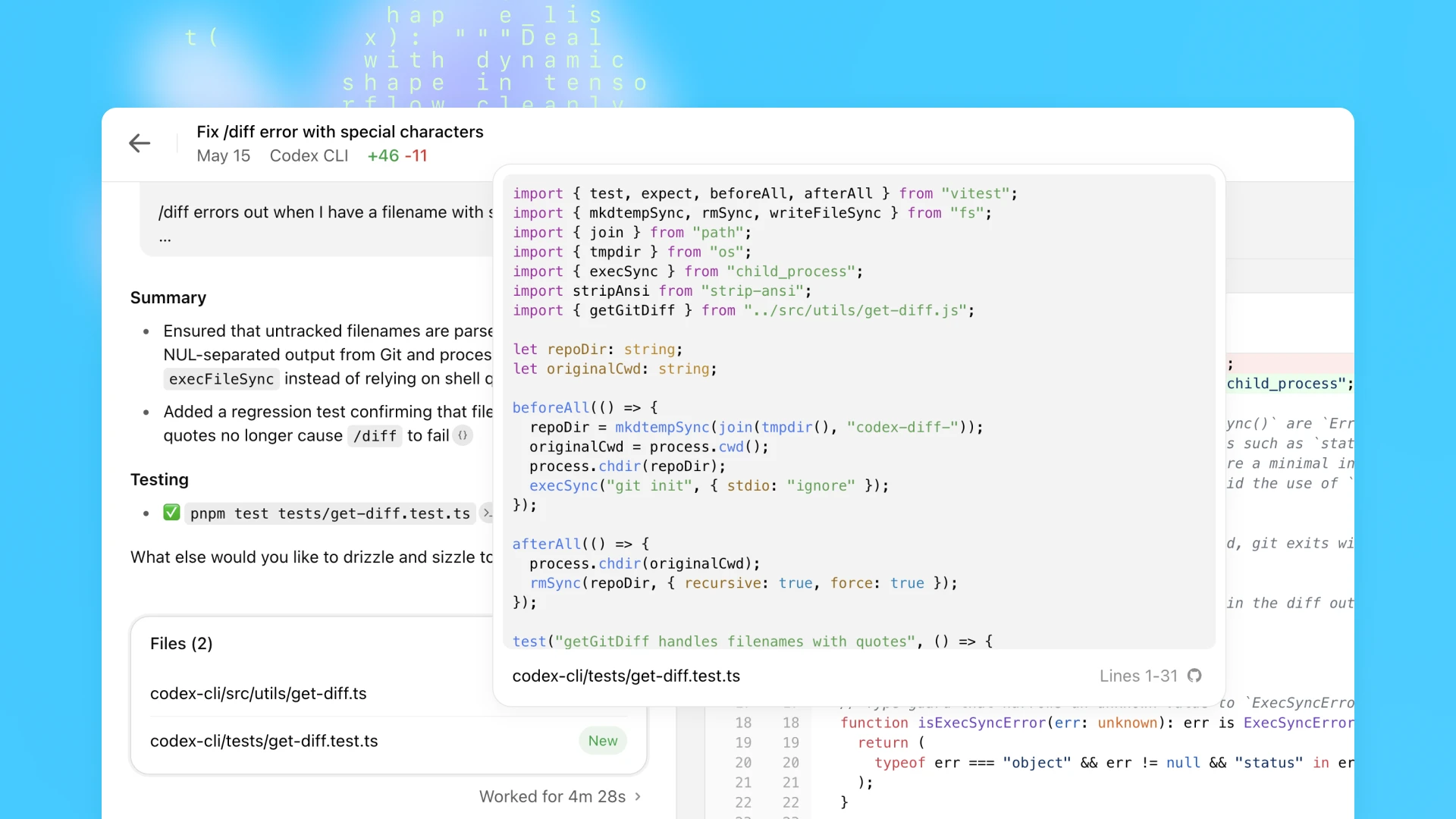
The next steps for users involve monitoring the ongoing updates to the developer portal and exploring the documentation regarding environment configuration. As OpenAI continues to refine these tools, users can expect further improvements in how these agents interact with complex, multi-file codebases. For those interested in the latest updates or specific administrative guidance, the official OpenAI developer documentation remains the primary source for technical specifications and feature availability. We encourage readers to share their experiences with these new workflows in the comments below.
- Roblox Twins Dance to ‘Looking for a Girl Like Me’ | Video by AwhxJelli (@jelli_ok) – Snapchat
- Una promesa de 5 años de actualizaciones: Samsung “firma el contrato” con el usuario de los nuevos Galaxy Watch – Xataka Móvil
- OpenAI Launches $230 Codex Micro Keypad for AI Coders (time.news)
- ChatGPT and Codex Experience Service Outages; OpenAI Investigating (newsdirectory3.com)